
Aneides lugubris
The arboreal salamander (Aneides lugubris) is a species of climbing salamander native to California and Baja California. It is distinguished by its prehensile tail, sharp teeth, and unique arboreal adaptations, including gliding behavior when falling from trees. This lungless salamander is primarily nocturnal and insectivorous, inhabiting oak and sycamore woodlands and chaparral.
Key Facts
- ›Arboreal salamanders are excellent climbers and possess a prehensile tail.
- ›They are lungless and breathe through their skin and oral membranes.
- ›Males have a broad, triangular head with front teeth extending beyond the lower lip.
- ›This species exhibits parental care, with adults guarding eggs.
- ›Arboreal salamanders can produce sounds resembling a faintly barking dog.
- ›They have a unique adaptation for controlled falls, using their bodies to glide or parachute.

Arboreal Salamander
Oak and Sycamore Woodlands, Chaparral, Coastal Woodlands, Conifer Forests, Shrublands, Tree Cavities, Under Leaf Litter, Moist Terrestrial Habitats, Burrows
California, Baja California, Humboldt County, North Baja California, South Farallon Islands, Los Coronados Islands, Catalina Island, AñO Nuevo Island, San Francisco Islands
- 6.5–10 Cm Snout-Vent Length .
- Plain Purplish-Brown Coloring.
- Dorsally Spotted With Gold Or Yellow, Though May Be Unspotted.
- Longer and Sharper Teeth Than Many Other Salamanders.
- Prehensile Tail.
- Juveniles Are Dark Overall With Greyish Clouds and Fine Yellow Speckling On the Back.
- Males Have A Broad, Triangular Head With Front Teeth Extending Beyond the Bottom Lip.
- Adults Can Inflict A Painful Bite.
- Possess More Developed Teeth and Jaws Compared To Most Other Plethodontids.
- Anterior Part of the Skull Becomes Heavily Ossified and Bulbous After the Second Year.
Beetles, Caterpillars, Sow Bugs, Ants, Centipedes
- Excellent Climber.
- Nocturnal.
- Spends Daylight Hours and Dry Periods In Tree Cavities.
- Deliberately Uses Body To Protect From Falls, Exhibiting Gliding Or Parachuting Behavior.
- Hatch From Eggs Laid and Guarded In Burrows.
- Adults Stay Near Eggs To Shield Them, Demonstrating Parental Care.
- Spends Most Time Under Leaf Litter and In Tree Cavities To Stay Moist.
- Exhibits Relatively Low Rates of Water Loss Due To Rapid Water Intake and Postural Adaptations.
- Can Produce Sounds Compared To A Faintly Barking Dog.
- Males Use Mental Gland and Teeth To Deliver Pheromones To Females During Courtship.
About Aneides lugubris
The arboreal salamander, scientifically known as Aneides lugubris, is a species of climbing salamander found in California and Baja California. This species is notable for its arboreal lifestyle, inhabiting oak and sycamore woodlands, chaparral, and other forested areas. Its ability to climb is enhanced by a prehensile tail, and it exhibits remarkable adaptations for arboreal life, including a controlled gliding or parachuting behavior when falling from trees.
Description and Physical Traits
Adult arboreal salamanders typically measure between 6.5 and 10 cm in snout-vent length. Their coloration is generally a plain purplish-brown, often adorned with dorsal spots of gold or yellow, though unspotted individuals also occur. A distinctive feature of Aneides lugubris is its teeth, which are longer and sharper than those of many other salamander species. Males can be identified by their broad, triangular heads and front teeth that protrude beyond the lower lip, capable of inflicting a painful bite. As plethodontid salamanders, they are lungless and respire through their skin and the membranes of their mouth and throat, which necessitates moist habitats and limits their terrestrial activity to periods of higher humidity.
Behavior and Reproduction
Arboreal salamanders are primarily nocturnal, seeking shelter during daylight hours and dry periods in tree cavities, often sharing these spaces with other individuals. They are adept climbers and have developed unique methods to mitigate the risks of falling, utilizing their bodies to steer their descent. Reproduction involves females laying clutches of 5-24 eggs in moist burrows, tree holes, or under ground cover. Parental care is observed, with adults guarding the eggs against predators and environmental hazards, thus increasing the hatchlings' survival rate. The genus Aneides is characterized by the absence of an aquatic larval stage, with young salamanders hatching directly from eggs and entering terrestrial life.
Distribution and Habitat
This species is nearly endemic to California, with populations also extending into Baja California. Their natural range includes coastal woodlands, conifer forests, and shrublands. Specific locations include Humboldt County, North Baja California, and various offshore islands such as South Farallon, Los Coronados, Catalina, Año Nuevo, and San Francisco Islands. They are often found in the cavities of oak trees and spend considerable time under forest leaf litter to maintain moisture levels.
Source: Wikipedia ↗
Frequently Asked Questions
What does the arboreal salamander eat?
The arboreal salamander is insectivorous. Its diet includes beetles, caterpillars, sow bugs, ants, and centipedes.
Where do arboreal salamanders live?
Arboreal salamanders are found in California and Baja California, primarily in oak and sycamore woodlands, chaparral, coastal woodlands, conifer forests, and shrublands. They inhabit cavities in oak trees and moist terrestrial environments like leaf litter.
What are the physical characteristics of the arboreal salamander?
Adult arboreal salamanders typically measure 6.5–10 cm in snout-vent length and have plain purplish-brown coloring, often spotted dorsally with gold or yellow. They have longer and sharper teeth than many other salamanders, and males are distinguishable by their broad, triangular heads.
How do arboreal salamanders reproduce?
Females lay eggs in moist burrows, tree holes, or under cover on the ground. Both parents may guard the eggs, and hatchlings emerge after about 3-4 months. The genus Aneides, to which this species belongs, is characterized by the loss of an aquatic larval stage.
What is unique about the arboreal salamander's behavior?
Arboreal salamanders are excellent climbers and are known for their ability to glide or parachute when falling from trees, a behavior thought to be an adaptation to their arboreal habitat. They are also nocturnal and spend daylight hours in tree cavities or under leaf litter.
Can arboreal salamanders bite?
Yes, arboreal salamanders have longer and sharper teeth than many other salamanders, and a large adult can inflict a painful bite.
Related Salamander and Newt species

Arboreal salamander
The arboreal salamander (Aneides lugubris) is a lungless salamander species native to California and Baja California, known for its climbing ability and distinctive prehensile tail. It inhabits oak and sycamore woodlands and chaparral, spending daylight hours in tree cavities and exhibiting unique gliding behaviors when falling.
Ambystoma opacum
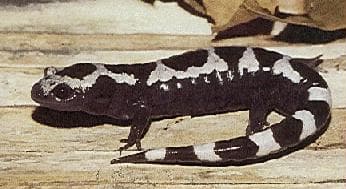
The marbled salamander (Ambystoma opacum) is a stout, terrestrial salamander found in the eastern United States, distinguished by its striking black and white banded pattern. Females typically have light gray bands, while males exhibit bright white bands, with males also possessing a larger proportion of white on their dorsal surface. This species spends most of its life under logs or in burrows and relies on seasonally flooded areas for breeding.

Aneides ferreus
The clouded salamander (Aneides ferreus) is a species of salamander found in the Pacific Northwest of North America. It is characterized by its long, slim body, prehensile tail, and distinctive pale grey coloration blotched with gold, olive green, or dull red. This species primarily inhabits temperate forests, often seeking shelter under logs, rocks, and loose bark.