
Eastern red-spotted newt
The eastern newt, scientifically known as Notophthalmus viridescens, is a common amphibian found across eastern North America. This species is distinctive for its three distinct life stages: an aquatic larva, a terrestrial "red eft" juvenile phase, and an aquatic adult form. They are known for producing tetrodotoxin, a potent toxin that deters predators.
Key Facts
- ›The eastern newt has three life stages: aquatic larva, terrestrial red eft, and aquatic adult.
- ›The red eft stage is characterized by bright orangish-red coloration and serves as a dispersal phase.
- ›Eastern newts produce tetrodotoxin, a neurotoxin that makes them unpalatable to predators.
- ›They inhabit a variety of aquatic and woodland environments, including ponds, streams, and damp forests.
- ›Adult eastern newts have a dull olive-green dorsal side and a dull yellow belly.
- ›They are carnivorous, feeding on invertebrates, insects, worms, and other small aquatic organisms.

Eastern Red-Spotted Newt
Small Lakes, Ponds, Vernal Ponds, Streams, Nearby Wooded Areas, Coniferous Forests, Deciduous Forests, Swamps, Ditches, Damp Woodlands, Muddy Environments, Aquatic Habitats, Terrestrial Habitats
Eastern North America
- Adults: Dull Olive Green Dorsally, Dull Yellow Belly, Characteristic Black-Rimmed Red Spots.
- Red Eft : Bright Orangish-Red With Darker Red Spots Outlined In Black.
- Larva: Brown-Green, Possesses Gills.
- Adults Develop A Larger, Blade-Like Tail and Characteristically Slimy Skin.
- Skin May Appear Rough and Dry For Parts of Their Lives.
- Can Have Up To 21 Black-Rimmed Red Spots.
Small Aquatic Invertebrates, Insects, Worms, Snails, Small Mollusks, Crustaceans, Young Amphibians, Frog Eggs, Springtails, Soil Mites, Beetles, Ants, Mosquito Larvae
- Carnivorous
- Terrestrial Travel During Eft Stage For Dispersal
- Aposematism
- Secrete Toxins From Skin As Defense Mechanism
- Sensitive To Environmental Changes
- Follow Thermoclines
- Can Survive and Breed Under Ice In Winter
- Burrow Underground Or Seek Shelter In Logs/Debris During Winter
- Home Using Magnetic Orientation
- Polygynandrous
- Males May Exhibit Territoriality During Breeding Season
- Exhibit Social Hierarchy and Aggressive Behaviors Towards Subordinates
Habitat Fragmentation, Climate Change, Invasive Species, Over-Exploitation, Emergent Infectious Diseases, Pollution, Loss of Wetlands, Toxicity of Coal-Tar Pavement
About Eastern red-spotted newt
Eastern Newt
What is known
The eastern newt, scientifically known as Notophthalmus viridescens, is a common species of newt found throughout eastern North America. It is recognized for its distinctive three-stage life cycle, which includes an aquatic larval phase, a terrestrial juvenile phase known as the "red eft," and a return to an aquatic adult stage. This species is notable for its production of tetrodotoxin, a powerful neurotoxin that serves as a defense mechanism against predators.
Life Stages and Description
The eastern newt's life begins as an aquatic larva, characterized by gills and a brown-green coloration. This stage lasts for two to five months and is the most vulnerable to predation. Following metamorphosis, the newt enters the terrestrial red eft stage, which is visually striking due to its bright orangish-red color and dark, black-rimmed red spots. This stage can last for several years and acts as a dispersal phase, helping the species colonize new areas. The red eft's coloration is an example of aposematism, warning predators of its toxicity. After this period, the eft returns to water and transforms into the adult form, which typically has a dull olive-green back and a yellow belly, retaining some of the red spots. The adult newt develops a more pronounced, blade-like tail and slimy skin.
Habitat and Distribution
Eastern newts inhabit a variety of freshwater environments, including small lakes, ponds, vernal ponds, and quiet stretches of streams, often with dense submerged vegetation. They also frequent nearby damp woodlands, forests, swamps, and ditches. They require moist conditions and thrive in muddy environments. While males often prefer more open aquatic habitats, females tend to favor forested, terrestrial areas, possibly related to reproductive roles.
Diet and Behavior
These newts are carnivorous, consuming a range of prey. Larvae feed on small aquatic invertebrates, while adults add insects, worms, snails, mollusks, crustaceans, and even small amphibians to their diet. Eastern newts are sensitive to environmental changes, detecting shifts in water quality and temperature, and are often considered an indicator species for ecosystem health. They exhibit adaptability, sometimes remaining aquatic or returning to terrestrial environments after breeding. During colder months, they may hibernate by burrowing or seeking shelter, though some populations remain active year-round. Eastern newts also possess a remarkable ability to regenerate lost limbs and organs, attributed to their high levels of stem cells.
Reproduction and Defense
Breeding occurs annually from late fall to early spring, with both males and females mating with multiple partners. Males attract females through tail fanning, releasing pheromones. Upon mating, the male deposits a spermatophore, which the female uses to fertilize her eggs. Females lay 200–400 eggs attached to submerged vegetation. The skin of the eastern newt contains toxins, including tetrodotoxin, which deters predators. The bright coloration of the red eft and the adult's red spots serve as warning signals. Despite their toxicity, some predators have been observed to overcome this defense, and certain species show resilience to the toxin.
Conservation Concerns
Despite their widespread distribution, eastern newts face increasing threats from habitat fragmentation, climate change, invasive species, over-exploitation, and emerging diseases. The loss of wetlands, crucial habitats for amphibians, significantly impacts their populations. Pollution, such as the toxicity from coal-tar pavement, can also have sublethal effects, impairing their movement and righting abilities. They are also susceptible to various pathogens, including Ranavirus and chytrid fungi, which can cause mortality.
Source: Wikipedia ↗
Frequently Asked Questions
What are the different life stages of the eastern newt?
The eastern newt undergoes three main life stages. It begins as an aquatic larva, then transforms into a terrestrial juvenile known as a red eft, and finally matures into an aquatic adult.
Why is the eastern newt's juvenile stage called a red eft?
The juvenile stage is called a red eft due to its striking bright orangish-red coloration. This vibrant coloring serves as aposematism, a warning signal to potential predators about the newt's toxicity.
What makes eastern newts toxic?
Eastern newts produce tetrodotoxin, a potent neurotoxin. This toxin is also known as the strongest emetic known and is stored in their tissues, making them unpalatable and dangerous to consume.
What do eastern newts eat?
Eastern newts are carnivorous. As larvae, they consume small aquatic invertebrates, and as adults, their diet includes insects, worms, snails, small mollusks, crustaceans, and even young amphibians and frog eggs.
Where do eastern newts live?
Eastern newts are found in eastern North America and inhabit a range of environments. They frequent small lakes, ponds, vernal ponds, streams, swamps, ditches, and nearby wooded areas, preferring moist environments with shallow, quiet water and submerged vegetation.
What is the lifespan of an eastern newt?
Eastern newts have a lifespan of about 7 to 10 years in the wild, although some individuals have been recorded to live up to 15 years. Their lifespan can vary depending on environmental conditions and whether they are in the wild or captivity.
Can eastern newts regenerate limbs?
Yes, eastern newts possess remarkable regenerative abilities. They are capable of regenerating lost limbs, as well as other organs like their spinal cord and heart, due to a high concentration of stem cells.
Related Salamander and Newt species
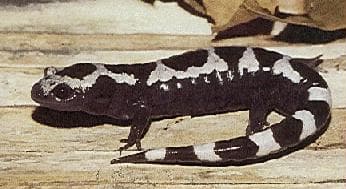
Ambystoma opacum
The marbled salamander (Ambystoma opacum) is a stout, terrestrial salamander found in the eastern United States, distinguished by its striking black and white banded pattern. Females typically have light gray bands, while males exhibit bright white bands, with males also possessing a larger proportion of white on their dorsal surface. This species spends most of its life under logs or in burrows and relies on seasonally flooded areas for breeding.

Hemidactylium scutatum
The four-toed salamander, *Hemidactylium scutatum*, is a unique lungless salamander found in eastern North America. It is distinguished by its white, black-dotted belly, elongated body and limbs, and a tail that constricts at the base. This species exhibits specialized defense mechanisms, including tail autotomy and playing dead.

Aneides lugubris
The arboreal salamander (Aneides lugubris) is a species of climbing salamander native to California and Baja California. It is distinguished by its prehensile tail, sharp teeth, and unique arboreal adaptations, including gliding behavior when falling from trees. This lungless salamander is primarily nocturnal and insectivorous, inhabiting oak and sycamore woodlands and chaparral.