
Eastern long-tailed salamander
The Eastern long-tailed salamander is a species of lungless salamander found in the Appalachian Region and Ohio River valley of the eastern United States. It is characterized by its yellow to orange-red body, often adorned with black spots, and a notably long tail. This salamander is commonly found in cave twilight zones, springs, and surrounding forests.
Key Facts
- ›Native to the Appalachian Region and Ohio River valley of the eastern United States.
- ›Body color ranges from yellow to orange-red with random black spots.
- ›Average snout-vent length (SVL) is 50 MM (2.0 in) with a tail length of 72 MM (2.8 in).
- ›Inhabits cave twilight zones, springs, forest areas, streamsides, and pond edges.
- ›Reproduction for one subspecies occurs from November to February, with larvae hatching in January-March.
- ›Overall population is large, with no major widespread threats identified.

Long-Tailed Salamander, Longtail Salamander, Dark-Sided Salamander, Black-Sided Salamander, Cope's Cave Salamander, Midland Long-Tailed Salamander
Cave Twilight Zones, Springs, Surrounding Forest, Streamsides, Spring Runs, Ponds, Cave Mouths, Abandoned Mines, Wooded Terrestrial Habitats
Appalachian Region, United States, Ohio River Valley, United States
- Body Color Varies From Yellow To Orange-Red To Red.
- Features Random Black Spots.
- Has A Long Tail.
- Hides In Rock Crevices Or Under Rocks, Logs, Etc.
- May Venture Into Wooded Terrestrial Habitats With Wet Weather.
Strip Mining, Acid Drainage From Coal Mining
About Eastern long-tailed salamander
The Eastern long-tailed salamander, scientifically known as Eurycea longicauda, is a species of lungless salamander native to the Appalachian Region and Ohio River valley in the eastern United States. Its common names include the long-tailed salamander and longtail salamander.
Physical Characteristics and Habitat
This salamander is recognized by its variable body coloration, which ranges from yellow to orange-red or red, often adorned with random black spots. A defining characteristic is its long tail. It typically measures around 50 mm (2.0 inches) in snout-vent length (SVL) with a tail length of approximately 72 mm (2.8 inches).
The Eastern long-tailed salamander is an adaptable species, inhabiting a variety of environments. It is commonly found in the twilight zones of caves, as well as in springs and the surrounding forest. Its preferred habitats also include streamsides, spring runs, ponds, cave mouths, and abandoned mines. During periods of wet weather, they may venture into wooded terrestrial areas, often seeking shelter in rock crevices or beneath rocks and logs.
Reproduction and Life Cycle
Reproductive activities for at least one subspecies, E. l. melanopleura, occur between November and February. Eggs, measuring about 7 mm (0.28 inches) in diameter, are laid in underground crevices associated with aquatic environments, and in caves, they may be attached to objects in or above water. The larvae hatch in January to March at approximately 10 mm (0.39 inches) SVL and undergo metamorphosis about seven months later, when they reach a size of 23–28 mm (0.91–1.10 inches) SVL. Sexual maturity is reached at SVLs between 31–43 mm (1.2–1.7 inches) for males and 33–43 mm (1.3–1.7 inches) for females.
Conservation Status
The overall population of the Eastern long-tailed salamander is considered large, likely exceeding 100,000 individuals. While some localized populations may experience impacts from activities such as strip mining and acid drainage from coal mining, there are no major overarching threats to the species. Furthermore, its geographic range overlaps with several protected conservation areas, contributing to its continued presence.
Source: Wikipedia ↗
Frequently Asked Questions
What is the Eastern long-tailed salamander's scientific name?
The scientific name for the Eastern long-tailed salamander is Eurycea longicauda. This species is also sometimes referred to by its common names, such as the long-tailed salamander or longtail salamander.
Where can the Eastern long-tailed salamander be found?
This species is native to the Appalachian Region and the Ohio River valley in the eastern United States. Its habitat includes cave twilight zones, springs, surrounding forests, streamsides, and pond edges.
What does the Eastern long-tailed salamander look like?
The Eastern long-tailed salamander typically has a body color that varies from yellow to orange-red or red, marked with random black spots. A distinctive feature is its long tail, which is often longer than its body.
What are the habitat preferences of the Eastern long-tailed salamander?
They frequent the twilight zones of caves and also inhabit springs and surrounding forests. They are found along streamsides, spring runs, ponds, cave mouths, and in abandoned mines, often hiding in rock crevices or under rocks and logs.
When does reproduction occur for the Eastern long-tailed salamander?
For at least one subspecies, E. l. melanopleura, reproduction takes place from November to February. Eggs hatch in January through March, and larvae metamorphose approximately seven months later.
Are there any conservation concerns for the Eastern long-tailed salamander?
The overall population size of this species is considered large, and there are no major threats identified across its entire range. While some local populations may be affected by mining activities, its range overlaps with several protected areas.
Related Salamander and Newt species
Eastern mud salamander
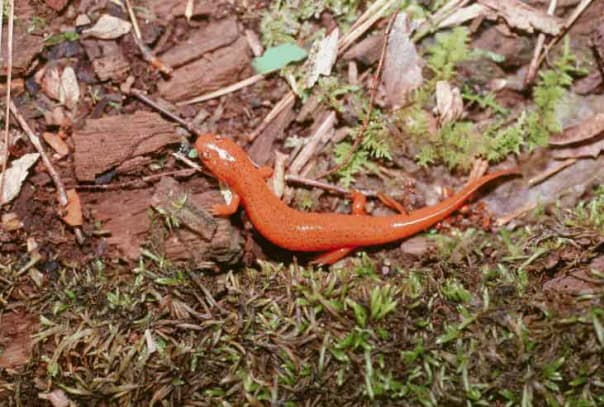
The Eastern mud salamander (Pseudotriton montanus montanus) is a species of salamander found in the eastern United States, inhabiting muddy wetland and riparian environments. It is characterized by its bright red to reddish-brown coloration, stocky body, and distinct black spots, which can vary in number and visibility with age and location. This species is known for its elusive nature and a unique proteinaceous skin toxin.

Ambystoma macrodactylum
The long-toed salamander (Ambystoma macrodactylum) is a mole salamander native to the Pacific Northwest of North America. It is distinguished by its mottled black, brown, and yellow coloration and a notably long outer fourth toe on its hind limbs. This species occupies a wide range of habitats, from temperate rainforests to alpine meadows, and is known for its subterranean adult lifestyle and aquatic breeding phase.
Desmognathus auriculatus
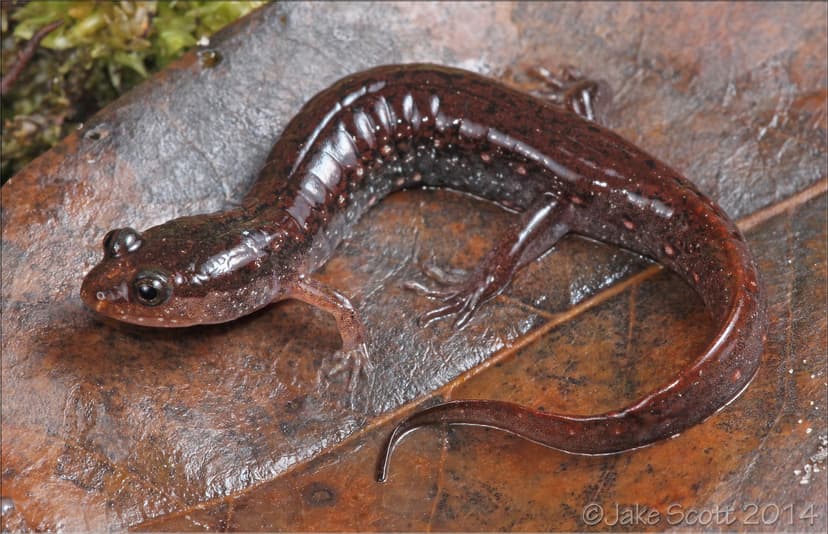
Holbrook's southern dusky salamander, scientifically known as *Desmognathus auriculatus*, is a species of salamander native to the southeastern United States. Once abundant, its populations have drastically declined since the 1960s, and it is now found in a fraction of its former range. This species is characterized by its dark coloration, long tail, and disproportionately larger hind legs.