
Fischer's clawed salamander
Fischer's clawed salamander, scientifically known as Onychodactylus fischeri, is a lungless salamander native to the Russian Far East. Distinctive for its tail, which is longer than its head and body combined, this species prefers shaded, thickly vegetated mountain streams and has a notable chromosome count.
Key Facts
- ›Found in the Russian Far East, preferring mountain streams with pebble bottoms and dense vegetation.
- ›Adults range from 17-19 CM in length, with females being slightly longer than males.
- ›Features a yellowish-brown dorsal side with dark brown spots and a lighter, unspotted ventral side.
- ›Its tail is longer than its head and body combined, giving it the 'clawed' part of its common name.
- ›Mating occurs from MID-March to MID-May, with eggs laid in streams and aquatic larvae emerging after about 5 weeks.
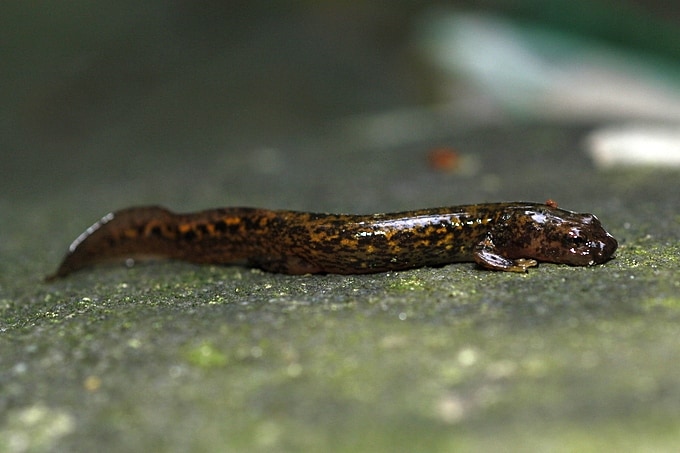
Fischer's Clawed Salamander, Russian Clawed Salamander
Mountain Streams, Pebble-Bottomed Streams, Underground Springs, Thickly-Vegetated Areas
Russian Far East
- Adult Males: 17–18 Cm Long.
- Adult Females: 18–19 Cm Long.
- Dorsal Aspect: Yellowish Brown With Bands of Dark Brown Spots.
- Ventral Aspect: Lighter In Color, Without Spots.
- Head: Small, Flat, and Oval.
- Skin: Smooth Overall With One Groove Along the Center of the Back.
- Tail: Longer Than the Head and Body Combined.
- Mating Season: Mid-March To Mid-May.
- Eggs Are Laid In Streams.
- Aquatic Larvae Emerge After Approximately 5 Weeks.
Habitat Change, Tree Felling In Stream Headwaters
About Fischer's clawed salamander
Fischer's clawed salamander, scientifically identified as Onychodactylus fischeri, is a species of lungless salamander native to the Russian Far East. Historically, its range was believed to extend throughout Northeast Asia, but current understanding recognizes distinct species for Chinese and Korean populations, clarifying its specific distribution.
Physical Characteristics and Habitat
Adult Fischer's clawed salamanders exhibit a notable size difference between sexes, with males measuring 17–18 cm and females slightly larger at 18–19 cm in length. Their dorsal side is characterized by a yellowish-brown coloration adorned with bands of dark brown spots, while the ventral side is a lighter hue and lacks these markings. A distinctive trait is their tail, which exceeds the combined length of their head and body, a feature that contributes to its common name. The head is small, flat, and oval, and the skin is generally smooth, marked by a single groove running down the center of the back. This species thrives in cool, shaded mountain streams with pebble-bottomed beds and dense vegetation, often found at elevations up to 1000 meters. They may also seek refuge near underground springs.
Reproduction and Life Cycle
The reproductive cycle of Fischer's clawed salamander is timed to coincide with the spring months, with the mating season occurring from mid-March to mid-May. Eggs are deposited directly into the water of streams, and the aquatic larvae emerge approximately five weeks after the eggs are laid. The species possesses 78 chromosomes, comprising 27 pairs of microchromosomes, six pairs of medium-sized chromosomes, and six pairs of large chromosomes.
Conservation Concerns
Fischer's clawed salamander faces threats primarily from habitat alteration. Activities such as tree felling in the headwaters of the streams they inhabit can significantly impact their environment and survival.
Source: Wikipedia ↗
Frequently Asked Questions
Where is Fischer's clawed salamander found?
Fischer's clawed salamander is found in the Russian Far East. It inhabits thickly vegetated stretches of mountain streams with pebble bottoms, often at elevations up to 1000 meters.
What are the physical characteristics of Fischer's clawed salamander?
Adult males typically measure 17–18 cm, while females are slightly larger at 18–19 cm. They have a yellowish-brown back with dark brown spots and a lighter, unspotted underside. A unique feature is their tail, which is longer than the rest of their body.
When does Fischer's clawed salamander breed?
The mating season for Fischer's clawed salamander generally runs from mid-March to mid-May. Eggs are deposited in streams, and the aquatic larvae hatch approximately five weeks later.
What are the habitat preferences of this species?
This salamander favors cool, shaded environments, specifically along mountain streams that have pebble bottoms and are densely vegetated. They may also be found near underground springs and are known to live at elevations up to 1000 meters.
What threats does Fischer's clawed salamander face?
A significant threat to Fischer's clawed salamander is habitat alteration. This includes issues such as tree felling in the headwaters of the streams where they live, which can disrupt their environment.
Related Salamander and Newt species
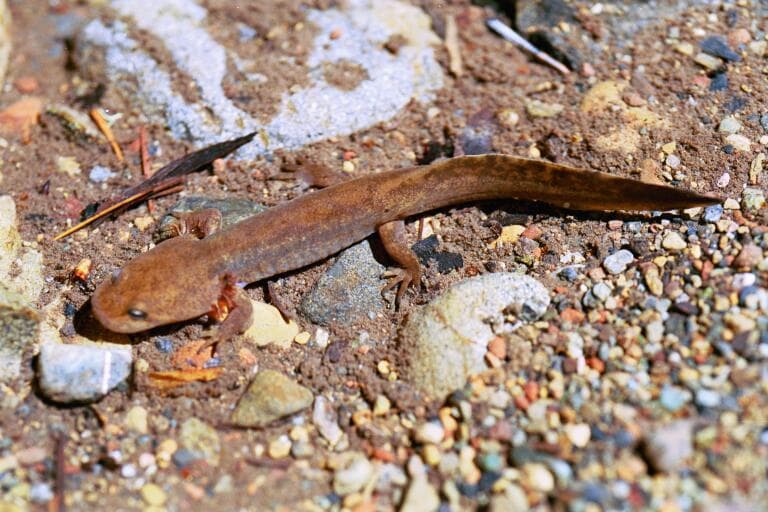
California giant salamander
The California giant salamander is a large amphibian endemic to Northern California, spending its adult terrestrial life near freshwater sources. Distinctive features include a marbled pattern, a broad head, and the ability to vocalize. This species is an important indicator of stream health.
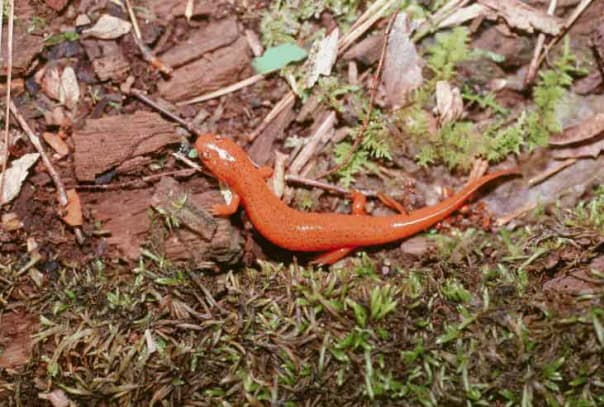
Eastern mud salamander
The Eastern mud salamander (Pseudotriton montanus montanus) is a species of salamander found in the eastern United States, inhabiting muddy wetland and riparian environments. It is characterized by its bright red to reddish-brown coloration, stocky body, and distinct black spots, which can vary in number and visibility with age and location. This species is known for its elusive nature and a unique proteinaceous skin toxin.
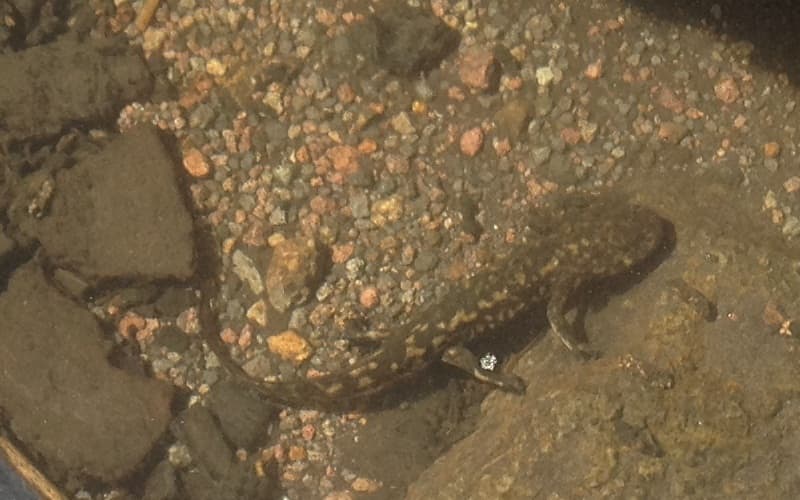
Ambystoma leorae
The Leora's stream salamander (Ambystoma leorae) is a critically endangered mole salamander endemic to a very small region within Mexico's Iztaccihuatl-Popocatepetl National Park. Its survival is threatened by its specific water quality requirements and human activities such as water extraction, cattle grazing, and direct consumption, leading to a single known population persisting on Mount Tlaloc.