
Hydromantes platycephalus
Least Concern·Oviparous (believed)
The Mount Lyell salamander (Hydromantes platycephalus) is a species of web-toed salamander endemic to the high-elevation Sierra Nevada mountains of California. It is distinctive for its flattened head, a trait reflected in its scientific name, and its ability to launch its tongue a remarkable distance to capture prey. This elusive species inhabits rocky crevices and talus slopes, often near moisture sources.
Key Facts
- ›Found exclusively in the Sierra Nevada mountains of California.
- ›Possesses a notably flattened head, reflected in its scientific name 'platycephalus'.
- ›Adults reach an average length of approximately 120 MM (4.7 inches).
- ›Primarily inhabits high-elevation rocky microhabitats like fissures, talus, and caves.
- ›Feeds on small invertebrates using a rapid, projectile tongue.
- ›Considered a species of Least Concern by the IUCN due to its remote habitat.
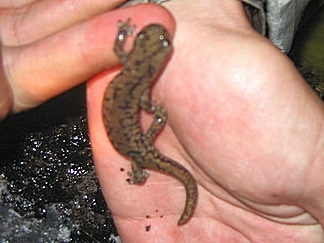
Mount Lyell Salamander, the Owens Valley Web-Toed Salamander
Rock Fissures, Talus, Caves, Crevices, Under Rocks, Rocky Areas With Minimal Topsoil, Riparian Corridors
California, United States
- Flat, Slender Body
- Deep Brown-Black Coloration With Dorsal Grey-Green Mottling
- Mottling Can Be Gold-Green In Juveniles
- Noticeably Flattened Head
- Webbed Toes
- Short Legs
- Stubby Tail
- Adult Length Approximately 120 Mm
- Typically 12-13 Costal Grooves
Centipedes, Spiders, Termites, Beetles, Adult Flies, Larval Flies
- Largely Nocturnal
- Most Active On the Surface During Or After Rainfall
- Seeks Deep Rock Fissures and Moist Crevices During Winter and Dry Periods
- Uses Webbed Toes and Tail For Locomotion On Steep Terrain
- Possesses A Ballistic Tongue For Capturing Prey
- When Threatened, Raises Head and Tail, Leaning Body Downwards
- May Coil When Picked Up To Roll Away If Dropped
Climate Change, Chytrid Fungus
About Hydromantes platycephalus
Mount Lyell Salamander (Hydromantes platycephalus)
The Mount Lyell salamander, scientifically known as Hydromantes platycephalus, is a unique species of salamander found exclusively within the high-elevation regions of the Sierra Nevada mountains in California, USA. Its common name and scientific epithet, 'platycephalus,' both allude to its most striking physical feature: a distinctly flattened head.
Description and Habitat
This species typically exhibits a slender body with a deep brown-black coloration, often adorned with dorsal grey-green mottling that can vary in pattern and intensity, sometimes matching the local granite. Adults grow to approximately 120 millimeters (4.7 inches) in length. The Mount Lyell salamander is a master of its challenging environment, preferring microhabitats such as rock fissures, talus slopes, caves, and crevices at altitudes ranging from 1,220 to 3,670 meters (4,000 to 12,040 feet) above sea level. Its habitat requirements are linked to moisture, often found near sources like melting snow or springs, especially at lower elevations where it may be more closely associated with riparian zones.
Behavior and Diet
Largely nocturnal, the Mount Lyell salamander is most active on the surface during or following rainfall. It conserves energy by retreating to deep, moist crevices during dry periods and winter. Its locomotion is aided by webbed toes providing grip and a stubby tail used as a brace on steep inclines. For feeding, it employs an extraordinary ballistic tongue, capable of extending up to 80% of its body length in a fraction of a second to capture small invertebrates like centipedes, spiders, and flies. This feeding mechanism is notably adapted to function efficiently even at the low temperatures of its high-altitude dwelling.
Reproduction and Conservation
While reproductive habits are not extensively documented, it is believed that females deposit 6 to 14 eggs in deep rock crevices during the fall, guarding them until hatching in the spring or early summer. The species is currently classified as Least Concern by the IUCN, primarily due to its remote habitat and presence within protected areas like Yosemite National Park. However, potential threats from climate change, which could alter snowpack and hydrology, and the unconfirmed risk of chytrid fungus, are areas of ongoing consideration for its long-term survival.
Source: Wikipedia ↗
Frequently Asked Questions
What is the scientific name for the Mount Lyell salamander?
The scientific name for the Mount Lyell salamander is Hydromantes platycephalus. This name is derived from Greek, with 'platycephalus' meaning 'flat head', referencing a key physical characteristic of the species.
Where is the Mount Lyell salamander found?
The Mount Lyell salamander is endemic to the Sierra Nevada mountains in California, United States. Its range spans from Alpine County to Tulare County, typically at high elevations between 1,200 and 3,600 meters.
What are the distinctive physical features of the Mount Lyell salamander?
This salamander is characterized by a flat, slender body with a deep brown-black coloration and grey-green mottling, which can vary in intensity and pattern among individuals and populations. Its head is noticeably flattened, and its toes are webbed, with short legs and a stubby tail.
What does the Mount Lyell salamander eat?
The diet of the Mount Lyell salamander consists primarily of small invertebrates. Common prey items include centipedes, spiders, termites, beetles, and both adult and larval flies, which it captures using a specialized ballistic tongue.
What is the conservation status of the Mount Lyell salamander?
The Mount Lyell salamander is currently listed as a species of Least Concern by the IUCN. This status is attributed to its remote, high-elevation habitat, which offers protection from development, and the presence of significant populations within protected areas like Yosemite National Park.
How does the Mount Lyell salamander move and hunt?
The salamander uses its webbed toes for grip on rocky terrain and its tail as a brace when ascending inclines. For feeding, it employs a remarkable ballistic tongue that can extend up to 80% of its body length in less than 20 milliseconds, a mechanism that remains effective even at low temperatures.
Related Salamander and Newt species

Ambrosi's cave salamander
Ambrosi's cave salamander, also known as the Spezia cave salamander, is a species of salamander endemic to a small region of northwestern Italy. It inhabits temperate forests, rocky areas, caves, and subterranean environments, distinguishing itself with a variable coloration ranging from brown to black, often with marbling or mottling. This species is critically endangered due to habitat loss and its very restricted range.
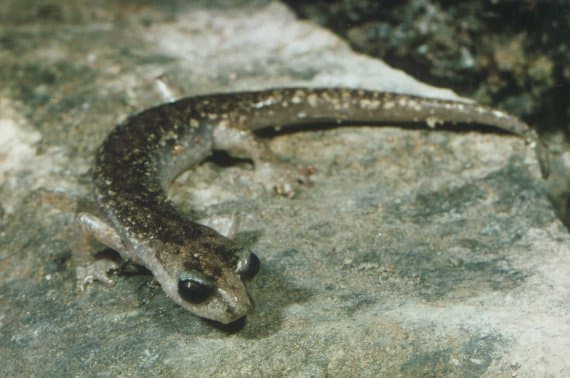
Brown cave salamander
The brown cave salamander, also known as Gene's cave salamander or the Sardinian salamander, is a species found exclusively on the island of Sardinia, Italy. This plethodontid salamander inhabits temperate forests, rocky regions, and subterranean environments, including caves.

Cow Knob salamander
The Cow Knob salamander, also known as the white-spotted salamander, is a species of salamander found in high mountain forests along the Virginia and West Virginia border. It is recognized by its dark coloration with white or cream spots on its sides and legs, and it is distinguished from similar species by its slender build and protuberant eyes. This species is considered near threatened due to habitat loss and climate change.