
Hydromantes samweli
Hydromantes samweli·Plethodontidae
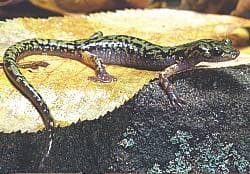
The Samwel Shasta salamander (Hydromantes samweli) is a species of salamander found exclusively in Shasta County, California. It is genetically distinct from the Shasta salamander, though physically indistinguishable, and is named after Samwel Cave, its type locality.
Key Facts
- ›Endemic to Shasta County, California.
- ›Genetically distinct from the Shasta salamander (H. shastae).
- ›Physically indistinguishable from the Shasta salamander.
- ›Named after Samwel Cave, its type locality.
- ›Distribution possibly fragmented by Shasta Lake and Shasta Dam.
- ›Currently does not warrant Endangered Species Act protections.

Samwel Shasta Salamander
Cave
United States
- Physically Indistinguishable From the Shasta Salamander.
Habitat Fragmentation, Habitat Flooding
About Hydromantes samweli
The Samwel Shasta Salamander
The Samwel Shasta salamander, scientifically known as Hydromantes samweli, is a species of salamander endemic to Shasta County in California. It belongs to the family Plethodontidae, which are characterized by the absence of lungs.
Taxonomy and Discovery
Historically, populations of Hydromantes samweli were considered part of the Shasta salamander species (H. shastae). However, a significant phylogenetic study conducted in 2018 established it as a genetically distinct species. Despite this genetic separation, it remains physically indistinguishable from the Shasta salamander. The species is named after Samwel Cave, its type locality, which itself derives from the Wintu name 'Sa-Wal,' meaning 'grizzly bear.'
Distribution and Habitat
The natural range of the Samwel Shasta salamander is confined to a relatively small area in Shasta County, primarily around the north-central and northwest sides of Shasta Lake. Its distribution may extend up to 20 kilometers further to the west. Its primary habitat is associated with caves.
Threats and Conservation
The species' habitat has likely been fragmented by the construction of Shasta Lake and the Shasta Dam. Further proposals to increase the lake's water levels pose a significant threat, as this could lead to the flooding of more of its limited habitat. Despite these concerns, in 2021, the U.S. Fish and Wildlife Service concluded that Hydromantes samweli did not meet the criteria for protection under the Endangered Species Act.
Source: Wikipedia ↗
Frequently Asked Questions
What is the Samwel Shasta salamander?
The Samwel Shasta salamander is a species of salamander belonging to the family Plethodontidae. It is found only in Shasta County, California.
How is the Samwel Shasta salamander different from the Shasta salamander?
While physically indistinguishable from the Shasta salamander (H. shastae), a 2018 phylogenetic study revealed that Hydromantes samweli is a genetically distinct species.
Where is the Samwel Shasta salamander found?
This species is endemic to Shasta County in California, with its distribution concentrated around the north-central and northwest sides of Shasta Lake. It may also extend up to 20 km further west.
What are the threats to the Samwel Shasta salamander?
The creation of Shasta Lake and the construction of Shasta Dam likely fragmented its habitat. Proposals to further raise the lake's water levels could flood more of its habitat, posing a significant threat.
Is the Samwel Shasta salamander endangered?
In 2021, the U.S. Fish and Wildlife Service determined that the species did not warrant protection under the Endangered Species Act, indicating it is not currently considered endangered.
Related Salamander and Newt species

Andrias davidianus
The Chinese giant salamander (Andrias davidianus) is one of the largest salamanders and amphibians globally, endemic to the Yangtze river basin in China. It is a fully aquatic species known for its large size, dark, wrinkly skin, and distinctive vocalizations that resemble a human infant's cry, earning it the nickname "infant fish." Critically endangered in the wild, its populations have drastically declined due to habitat loss, pollution, and overcollection for food and traditional medicine.
Aneides aeneus
The green salamander (Aneides aeneus) is a small, flat, lungless salamander found in moist, shaded rock crevices in the eastern United States. Its most distinctive feature is its green, lichen-like markings against a darker body, making it unique among North American salamanders. This species is highly specialized in its habitat and exhibits unusual territorial aggression.

Blacksburg salamander
The Blacksburg salamander (Plethodon jacksoni) is a species of woodland salamander found in the Appalachian Mountains of southwestern Virginia and potentially neighboring North Carolina. It is characterized by its slender build, dark bluish-gray background coloration, and distinctive white blotches on its sides and limbs. This species was initially considered a variant of Wehrle's salamander but has since been recognized as a distinct species based on genetic evidence.