
Akhayat sinkhole
The Akhayat sinkhole, also known as Aşağı Dünya Obruğu, is a significant geological formation located in Mersin Province, Turkey. It is notable for its substantial dimensions and the presence of ancient man-made features, suggesting a historical connection to human activity and potentially a cultic site.
Key Facts
- ›Dimensions are approximately 100 X 150 meters.
- ›Maximum depth is around 70 meters relative to the surrounding terrain.
- ›Features an ancient, partially demolished rock-carved ladder on the northwest side.
- ›Contains several man-made caves carved into its walls.
- ›An ancient settlement, possibly a cult center, with rock tombs and altars, is located nearby.
- ›Relatively less known compared to other sinkholes in Mersin Province.

Aşağı Dünya Obruğu
Ancient Rock-Carved Ladder, Man-Made Caves, Proximity To Ancient Settlement
About Akhayat sinkhole
The Akhayat sinkhole, also known by its Turkish name Aşağı Dünya Obruğu, is a notable geological feature situated in the Silifke district of Mersin Province, Turkey. This impressive sinkhole is located in a rural area north of the town of Atayurt and is approximately 19 kilometers from the district center of Silifke.
Geography and Dimensions
The sinkhole presents significant dimensions, measuring about 100 by 150 meters. Its maximum depth, relative to the surrounding terrain, is approximately 70 meters. Access to the site involves traveling from Mersin via the D.400 state highway for about 75 kilometers, then heading north on a connecting road for 10 kilometers, followed by a 700-meter path.
Historical and Geological Significance
Akhayat sinkhole is distinguished by several man-made elements within its structure. A rock-carved ancient ladder, though partially demolished and now considered dangerous for descent, is present on the northwest side. The walls of the sinkhole also contain several man-made caves. Furthermore, traces of an ancient settlement, believed to have been a cult center, are found about 400 meters to the west of the sinkhole, complete with rock tombs and altars to the south. It is theorized that the sinkhole and this ancient settlement were connected.
Tourism Potential
While other sinkholes in Mersin Province, such as the Cennet and Cehennem system and Kanlıdivane, are more widely known, Akhayat remains relatively less explored by tourists. Despite its current lack of developed tourist infrastructure, the site is accessible for visitation. Local authorities have expressed intentions to develop Akhayat sinkhole into a tourist attraction in the future.
Source: Wikipedia ↗
Frequently Asked Questions
Where is the Akhayat sinkhole located?
The Akhayat sinkhole is situated in the Silifke district of Mersin Province, Turkey, to the north of Atayurt town. It is approximately 19 kilometers from Silifke town.
What are the dimensions of the Akhayat sinkhole?
The sinkhole measures approximately 100 by 150 meters. Its maximum depth relative to the surrounding landscape is about 70 meters.
Are there any historical features at the Akhayat sinkhole?
Yes, there is an ancient rock-carved ladder on the northwest side, though it is partially demolished and dangerous to use. Additionally, several man-made caves are carved into the sinkhole's walls, and traces of an ancient settlement, potentially a cult center with rock tombs and altars, exist nearby.
Is the Akhayat sinkhole a popular tourist destination?
Currently, Akhayat sinkhole is relatively less known and does not have developed tourist activities, unlike other sinkholes in Mersin Province. However, plans are in place to open the site for tourism.
How can one access the Akhayat sinkhole?
Access involves traveling about 75 kilometers on the D.400 highway from Mersin, then taking a road north for 10 kilometers, followed by a 700-meter path. The ancient ladder, while a feature, is considered dangerous for descent.
Related Sinkholes
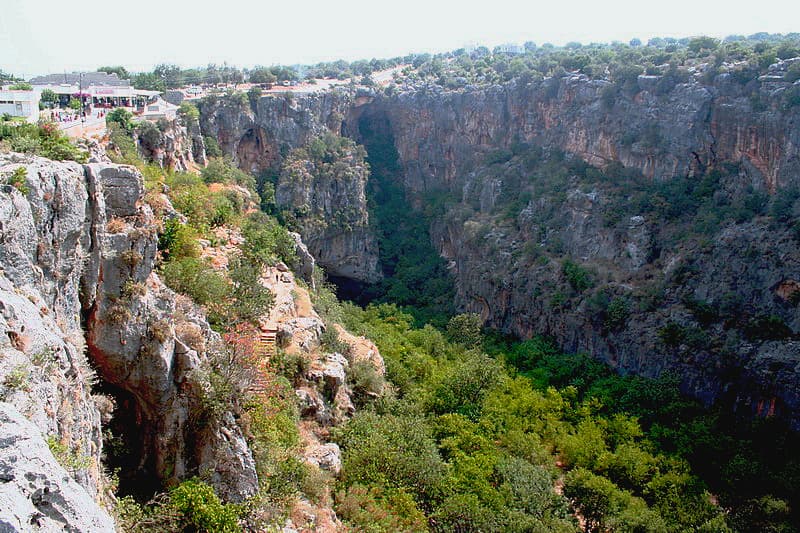
Cennet and Cehennem
Cennet and Cehennem are two large, adjacent sinkholes located in the Taurus Mountains of Mersin Province, Turkey. Cennet, or 'Heaven,' features a large opening and a staircase leading to ruins of a 5th-century monastery, while Cehennem, or 'Hell,' is a deeper, narrower sinkhole with no access to its bottom. They are significant geological formations and tourist attractions, with mythological associations to the Greek god Zeus.
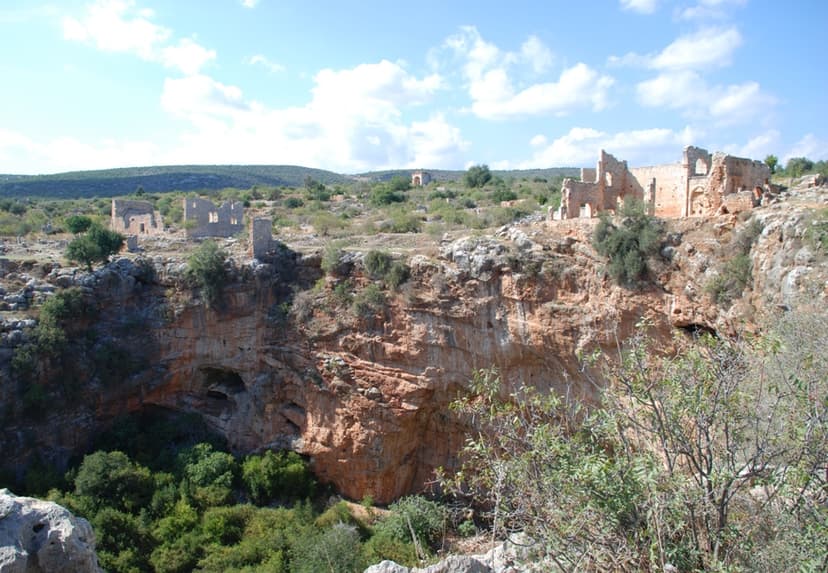
Kanlıdivane
Kanlıdivane is an ancient city site in Mersin Province, Turkey, built around a large sinkhole. Historically known as Canytelis, the site features ruins from various periods, including the Olba Kingdom, Roman, and Byzantine eras, and is notable for its dramatic geological formation and its use as a concert venue.

Kızören Sinkhole
The Kızören Sinkhole, also known as Kızören Obruğu or Lake Kızören, is a significant karst formation in central Turkey containing a lake. It is notable for its considerable dimensions and its role as the sole source of fresh water for the local community, a fact underscored by the installation of a pump by the State Water Institute. The sinkhole is also a historical site, with evidence of human activity dating back to the Seljuk Empire and the presence of the Obruk Han, a caravanserai that served the Silk Road.