
Kanlıdivane
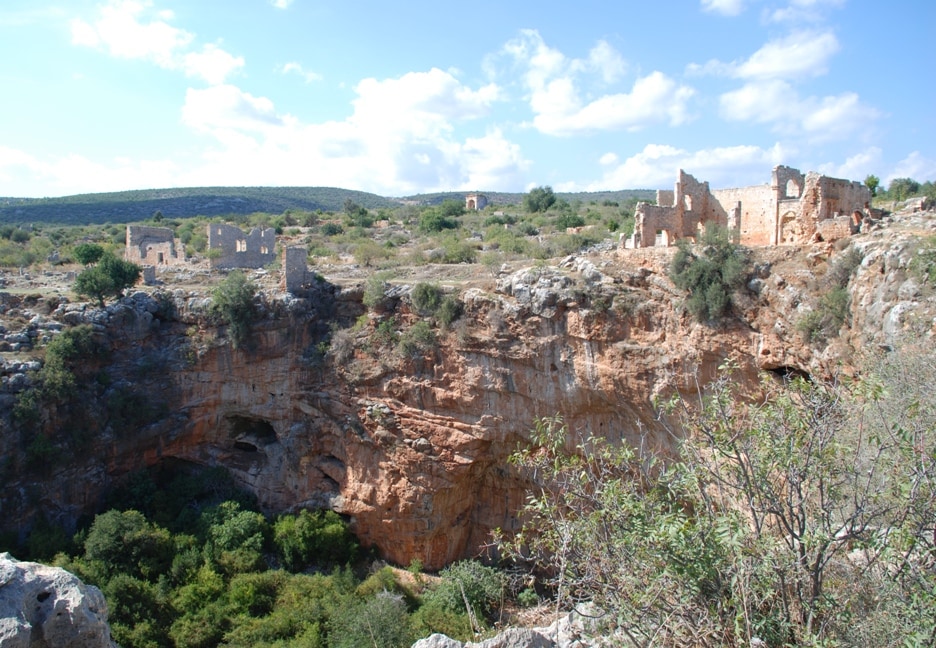
Kanlıdivane is an ancient city site in Mersin Province, Turkey, built around a large sinkhole. Historically known as Canytelis, the site features ruins from various periods, including the Olba Kingdom, Roman, and Byzantine eras, and is notable for its dramatic geological formation and its use as a concert venue.
Key Facts
- ›The sinkhole has a longer dimension of 130 meters and a depth of approximately 70 meters.
- ›The ancient city was known as Canytelis and later Neapolis during the Byzantine era.
- ›Ruins include a mausoleum built by Queen Aba and inscriptions dedicated to Zeus.
- ›The modern Turkish name, Kanlıdivane, translates to 'bloody crazy' and may refer to the soil color or historical executions.
- ›The site is used for outdoor concerts during the Mersin International Music Festival.
Canytelis, Neapolis
Ancient City Ruins, Mausoleum of Queen Aba, Inscriptions Dedicated To Zeus, Basilicas, Cisterns, Rock-Cut Graves, Concert Venue
About Kanlıdivane
Kanlıdivane, historically known as Canytelis and later as Neapolis, is an ancient city situated in Mersin Province, Turkey. The settlement is notably built around a large and dramatic sinkhole. Archaeological surveys and excavations have revealed extensive ruins that speak to its long and varied history.
Geography and Geology
The sinkhole at Kanlıdivane is a prominent geological feature, measuring approximately 130 meters in its longest dimension and reaching a depth of about 70 meters. The site is located in the rural area of the Erdemli district, at an altitude of roughly 230 meters above sea level. Its proximity to the coastal town of Kumkuyu and the Çanakçı rock tombs places it within a region rich in historical and natural landmarks.
Historical Context
Kanlıdivane boasts a history stretching back to antiquity. It was once a part of the Olba Kingdom, during which Queen Aba commissioned a mausoleum for her family, and inscriptions indicate dedications to Zeus. By the 1st century AD, the region came under Roman influence. During the Byzantine era, Emperor Theodosius II re-established the city as a Christian religious center, renaming it Neapolis. The surrounding area contains remnants of basilicas, cisterns, and rock-cut graves, illustrating its development through different civilizations.
The modern Turkish name, Kanlıdivane, translates to 'bloody crazy'. This name is thought to derive from the distinctive red color of the surrounding soil or, alternatively, from a grim legend suggesting that criminals were executed by being thrown into the sinkhole during Roman times.
Cultural Significance
Today, Kanlıdivane serves not only as an archaeological site but also as a unique venue for cultural events. Annually, the Mersin International Music Festival features outdoor concerts held within the sinkhole, with performers and audiences positioned on opposite sides, creating a memorable experience against the backdrop of ancient history and natural wonder.
Source: Wikipedia ↗
Frequently Asked Questions
What is Kanlıdivane?
Kanlıdivane is an ancient city site located in Mersin Province, Turkey, built around a significant sinkhole. It was historically known as Canytelis and served as an important center through various ancient periods.
Where is Kanlıdivane located?
Kanlıdivane is situated in the rural area of the Erdemli district, Mersin Province, Turkey. It is approximately 18 km from Erdemli and 55 km from Mersin, at an altitude of about 230 meters.
What are the dimensions of the Kanlıdivane sinkhole?
The sinkhole at Kanlıdivane is quite wide, with its longer dimension measuring 130 meters. Its depth is estimated to be around 70 meters.
What is the historical significance of Kanlıdivane?
Kanlıdivane was part of the ancient Olba Kingdom and later became a Christian religious center renamed Neapolis by Byzantine Emperor Theodosius II. Ruins of basilicas, cisterns, and rock-cut graves are present around the sinkhole.
Why is it called Kanlıdivane?
The Turkish name Kanlıdivane means 'bloody crazy' and might refer to the red color of the surrounding soil. Another theory suggests it relates to a legend about criminals being executed by being thrown into the sinkhole during Roman times.
Is Kanlıdivane a tourist attraction?
Yes, Kanlıdivane is a significant historical site with archaeological ruins. It is also known for hosting outdoor concerts during the Mersin International Music Festival, making it a venue for cultural events.
Related Sinkholes
Cennet and Cehennem
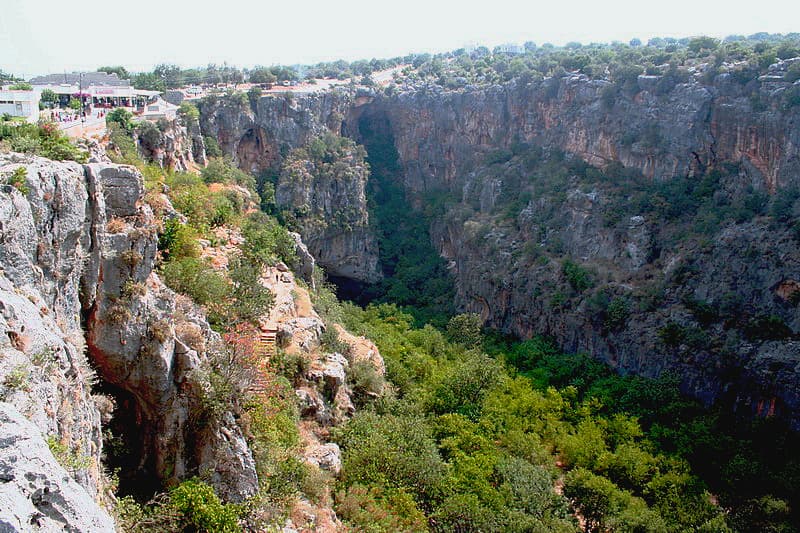
Cennet and Cehennem are two large, adjacent sinkholes located in the Taurus Mountains of Mersin Province, Turkey. Cennet, or 'Heaven,' features a large opening and a staircase leading to ruins of a 5th-century monastery, while Cehennem, or 'Hell,' is a deeper, narrower sinkhole with no access to its bottom. They are significant geological formations and tourist attractions, with mythological associations to the Greek god Zeus.

Akhayat sinkhole
The Akhayat sinkhole, also known as Aşağı Dünya Obruğu, is a significant geological formation located in Mersin Province, Turkey. It is notable for its substantial dimensions and the presence of ancient man-made features, suggesting a historical connection to human activity and potentially a cultic site.

Kızören Sinkhole
The Kızören Sinkhole, also known as Kızören Obruğu or Lake Kızören, is a significant karst formation in central Turkey containing a lake. It is notable for its considerable dimensions and its role as the sole source of fresh water for the local community, a fact underscored by the installation of a pump by the State Water Institute. The sinkhole is also a historical site, with evidence of human activity dating back to the Seljuk Empire and the presence of the Obruk Han, a caravanserai that served the Silk Road.