
Cennet and Cehennem
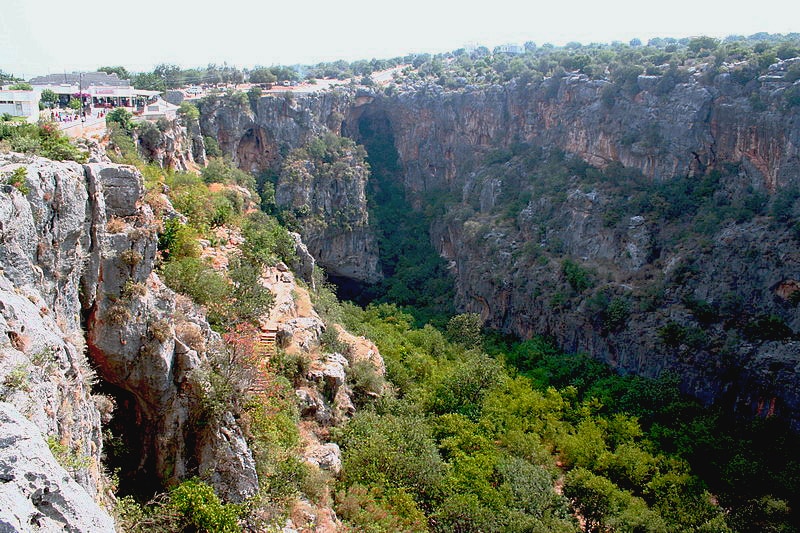
Cennet and Cehennem are two large, adjacent sinkholes located in the Taurus Mountains of Mersin Province, Turkey. Cennet, or 'Heaven,' features a large opening and a staircase leading to ruins of a 5th-century monastery, while Cehennem, or 'Hell,' is a deeper, narrower sinkhole with no access to its bottom. They are significant geological formations and tourist attractions, with mythological associations to the Greek god Zeus.
Key Facts
- ›Cennet and Cehennem are located in Mersin Province, Turkey.
- ›Cennet has an opening of 250 X 110 M² and an average depth of 70 meters.
- ›Cehennem has a depth of 128 meters with a smaller opening of 70 X 50 M².
- ›Cennet contains the ruins of a 5th-century monastery dedicated to the Virgin Mary.
- ›An underground stream flows from the monastery in Cennet to the Gulf of Narlıkuyu.
- ›Mythologically, Zeus is said to have imprisoned the monster Typhon in Cehennem.
Heaven (Cennet), Hell (Cehennem)
Ruins of A 5th-Century Monastery In Cennet, Underground Stream In Cennet, Mythological Association With Typhon and Zeus
Freshwater
About Cennet and Cehennem
Cennet and Cehennem, translating to 'Heaven' and 'Hell' respectively in Turkish, are two magnificent and imposing sinkholes situated side-by-side in the Taurus Mountains of Mersin Province, Turkey. These natural formations are notable geological features and significant tourist attractions within the region.
Cennet (Heaven)
The sinkhole known as Cennet is characterized by a large opening, measuring approximately 250 by 110 meters, with an average depth of 70 meters. Access to its bottom is facilitated by a primitive staircase of 300 steps, and more recently, an elevator has been installed. Towards the southern part of Cennet's floor lies a smaller cave, deeper still and requiring an additional 150 steps to reach. Within this cave, visitors can find the remnants of a monastery constructed in the 5th century by a figure named Paulus, dedicated to the Virgin Mary. A unique auditory experience within this monastery is the sound of a small underground stream that flows from the monastic ruins all the way to the Gulf of Narlıkuyu.
Cehennem (Hell)
Cehennem presents a more dramatic and inaccessible character. It is a deeper sinkhole, plunging to a depth of 128 meters, but its top opening is considerably smaller than Cennet's, measuring just 70 by 50 meters. The upper edge of Cehennem's opening is concave, which prevents any direct access to its bottom, contributing to its formidable appearance.
Mythology and Accessibility
These sinkholes also hold a place in ancient mythology. It is recounted that Zeus, the king of the gods, temporarily held the monstrous Typhon within Cehennem before ultimately imprisoning him beneath Mount Etna. Both Cennet and Cehennem are accessible via a 2-kilometer all-season road from the main highway (D 400), making them relatively easy to visit for tourists interested in natural wonders and historical sites.
Source: Wikipedia ↗
Frequently Asked Questions
Where are Cennet and Cehennem located?
Cennet and Cehennem are located in the rural area of the Silifke district, which is part of Mersin Province in Turkey. They are situated in the Taurus Mountains and are accessible via a road from the main highway (D 400), close to the coastal town of Narlıkuyu.
What are the dimensions of Cennet sinkhole?
The opening of Cennet sinkhole measures approximately 250 by 110 meters (820 by 360 feet). Its average depth is around 70 meters (230 feet).
What is found at the bottom of Cennet?
At the bottom of Cennet, there is a smaller cave accessible by a staircase. Within this cave are the ruins of a monastery built in the 5th century by Paulus and dedicated to the Virgin Mary. An underground stream also flows from this monastery.
What are the dimensions and depth of Cehennem sinkhole?
Cehennem sinkhole has a depth of 128 meters (420 feet). Its top opening is smaller than Cennet's, measuring 70 by 50 meters (210 by 150 feet).
Is it possible to access the bottom of Cehennem?
Due to the concave nature of its upper edge, there is no access to the bottom of Cehennem sinkhole. This makes it a deeper but less accessible formation compared to Cennet.
What is the mythological significance of Cehennem?
In mythology, Cehennem is known as the place where Zeus temporarily held the monster Typhon. Typhon was later imprisoned by Zeus under Mount Etna.
Are Cennet and Cehennem tourist attractions?
Yes, Cennet and Cehennem are considered among the tourist attractions of Mersin Province. They are accessible by road, and Cennet has a staircase and an elevator for reaching its bottom.
Related Sinkholes
Kanlıdivane
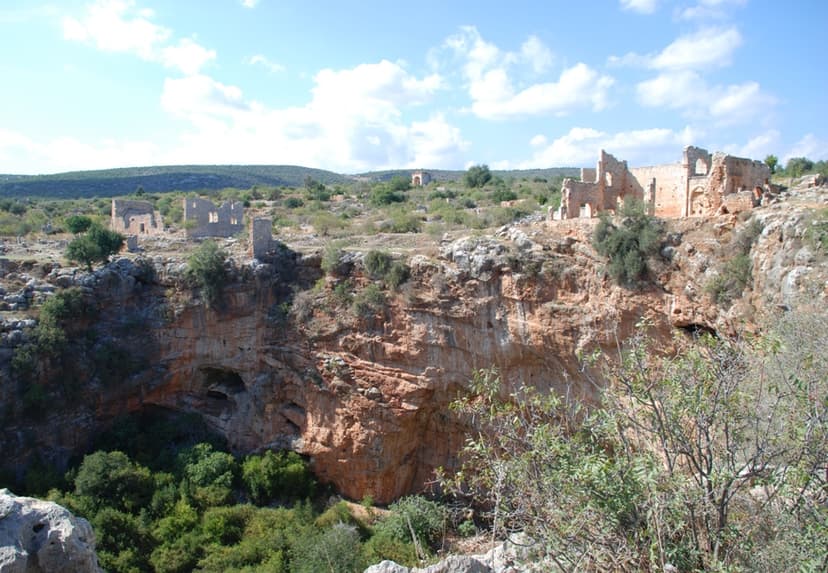
Kanlıdivane is an ancient city site in Mersin Province, Turkey, built around a large sinkhole. Historically known as Canytelis, the site features ruins from various periods, including the Olba Kingdom, Roman, and Byzantine eras, and is notable for its dramatic geological formation and its use as a concert venue.

Akhayat sinkhole
The Akhayat sinkhole, also known as Aşağı Dünya Obruğu, is a significant geological formation located in Mersin Province, Turkey. It is notable for its substantial dimensions and the presence of ancient man-made features, suggesting a historical connection to human activity and potentially a cultic site.

Kızören Sinkhole
The Kızören Sinkhole, also known as Kızören Obruğu or Lake Kızören, is a significant karst formation in central Turkey containing a lake. It is notable for its considerable dimensions and its role as the sole source of fresh water for the local community, a fact underscored by the installation of a pump by the State Water Institute. The sinkhole is also a historical site, with evidence of human activity dating back to the Seljuk Empire and the presence of the Obruk Han, a caravanserai that served the Silk Road.