
Blue Lake
Blue Lake is a significant karst sinkhole located near Imotski, Croatia. It is known for its dramatic seasonal water level fluctuations and its considerable depth, potentially formed by the collapse of a large cave. The lake is a popular site for tourism and outdoor activities.
Key Facts
- ›Located near Imotski in southern Croatia.
- ›Total depth from the upper rim is approximately 220 meters.
- ›Water depth can reach up to 90 meters in spring, overflowing the southern rim in some years.
- ›Maximum dimensions of the lake are around 800 M × 500 M, varying significantly with water levels.
- ›The lake may completely disappear at the end of summer.
- ›A road was built descending to the lake in 1907.

Modro jezero, Plavo jezero
Seasonal Water Level Fluctuations, Deep Sinkhole, Potential Cave Collapse Formation
Freshwater
About Blue Lake
Blue Lake, known in Croatian as Modro jezero or Plavo jezero, is a notable karst sinkhole located in the vicinity of Imotski in southern Croatia. Its geological significance lies in its formation, believed to be the result of the collapse of a vast underground cave. The sinkhole presents a dramatic natural spectacle, particularly due to the extreme seasonal variations in its water level.
Geological Features and Dimensions
The sinkhole itself boasts a considerable total depth from its upper rim, estimated to be around 220 meters. The water depth within the lake varies dramatically throughout the year. In the spring, fueled by melting snow from the surrounding mountains, the water level can rise to approximately 90 meters. Historically, in 1914, the water depth reached 114 meters, causing it to overflow the southern rim. The lake's surface dimensions are also dynamic, with maximums around 800 meters by 500 meters, but these can shrink considerably by the end of summer, at which point the lake may entirely disappear.
Historical Context and Access
Human interaction with Blue Lake dates back to at least 1907, when a road was constructed to facilitate access to the lake. A significant geological event impacting the lake occurred in 1942 when an earthquake triggered a large rockfall, which consequently reduced the lake's overall depth. Despite these changes, Blue Lake remains a popular destination for visitors, attracting hikers and sight-seers who come to witness its unique hydrological cycle and dramatic landscape.
Source: Wikipedia ↗
Frequently Asked Questions
Where is Blue Lake located?
Blue Lake is situated near the town of Imotski in southern Croatia. It is a karst lake found within a deep sinkhole.
How deep is Blue Lake?
The total depth from the upper rim of the sinkhole is around 220 meters. The actual water depth varies, reaching up to 90 meters in the spring and potentially overflowing the rim.
Does Blue Lake always have water?
No, Blue Lake's water level fluctuates significantly with the seasons. At the end of summer, the lake may completely disappear, only to refill with melting snow from surrounding mountains in the spring.
What are the dimensions of Blue Lake?
The maximum dimensions of the lake are approximately 800 meters by 500 meters. These dimensions change considerably due to the large variations in water level throughout the year.
What caused the changes in Blue Lake's depth?
While the sinkhole itself is likely formed by the collapse of an enormous cave, an earthquake in 1942 caused a large rockfall that reduced the lake's depth.
Is Blue Lake a tourist attraction?
Yes, Blue Lake is a popular destination for hiking and sight-seeing. A road was constructed in 1907 to provide access to the lake.
Related Sinkholes

Red Lake
Red Lake (Crveno jezero) is a significant karst sinkhole in Croatia, renowned for its immense depth and the lake it contains. Its reddish cliffs, colored by iron oxides, give it its name and contribute to its striking appearance. It is recognized as the third largest sinkhole globally and the deepest known collapse doline holding a lake, making it a site of considerable geological interest.

Kızören Sinkhole
The Kızören Sinkhole, also known as Kızören Obruğu or Lake Kızören, is a significant karst formation in central Turkey containing a lake. It is notable for its considerable dimensions and its role as the sole source of fresh water for the local community, a fact underscored by the installation of a pump by the State Water Institute. The sinkhole is also a historical site, with evidence of human activity dating back to the Seljuk Empire and the presence of the Obruk Han, a caravanserai that served the Silk Road.
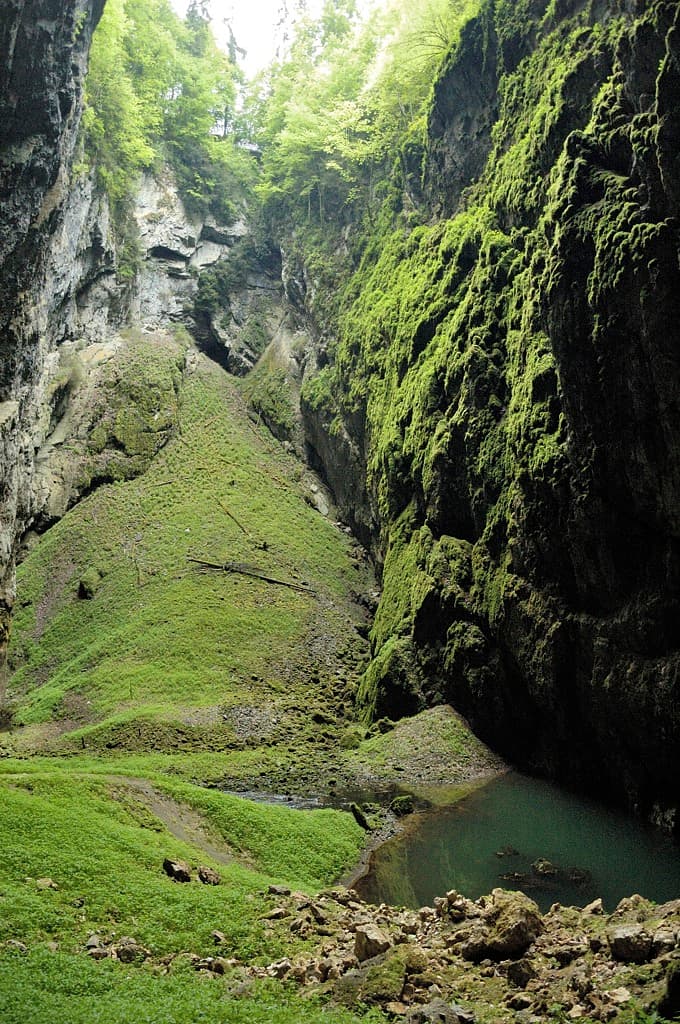
Macocha Gorge
The Macocha Abyss, also known as Macocha Gorge, is a significant sinkhole located within the Moravian Karst cave system in the Czech Republic. It holds the distinction of being the deepest "light hole" type sinkhole in Central Europe, making it a notable geological feature and a popular destination for tourists, cavers, and divers.