
Macocha Gorge
The Macocha Abyss, also known as Macocha Gorge, is a significant sinkhole located within the Moravian Karst cave system in the Czech Republic. It holds the distinction of being the deepest "light hole" type sinkhole in Central Europe, making it a notable geological feature and a popular destination for tourists, cavers, and divers.
Key Facts
- ›It is the deepest light hole type sinkhole in Central Europe.
- ›The sinkhole is 174 meters (571 ft) long and 76 meters (249 ft) wide.
- ›Its depth to the surface of Dolní Lake is 138.5 meters (454 ft).
- ›The total explored depth, including underground spaces below Dolní Lake, reaches 187.5 meters (615 ft).
- ›Macocha Abyss is part of the Punkva Caves system.
- ›The name is derived from the Czech word 'macecha' meaning 'stepmother'.
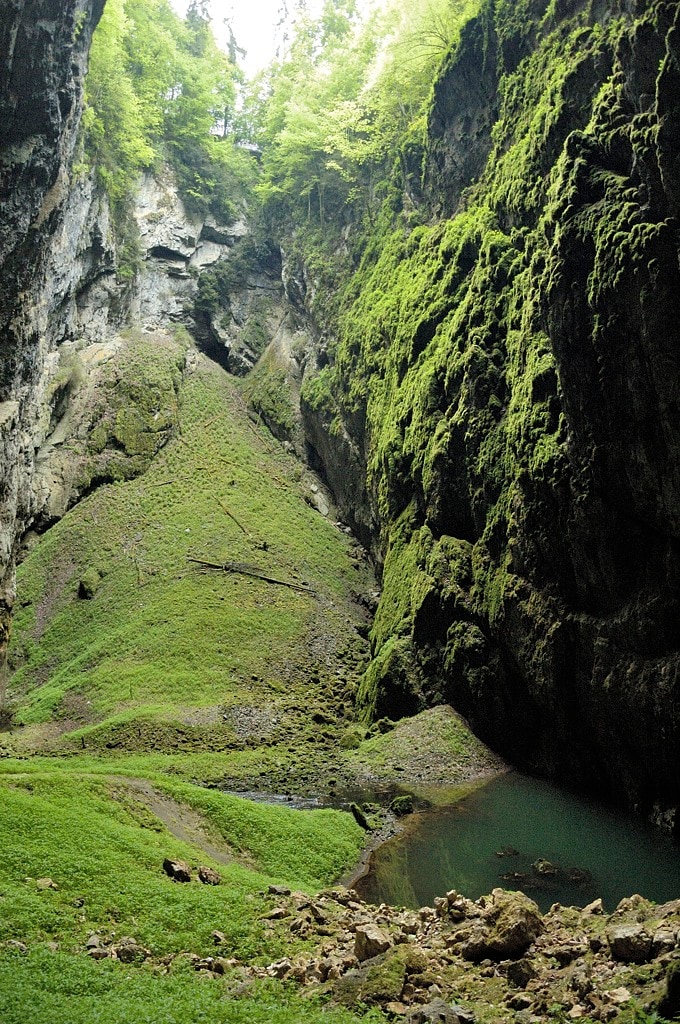
Macocha Abyss
- Deepest 'Light Hole' Type Sinkhole In Central Europe
- Part of the Moravian Karst Cave System
- Punkva River Flows Through It
Freshwater
About Macocha Gorge
The Macocha Gorge, also referred to as the Macocha Abyss, is a prominent sinkhole situated within the Moravian Karst cave system in the Czech Republic. This geological marvel is recognized as the deepest 'light hole' type sinkhole in Central Europe, measuring 174 meters (571 ft) in length and 76 meters (249 ft) in width. Its impressive depth reaches 138.5 meters (454 ft) to the surface of the Dolní Lake, with further underground exploration revealing a total explored depth of 187.5 meters (615 ft).
Location and Geology
The Macocha Abyss is located in the Vilémovice municipality in the South Moravian Region, north of the city of Brno. It forms an integral part of the extensive Punkva Caves system, and the subterranean Punkva River flows through it. The sinkhole's classification as a 'light hole' signifies that its considerable dimensions allow natural daylight to penetrate to its depths.
Etymology and Folklore
The name 'Macocha' is derived from the Czech word 'macecha,' which translates to 'stepmother.' This name is linked to a well-known folk legend. According to this story, an evil stepmother, fearing her own child would not inherit from her farmer husband, lured her stepson to the abyss and pushed him in. The tale has variations, with some versions stating she then jumped in herself, while others suggest she was thrown in by villagers after her deed was discovered. Despite the tragic folklore, the stepson reportedly survived and was rescued.
Tourism and Exploration
Due to its unique geological features and the surrounding cave system, the Macocha Abyss is a significant tourist attraction. It draws a variety of visitors, including casual tourists, experienced cavers, and advanced technical divers. Its accessibility is managed as part of the broader Punkva Caves experience, which includes the longest public underground trail in the Czech Republic.
Source: Wikipedia ↗
Frequently Asked Questions
What is the Macocha Abyss?
The Macocha Abyss, also known as Macocha Gorge, is a large sinkhole located in the Moravian Karst cave system in the Czech Republic. It is geologically classified as a 'light hole' due to its size which allows daylight to penetrate.
How deep is the Macocha Abyss?
The sinkhole has a depth of 138.5 meters (454 ft) to the surface of Dolní Lake. Further exploration has revealed underground spaces below the lake, with a total explored depth of 187.5 meters (615 ft).
Where is the Macocha Abyss located?
It is situated in the Vilémovice municipality in the South Moravian Region of the Czech Republic, approximately 20 kilometers (12 mi) north of the city of Brno. It is part of the Punkva Caves.
Why is it called Macocha?
The name Macocha is derived from the Czech word 'macecha,' meaning 'stepmother.' This name originates from a folk story about an evil stepmother who allegedly pushed her stepson into the abyss.
Is Macocha Abyss a tourist attraction?
Yes, it is a popular tourist attraction, drawing casual visitors, cavers, and technical divers to the region. It is accessible as part of the Punkva Caves system.
What is the significance of the 'light hole' classification?
The classification as a 'light hole' means that the dimensions of the abyss are large enough to allow daylight to reach its bottom. This distinguishes it from darker, more enclosed sinkhole types.
Related Sinkholes

Hranice Abyss
The Hranice Abyss, also known as Hranická propast, is a karst sinkhole in the Czech Republic recognized as the deepest flooded pit cave globally. Its geological significance lies in its formation by upwelling hot acidic water, a process revealed by recent expeditions. The abyss is a complex karst system, featuring both dry caves and extensive submerged passages, making it a subject of scientific interest and exploration.
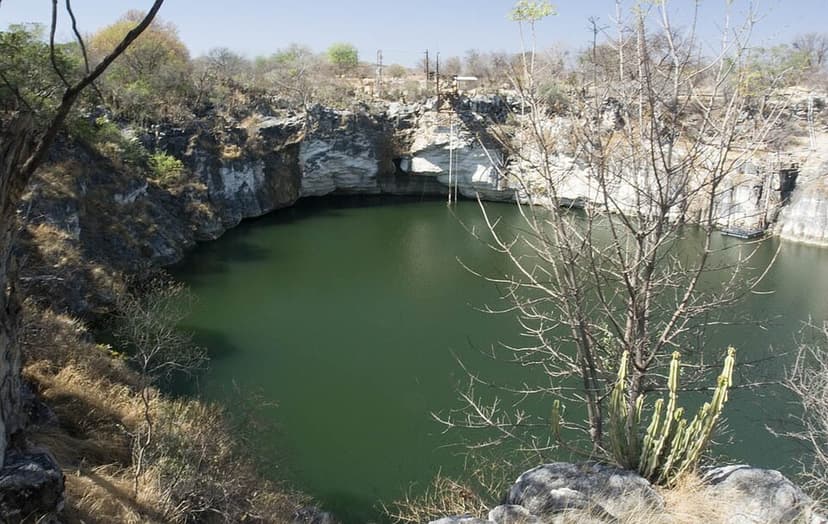
Otjikoto Lake
Otjikoto Lake is one of only two permanent natural lakes in Namibia, formed by a collapsing karst cave. It is notable for its significant depth, historical use as a dumping ground for German troops during World War I, and its unique ecosystem. The lake's name has evolved from the San's "Gaisis" to the Herero's "Otjikoto" (deep hole), which also lent its name to the surrounding region.

Red Lake
Red Lake (Crveno jezero) is a significant karst sinkhole in Croatia, renowned for its immense depth and the lake it contains. Its reddish cliffs, colored by iron oxides, give it its name and contribute to its striking appearance. It is recognized as the third largest sinkhole globally and the deepest known collapse doline holding a lake, making it a site of considerable geological interest.