
Hranice Abyss
The Hranice Abyss, also known as Hranická propast, is a karst sinkhole in the Czech Republic recognized as the deepest flooded pit cave globally. Its geological significance lies in its formation by upwelling hot acidic water, a process revealed by recent expeditions. The abyss is a complex karst system, featuring both dry caves and extensive submerged passages, making it a subject of scientific interest and exploration.
Key Facts
- ›The greatest confirmed depth of the Hranice Abyss is 519.5 meters (1,704 ft).
- ›Of its total depth, 450 meters (1,476 ft) is underwater.
- ›The sinkhole has an elliptical shape, approximately 110 meters (360 ft) long and 50 meters (160 ft) wide.
- ›It is located near the Zbrašov Aragonite Caves.
- ›Dry caves, including the Rotunda Dry, are accessible at a depth of 48 meters (157 ft) below the lake's surface.
- ›The abyss is believed to have been formed by upwelling hot acidic water.

Hranická propast
Deepest Flooded Pit Cave In the World, Dry Caves, Submerged Passages, Bat Roosting Site
Freshwater, Acidic
Bats
About Hranice Abyss
The Hranice Abyss, known in Czech as Hranická propast, is a remarkable natural formation recognized as the deepest flooded pit cave on Earth. Situated near the town of Hranice in the Czech Republic, this karst sinkhole presents a complex and awe-inspiring geological environment.
Geological Significance and Formation
Scientific expeditions have revealed that the deepest reaches of the Hranice Abyss are filled with sediment. The current scientific consensus speculates that the sinkhole was formed by the upwelling of hot, acidic water. This hypogenic origin is a key aspect of its geological importance, differentiating it from sinkholes formed by other processes.
Description and Exploration
The Hranice Abyss boasts a confirmed depth of 519.5 meters (1,704 ft), with a substantial portion, 450 meters (1,476 ft), submerged beneath the surface of the Hranice Lake. The sinkhole possesses an elliptical shape, measuring approximately 110 meters (360 ft) in length and 50 meters (160 ft) in width at its widest points. Beyond its sheer depth, it is a rugged karst system containing numerous dry caves as well as challenging underwater passages.
At a depth of 48 meters (157 ft) below the lake's surface, explorers can access dry caves such as the Rotunda Dry, Heaven I-III, and Monika. The Rotunda Dry is notable as a roosting site for bats, which navigate a narrow passage to reach it. Below the lake's surface, further exploration has identified submerged sections like the siphon named Zubatice and the deep underwater cave called Lift, which is complicated by sunken trees and branches.
Source: Wikipedia ↗
Frequently Asked Questions
What is the Hranice Abyss?
The Hranice Abyss is a karst sinkhole located in the Czech Republic. It is renowned for being the deepest flooded pit cave in the world, presenting a complex geological formation with both dry and submerged sections.
How deep is the Hranice Abyss?
The greatest confirmed depth of the Hranice Abyss is 519.5 meters (1,704 ft). Of this total, 450 meters (1,476 ft) is underwater, with the lake at its bottom reaching this considerable depth.
What is the geological significance of the Hranice Abyss?
The Hranice Abyss is geologically significant as it is believed to have been formed by the upwelling of hot, acidic water. This hypogenic origin is a key feature of its formation, distinguishing it from many other karst sinkholes.
Can you explore the dry parts of the Hranice Abyss?
Yes, dry caves are accessible within the Hranice Abyss. At a depth of 48 meters (157 ft) below the lake's surface, after navigating a siphon, explorers can reach passages like the Rotunda Dry, which is also a roosting site for bats.
What is the shape and size of the Hranice Abyss?
The sinkhole has an elliptical shape and is oriented in the SE-SW direction. It measures approximately 110 meters (360 ft) in length at its longest point and 50 meters (160 ft) in width at its widest point.
Is the Hranice Abyss a popular tourist attraction?
While the nearby Zbrašov Aragonite Caves are open to the public, the Hranice Abyss itself, due to its extreme depths and complex underwater passages, is more of a scientific exploration site than a typical tourist attraction. However, its unique nature draws considerable interest.
Related Sinkholes
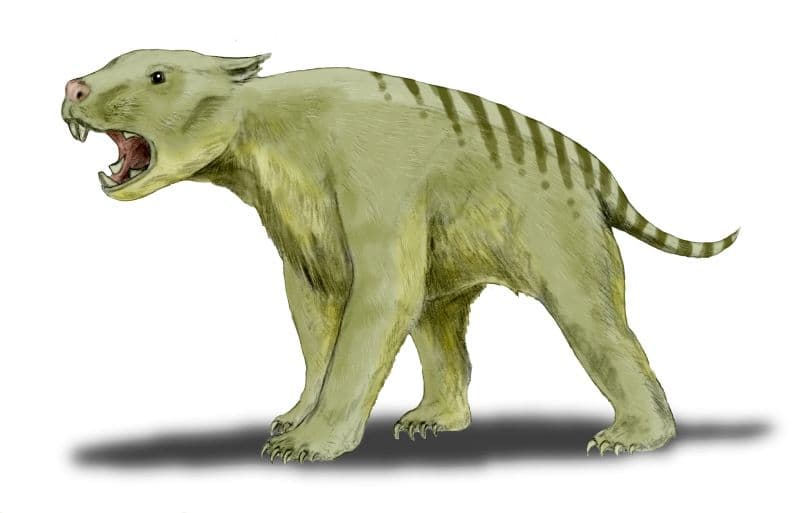
Fossil Cave
Fossil Cave, formerly known as The Green Waterhole, is a significant karst sinkhole in South Australia's Limestone Coast region. It is geologically notable for its formation in 30-million-year-old limestone and is a crucial paleontological site, yielding Pleistocene subfossil remains of extinct megafauna and serving as the type locality for rare crustaceans. The cave is a popular destination for skilled cave divers.
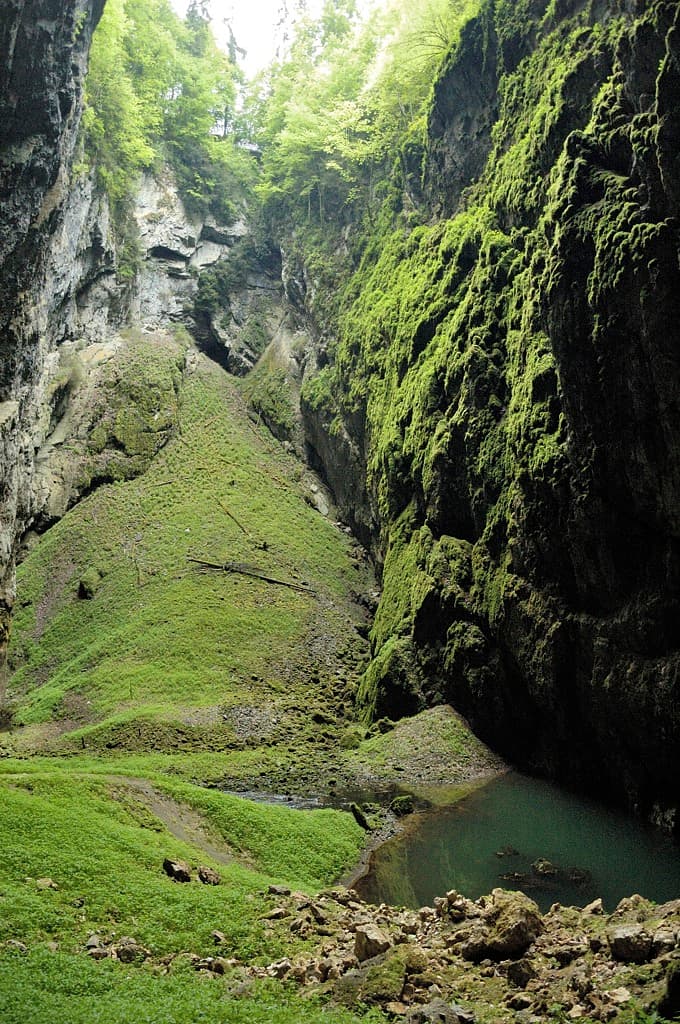
Macocha Gorge
The Macocha Abyss, also known as Macocha Gorge, is a significant sinkhole located within the Moravian Karst cave system in the Czech Republic. It holds the distinction of being the deepest "light hole" type sinkhole in Central Europe, making it a notable geological feature and a popular destination for tourists, cavers, and divers.

Blue Hole (Red Sea)
The Blue Hole is a renowned diving site located on the coast of the Gulf of Aqaba in Egypt's Red Sea. It is a deep marine sinkhole, famous for its challenging "Arch" tunnel and notorious for being the site of numerous diver fatalities, earning it the grim distinction of having the highest number of diver deaths globally. Despite its dangers, the Blue Hole remains a popular destination for experienced divers and freedivers due to its direct shore access to significant depths and abundant marine life.