
Otjikoto Lake
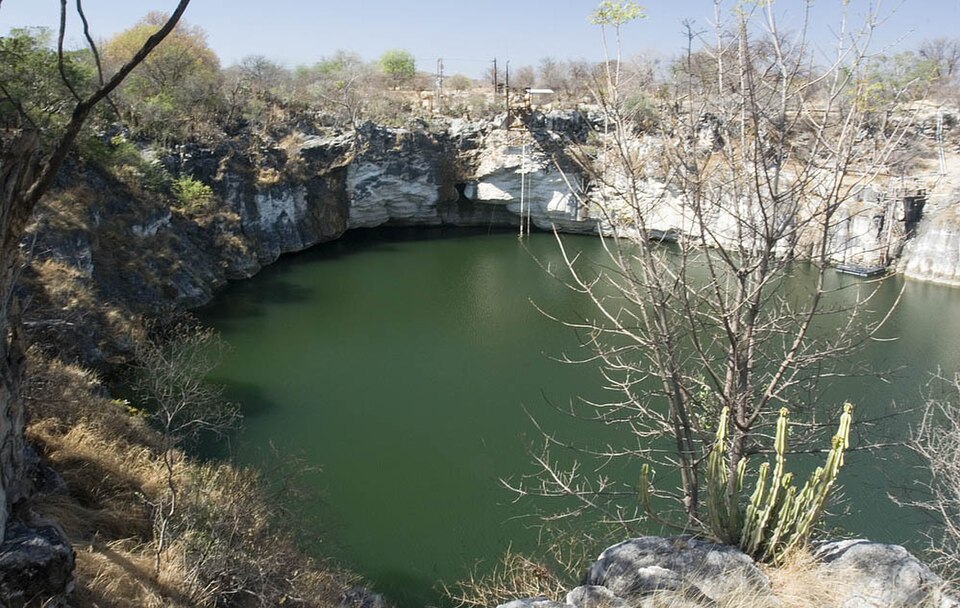
Otjikoto Lake is one of only two permanent natural lakes in Namibia, formed by a collapsing karst cave. It is notable for its significant depth, historical use as a dumping ground for German troops during World War I, and its unique ecosystem. The lake's name has evolved from the San's "Gaisis" to the Herero's "Otjikoto" (deep hole), which also lent its name to the surrounding region.
Key Facts
- ›It is one of Namibia's only two permanent natural lakes.
- ›Otjikoto Lake is a sinkhole formed by a collapsing karst cave.
- ›Its diameter is approximately 102 meters (335 ft).
- ›Depth estimates vary, with some suggesting over 142 meters in places due to an underlying cave system.
- ›German troops dumped war materials into the lake during World War I.
- ›It was declared a national monument in 1972.
Gaisis
Dumping Ground For Wwi War Materials, Unique Ecosystem, Significant Depth
Freshwater
Tilapia Guinasana
About Otjikoto Lake
Otjikoto Lake is a significant natural landmark in Namibia, recognized as one of the country's only two permanent natural lakes. This unique geological formation is a sinkhole lake, created by the collapse of a karst cave system. Its imposing dimensions and historical significance have made it a site of considerable interest.
Geological Formation and Characteristics
The lake's formation is attributed to the dissolution of soluble bedrock, a process characteristic of karst topography. Otjikoto Lake boasts a considerable diameter of approximately 102 meters. Its depth is a subject of fascination and varied measurement, with estimates suggesting it exceeds 142 meters in certain areas. This extreme depth is partly due to the presence of an extensive lateral cave system that extends from the lakebed, making precise measurement challenging.
Historical Significance
Historically, Otjikoto Lake was known to the indigenous San people by the name Gaisis, meaning "ugly." Upon the arrival of the Herero people, it was renamed Otjikoto, translating to "deep hole." This name was significant enough to lend its spelling to Namibia's Oshikoto Region. The first European explorers to document the lake were Francis Galton and Carl Johan Andersson, who encountered it in 1851 during their expedition.
During World War I, Otjikoto Lake served a more somber purpose as a dumping ground for war materials by the German Schutztruppe. In June 1915, as German forces prepared to surrender to South African and British troops, they submerged large quantities of weaponry and ammunition in the lake to prevent their capture. While many of the larger items have since been recovered and are on display at the Tsumeb Museum, several cannons and considerable ammunition remain submerged, accessible only to divers with special permits. A persistent legend also claims that a sealed safe, purportedly containing six million gold marks, was sunk in the lake, though its recovery remains elusive.
Biodiversity and Conservation
Beyond its geological and historical importance, Otjikoto Lake harbors unique biodiversity. Botanist Kurt Dinter documented several previously unknown plant species during his visit in 1911. Furthermore, the lake is home to Tilapia guinasana, a species of cichlid fish that was naturally found only in its sister lake, Lake Guinas. The introduction of this species to Otjikoto Lake highlights efforts to preserve its unique aquatic life. While the potential connection between Otjikoto and Lake Guinas via subterranean caves is frequently suggested, it remains unproven.
Otjikoto Lake was officially recognized for its natural and historical value when it was declared a national monument in 1972, ensuring its protection for future generations.
Source: Wikipedia ↗
Frequently Asked Questions
What is Otjikoto Lake?
Otjikoto Lake is a permanent natural lake in Namibia, formed by the collapse of a karst cave. It is one of only two such natural lakes in the country.
How was Otjikoto Lake formed?
The lake was created when a karst cave collapsed, forming a sinkhole. This geological process is common in areas with soluble bedrock like limestone.
How deep is Otjikoto Lake?
The exact depth of Otjikoto Lake is difficult to determine due to an underlying lateral cave system. Estimates suggest it is over 142 meters deep in some areas, with depths varying from 62 meters at the sides to 100 meters in the center.
What is the history of Otjikoto Lake?
Historically, the lake was known to the San people as "Gaisis" and to the Herero people as "Otjikoto," meaning "deep hole." In 1915, German troops dumped war materials into the lake before surrendering, and it was later declared a national monument in 1972.
Are there any unique features or wildlife at Otjikoto Lake?
Otjikoto Lake is home to the cichlid fish species Tilapia guinasana, which was introduced from its sister lake, Lake Guinas. Botanist Kurt Dinter also collected several previously unknown plant species there.
Is Otjikoto Lake accessible to the public?
Otjikoto Lake is located near the main road B1, about 20 kilometers northwest of Tsumeb, making it relatively accessible. It has been developed as a tourist attraction.
Related Sinkholes

Lake Guinas
Lake Guinas is a significant geological feature in Namibia, being one of only two permanent natural lakes in the country. It is a sinkhole lake formed by a collapsing karst cave, notable for its impressive depth and for being the sole natural habitat of the critically endangered cichlid fish, Tilapia guinasana. Its unique ecosystem and geological formation make it a site of scientific interest.
Macocha Gorge
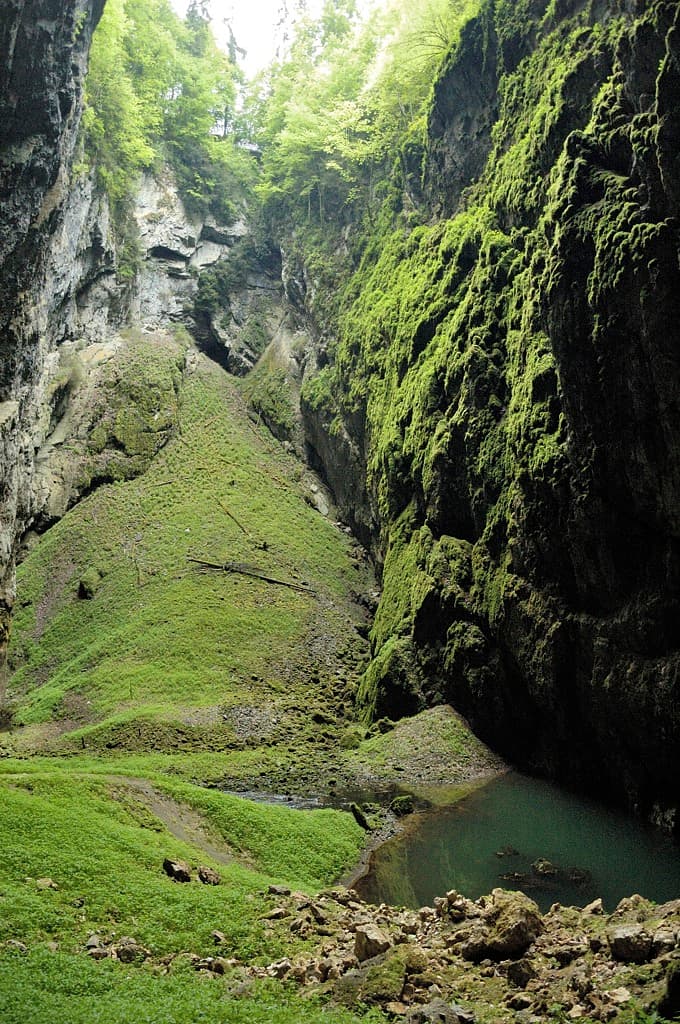
The Macocha Abyss, also known as Macocha Gorge, is a significant sinkhole located within the Moravian Karst cave system in the Czech Republic. It holds the distinction of being the deepest "light hole" type sinkhole in Central Europe, making it a notable geological feature and a popular destination for tourists, cavers, and divers.

Red Lake
Red Lake (Crveno jezero) is a significant karst sinkhole in Croatia, renowned for its immense depth and the lake it contains. Its reddish cliffs, colored by iron oxides, give it its name and contribute to its striking appearance. It is recognized as the third largest sinkhole globally and the deepest known collapse doline holding a lake, making it a site of considerable geological interest.