
Makauwahi Cave
dissolution·Usa·eolianite limestone
Makauwahi Cave is the largest limestone cave in Hawaii, located on the south coast of Kauaʻi in the Māhāʻulepū Valley. It is geologically unique as a sinkhole paleolake within eolianite limestone, preserving nearly 10,000 years of sedimentary record. Its significance lies in its rich paleoecological and archaeological findings, offering insights into pre-human conditions and the ecological impact of human colonization.
Key Facts
- ›Largest limestone cave in Hawaii.
- ›Contains a sinkhole paleolake with approximately 10,000 years of sedimentary record.
- ›Excavations have yielded pollen, seeds, diatoms, invertebrate shells, Polynesian artifacts, and thousands of bird and fish bones.
- ›Documented the existence of numerous extinct native bird species, at least half of the ~40 species found.
- ›The cave reserve spans 17 hectares (42.0 acres).
- ›Known traditionally as Makauwahi, meaning 'smoke eye'.

Makauwahi
Paleoecological Value, Archaeological Value, Fossil Site, Paleolake
KauaʻI Cave Wolf Spider, KauaʻI Cave Amphipod, Sulcata Tortoises, Blackburnia Burneyi, Carelia Snails, Extinct Bird Species, Endangered Bird Species, Native Plants, Shorebirds, Hawaiian Monk Seals, Green Sea Turtles, Seabirds
About Makauwahi Cave
Makauwahi Cave, traditionally known as Makauwahi, meaning "smoke eye" in Hawaiian, is recognized as the largest limestone cave in Hawaii. Situated on the southern coast of Kauaʻi Island within the Māhāʻulepū Valley, it is accessed via a sinkhole and holds significant paleoecological and archaeological importance. It has been described as potentially the most vital fossil site in the Hawaiian Islands and possibly the broader Pacific Island region.
Geological Significance
The cave's geological uniqueness lies in its formation as a sinkhole paleolake within eolianite limestone. This ancient lake bed contains a sedimentary record spanning nearly 10,000 years. Excavations have yielded a rich array of fossils, including pollen, seeds, diatoms, invertebrate shells, and Polynesian artifacts, alongside thousands of bird and fish bones.
Paleoecological and Archaeological Insights
The findings from Makauwahi Cave provide a detailed chronicle of the Hawaiian Islands' environment and biodiversity. They document conditions before human arrival and the profound ecological shifts that occurred over a millennium of human occupation, marked by the introduction of invasive species like feral pigs, dogs, cats, rats, mosquitoes, and mongooses. These discoveries have revealed the existence of numerous native bird species that are now extinct, and have also indicated that certain plants, previously thought to be Polynesian introductions, were present on the islands prior to human settlement.
Extinct and Endangered Species
Remains of about 40 bird species have been unearthed, with half of them now extinct. Among the significant discoveries are giant flightless Anatidae species, such as the turtle-jawed moa-nalo, and other extinct birds like the Kauaʻi palila and Kauaʻi oʻo. The cave has also yielded evidence of extinct insects and snails. The Makauwahi Cave Reserve is also a habitat for several endangered native species and is involved in conservation efforts, including the use of Sulcata tortoises for invasive weed control and the replanting of native flora.
History and Conservation
While historically known to island inhabitants and used as a burial site by ancient Hawaiians, the cave's paleontological value was formally recognized in 1992. The Makauwahi Cave Reserve was established in 2004 after acquiring a lease on the property, initiating environmental restoration efforts on land previously used for agriculture. In 2024, it was announced that due to funding shortages, the cave would close to the public and its ownership would transfer to Grove Farm, a local land-development company.
Source: Wikipedia ↗
Frequently Asked Questions
What is Makauwahi Cave known for?
Makauwahi Cave is renowned as Hawaii's largest limestone cave and a significant paleoecological and archaeological site. It preserves a nearly 10,000-year record of environmental and biological history, including evidence of extinct species and the impact of human settlement on the islands.
Where is Makauwahi Cave located?
Makauwahi Cave is situated on the south coast of the island of Kauaʻi, within the Māhāʻulepū Valley. It is located near Māhāʻulepū Beach and is accessed via a sinkhole.
What kind of geological formations are found at Makauwahi Cave?
The cave is geologically unique in the Hawaiian Islands, characterized by a sinkhole paleolake formed within eolianite limestone. This geological setting has allowed for the exceptional preservation of ancient sedimentary records.
What has been discovered in Makauwahi Cave?
Excavations within the cave have uncovered a wealth of materials, including pollen, seeds, diatoms, invertebrate shells, and Polynesian artifacts. Thousands of bird and fish bones have also been found, shedding light on past ecosystems and extinctions.
What does the paleolake in Makauwahi Cave reveal about the past?
The sedimentary record in the paleolake provides insights into the conditions of the Hawaiian Islands before human colonization and the dramatic ecological changes that occurred following the arrival of Polynesians and later Europeans. It details the introduction of invasive species and the subsequent extinctions of native flora and fauna.
Are there any extinct species found at Makauwahi Cave?
Yes, remains of approximately 40 bird species have been found in the cave, with about half now extinct. Notable discoveries include giant flightless ducks (moa-nalo) and various other extinct bird species like the Kauaʻi palila and Kauaʻi oʻo, as well as insects and snails.
What is the current status of Makauwahi Cave?
As of 2024, it was announced that Makauwahi Cave would close to the public due to a lack of funding and its ownership would be transferred to Grove Farm. The site has been undergoing environmental restoration.
Related Sinkholes

Trout Pond
Trout Pond, formerly known as Old Pond, is West Virginia's only natural lake, formed by a sinkhole that filled with water from mountain streams. It is a karst feature located within the Trout Pond Recreation Area in the George Washington National Forest. While historically a stable body of water, recent underground structural changes in the underlying limestone have caused it to periodically drain, highlighting the dynamic nature of sinkhole formations.
Devil's Den Cave
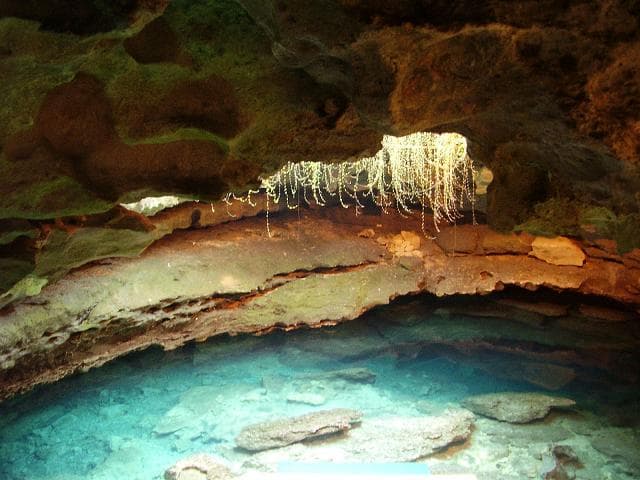
Devil's Den Cave is a unique solution sinkhole located near Williston, Florida, notable for its ancient paleontological discoveries and its transformation into a recreational SCUBA diving site. The cave features a karst window opening to a geothermally warmed underground river, which, during colder months, produces a visible steam plume reminiscent of a "chimney from Hell" to early settlers. Extensive fossil finds, including those of extinct Pleistocene animals alongside human remains and artifacts, have been documented within its underwater passages, offering a glimpse into prehistoric life.
Kingsley Lake
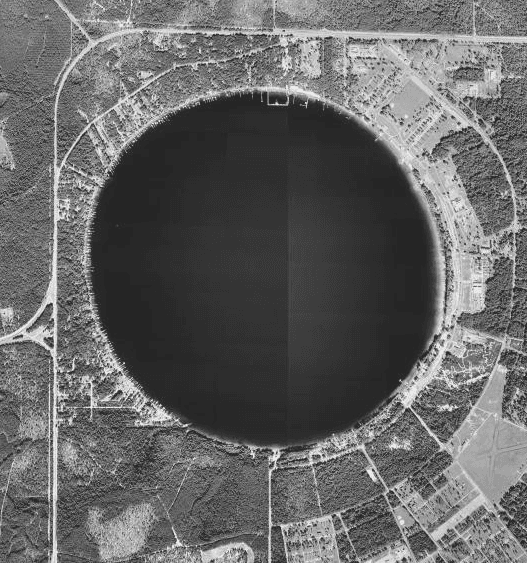
Kingsley Lake is a nearly circular freshwater sinkhole lake located in Clay County, Florida, distinguished by its near-perfect round shape and its position atop Florida's ancient Trail Ridge. Formed by the dissolution of underlying limestone, it is an oligotrophic body of water with exceptional clarity and minimal nutrient levels, making it a valuable natural resource and a site of ecological and geological interest.