
Choloepus
Choloepus is a genus of two-toed sloths native to Central and South America. Unlike their three-toed relatives, they possess two digits on their forelimbs and three on their hindlimbs, and are distinguished by their longer fur, more prominent snout, and absence of a tail. These arboreal mammals are predominantly nocturnal and move by hanging upside down, a behavior that contributes to their extremely slow locomotion.
Key Facts
- ›Choloepus species have two digits on their forelimbs and three on their hindlimbs.
- ›They are larger than three-toed sloths, with a body length of 58-70 cm and a weight of 4-8 kg.
- ›These sloths are predominantly nocturnal and their fur often hosts algae, aiding in camouflage.
- ›Their diet consists primarily of leaves, supplemented by shoots, fruits, nuts, berries, bark, and occasionally small vertebrates.
- ›Two-toed sloths have a slow metabolism, leading to digestion times of up to a month for their food.
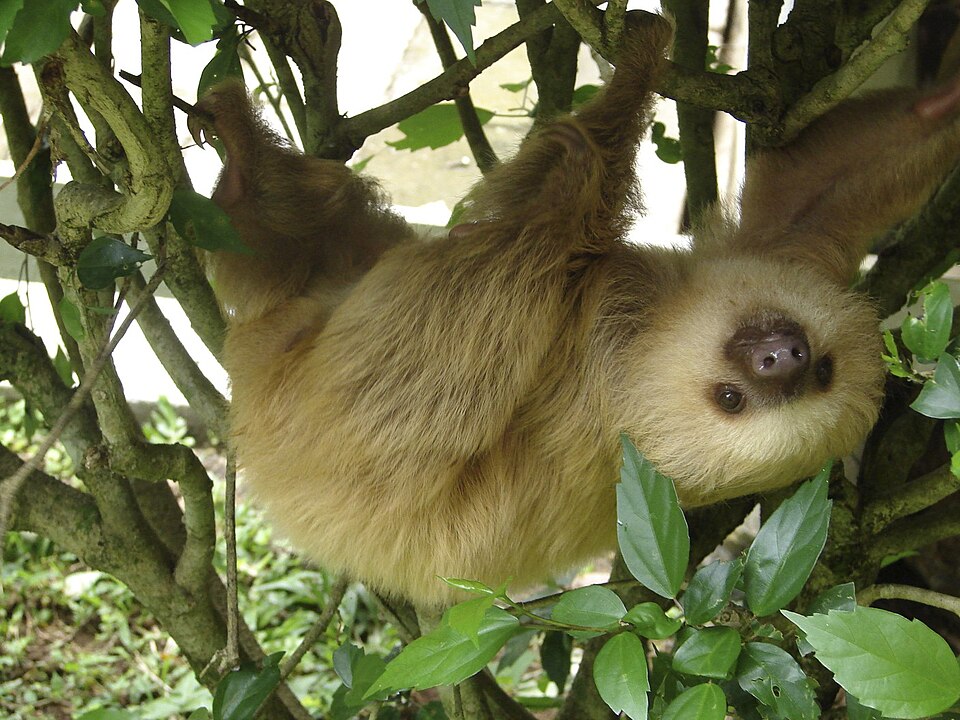
Two-Toed Sloth, Two-Fingered Sloth
Central America, South America
Tropical Forests, Riparian Forest Buffers, Shade-Grown Cacao Plantations
- Two Digits On Forelimbs, Three Digits On Hindlimbs
- Larger Than Three-Toed Sloths
- Body Length of 58 To 70 cm
- Weight of 4 To 8 kg
- More Prominent Snout
- Longer Fur
- Absence of A Tail
- Fur Grows Greenish Algae For Camouflage
Leaves, Shoots, Fruits, Nuts, Berries, Bark, Native Flowers, Small Vertebrates, Algae
- Spend Most of Their Lives Hanging Upside Down
- Move By Pulling Hand-Over-Hand
- Extremely Slow Locomotion
- Predominantly Nocturnal
- Body Temperature Depends Partially On Ambient Temperature
- Cannot Shiver To Keep Warm
- Prefer To Descend Head First When Climbing Down Trees
About Choloepus
Two-Toed Sloths (Choloepus)
The genus Choloepus, commonly known as two-toed sloths, comprises a group of xenarthran mammals found in the forests of Central and South America. These animals are characterized by their distinctive limb structure, possessing two digits on their forelimbs and three on their hindlimbs, a trait that distinguishes them from their three-toed sloth relatives. While often referred to as two-fingered sloths, the term "two-toed" is more widely used despite the potential for confusion.
Physical Characteristics and Behavior
Two-toed sloths are larger than three-toed sloths, typically measuring between 58 to 70 centimeters in body length and weighing between 4 to 8 kilograms. They have a more prominent snout, longer fur that can host algae for camouflage, and notably, no tail. Their lives are predominantly spent hanging upside down from trees, moving with an exceptionally slow gait by pulling themselves hand-over-hand. This arboreal lifestyle is complemented by their predominantly nocturnal activity patterns. Due to their low metabolic rates and reduced musculature, they cannot shiver to regulate body temperature and rely partly on ambient warmth.
Diet and Digestion
The diet of two-toed sloths consists primarily of leaves, but they also supplement their intake with shoots, fruits, nuts, berries, bark, and occasionally small vertebrates. In times of scarcity, they have been observed to consume the algae growing on their fur. Their digestive system is adapted to process large amounts of plant matter, featuring large, four-chambered stomachs for fermentation. This slow metabolism means that food digestion can take up to a month, and their urine and feces can constitute a significant portion of their body weight.
Lifecycle and Reproduction
Reproduction in two-toed sloths involves a gestation period that can range from six months to a year, depending on the species. Mothers give birth to a single young while hanging upside down. The offspring are born with claws, weaned after approximately one month, and remain with their mother for several more months. Females reach sexual maturity around three years of age, while males mature between four to five years.
Evolutionary Context
Recent molecular studies have revealed that two-toed sloths are not closely related to three-toed sloths, despite occupying similar forest habitats. Instead, phylogenetic analyses place them closer to extinct ground sloths of the Mylodontidae family. This finding supports the hypothesis of diphyly, suggesting that the arboreal adaptations of two-toed and three-toed sloths evolved independently through convergent evolution, making tree sloths a remarkable example of this evolutionary process among mammals.
Source: Wikipedia ↗
Frequently Asked Questions
What is the difference between two-toed and three-toed sloths?
The primary difference lies in the number of digits on their limbs: two-toed sloths (Choloepus) have two digits on their forelimbs and three on their hindlimbs, while three-toed sloths (Bradypus) have three on all limbs. Two-toed sloths are also generally larger and have longer fur.
How do two-toed sloths move?
Two-toed sloths spend most of their lives hanging upside down from trees and move by pulling themselves hand-over-hand. They cannot walk and their movement is exceptionally slow, with almost all activity occurring in this suspended position.
What do two-toed sloths eat?
Their diet is primarily leaves, but they also consume shoots, fruits, nuts, berries, bark, and occasionally small vertebrates. They have even been known to eat the algae that grow on their fur when food is scarce.
How long do two-toed sloths live?
The text states that females reach maturity at three years old and males at four to five years old, but does not specify their total lifespan.
What is the evolutionary relationship of two-toed sloths?
Molecular data suggests that two-toed sloths are most closely related to extinct ground sloths of the family Mylodontidae, rather than being closely related to three-toed sloths. This indicates convergent evolution for their arboreal lifestyles.
Related Sloths & Anteaters

Cyclopes
The silky anteater, also known as the pygmy anteater, is the smallest of all known anteaters, belonging to the genus Cyclopes. It inhabits southern Mexico, Central America, and South America, and is distinguished by its nocturnal and arboreal lifestyle, with highly modified hind feet for climbing. Recent taxonomic reviews suggest that what was once considered a single species may actually comprise several distinct species.

Tamandua
Tamandua are a genus of anteaters native to forests and grasslands in South America. They are semi-arboreal, meaning they spend time both in trees and on the ground, and are distinguished by their long, tubular snouts, partially prehensile tails, and thick, bristly fur that often features a dark lateral band. Primarily feeding on ants and termites, tamanduas are nocturnal and rely heavily on their keen sense of smell and hearing to locate prey.
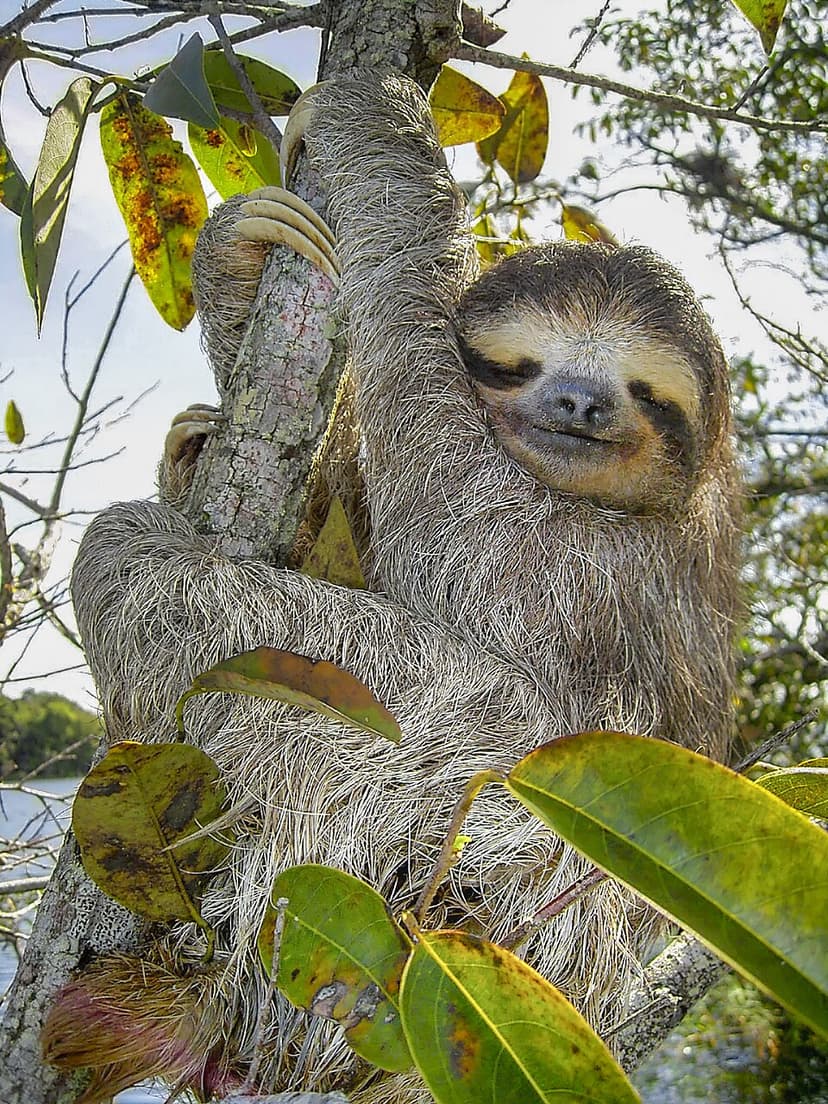
Bradypus
The three-toed sloth, belonging to the genus Bradypus, is an arboreal mammal native to neotropical regions. Distinctive for its incredibly slow movement, it has a unique symbiotic relationship with algae that grows on its fur, providing camouflage and potential nutritional benefits. These sloths are primarily diurnal and solitary, with a specialized digestive system adapted to their low-energy diet of leaves.