
Cyclopes
The silky anteater, also known as the pygmy anteater, is the smallest of all known anteaters, belonging to the genus Cyclopes. It inhabits southern Mexico, Central America, and South America, and is distinguished by its nocturnal and arboreal lifestyle, with highly modified hind feet for climbing. Recent taxonomic reviews suggest that what was once considered a single species may actually comprise several distinct species.
Key Facts
- ›It is the smallest extant anteater, weighing between 175 and 400 grams.
- ›Silky anteaters are nocturnal and spend their entire lives in trees.
- ›Their diet primarily consists of ants, supplemented by wasps and occasionally other insects.
- ›They possess dense, soft fur ranging from gray to yellowish, with a silvery sheen.
- ›Their forefeet have two claws, with the third toe being significantly larger.
- ›Silky anteaters typically give birth to a single young, up to twice a year.

Pygmy Anteater, Lesser Anteater
Mexico, Central America, South America, Trinidad
Semi-Deciduous Forests, Tropical Evergreen Forests, Mangrove Forests, Lowland Rainforests With Continuous Canopy
- Smallest Extant Anteater
- Proportionately Shorter Faces and Larger Crania Than Other Anteaters
- Dense and Soft Fur, Ranging From Gray To Yellowish With A Silvery Sheen
- Dark, Often Brownish, Streaks On Many Subspecies
- Eyes Are Black, Foot Soles Are Red
- Claws On the Second and Third Toes of Forefeet
- Partially Prehensile Tails
- Broad and Flat Ribs Forming An Internal Armored Casing Protecting the Chest
Ants, Wasps and Wasp Pupae, Other Insects, Fruits
- Nocturnal Habits
- Completely Arboreal
- Slow-Moving
- Solitary
- Defends Itself By Standing On Hind Legs and Striking With Forefeet Claws When Threatened
- Sleeps Curled Up In A Ball During the Day
Hawks, Harpy Eagles
About Cyclopes
Cyclopes: The Pygmy Anteater
The silky anteater, also known by the common name pygmy anteater, is the smallest of all known anteater species and belongs to the genus Cyclopes. Traditionally considered a single species, Cyclopes didactylus, recent taxonomic research suggests that this genus may encompass at least seven distinct species. These small mammals are found across a wide range, from southern Mexico through Central and South America, including the island of Trinidad. Their distinctive adaptations for an arboreal lifestyle and their nocturnal habits make them elusive inhabitants of the neotropical rainforests.
Physical Characteristics
Silky anteaters are characterized by their dense, soft fur, which ranges in color from gray to yellowish and possesses a silvery sheen. Many subspecies exhibit dark, often brownish, streaks. They have proportionately shorter faces and larger crania compared to other anteaters. Adult lengths typically range from 36 to 45 cm (14 to 18 in), including a tail of 17 to 24 cm (6.7 to 9.4 in), with weights varying from 175 to 400 g (6.2 to 14.1 oz). Anatomically, they possess unique adaptations for their arboreal existence, including highly modified hind feet for climbing and partially prehensile tails. Their forefeet feature claws on the second and third toes, with the third toe being notably larger. The species also has broad, flat ribs that overlap to create an internal armored casing protecting their chest.
Habitat and Behavior
These anteaters inhabit a variety of forest types, including semi-deciduous, tropical evergreen, and mangrove forests, typically found from sea level up to 1,500 meters (4,900 ft). They are entirely arboreal and nocturnal, with their activity centered in lowland rainforests that have a continuous canopy, allowing them to move between trees without descending to the ground. Silky anteaters are slow-moving creatures. Their diet primarily consists of ants, and they also feed on wasps and wasp pupae, often attacking nests at night when the insects are less active. Occasionally, they may consume other insects like termites and small beetles, and fruits have been observed in their diet when in captivity. They are solitary animals and give birth to a single young, which is often left in a nest of dead leaves while the mother forages. When threatened, silky anteaters will stand on their hind legs and use their sharp foreclaws for defense.
Taxonomy and Distribution
The genus Cyclopes forms a sister clade to the myrmecophagid anteaters, together constituting the suborder Vermilingua, which in turn is sister to the sloths (Folivora), forming the order Pilosa. Historically, Cyclopes didactylus was considered a single species with several subspecies. However, a comprehensive taxonomic review in 2017, utilizing molecular and morphological data, proposed that Cyclopes may comprise at least seven species. The distribution of silky anteaters spans from southern Mexico through Central America (excluding El Salvador) and extends south to Ecuador, northern Peru, Bolivia, and Brazil. A distinct population is found in the Atlantic Forest of eastern Brazil, and they are also present on the island of Trinidad. The only known extinct cyclopedid species is Palaeomyrmidon incomtus, dating back to the Late Miocene of Argentina.
Source: Wikipedia ↗
Frequently Asked Questions
What is the scientific name for the silky anteater?
The scientific name traditionally associated with the silky anteater is Cyclopes didactylus. However, recent taxonomic reviews suggest that this may represent multiple distinct species within the genus Cyclopes.
What is the typical size and weight of a silky anteater?
Adult silky anteaters typically measure between 36 to 45 cm (14 to 18 in) in length, including their tail, and weigh between 175 to 400 g (6.2 to 14.1 oz).
What do silky anteaters eat?
Silky anteaters primarily feed on ants, consuming between 700 and 5,000 ants per day. They also consume wasps and wasp pupae, and have been observed to eat fruits in captivity.
Where are silky anteaters found?
They are found from Oaxaca and southern Veracruz in Mexico, through Central America (excluding El Salvador), and south to Ecuador, northern Peru, Bolivia, and Brazil. A separate population exists in the Atlantic Forest of eastern Brazil, and they are also found on the island of Trinidad.
How do silky anteaters move and climb?
Silky anteaters are entirely arboreal, meaning they live in trees. Their hind feet are highly modified for climbing, and they also have partially prehensile tails that aid in their arboreal lifestyle.
What are the distinctive physical characteristics of the silky anteater?
They have dense, soft fur with a silvery sheen, ranging in color from gray to yellowish, often with dark streaks. Their forefeet have two claws, and their hind feet have four long claws. They also possess broad, flat ribs that form an armored casing around their chest.
Are silky anteaters solitary animals?
Yes, the silky anteater is described as a solitary animal. They give birth to a single young, which is left in a nest of dead leaves for about eight hours each night while the mother forages.
Related Sloths & Anteaters

Tamandua
Tamandua are a genus of anteaters native to forests and grasslands in South America. They are semi-arboreal, meaning they spend time both in trees and on the ground, and are distinguished by their long, tubular snouts, partially prehensile tails, and thick, bristly fur that often features a dark lateral band. Primarily feeding on ants and termites, tamanduas are nocturnal and rely heavily on their keen sense of smell and hearing to locate prey.
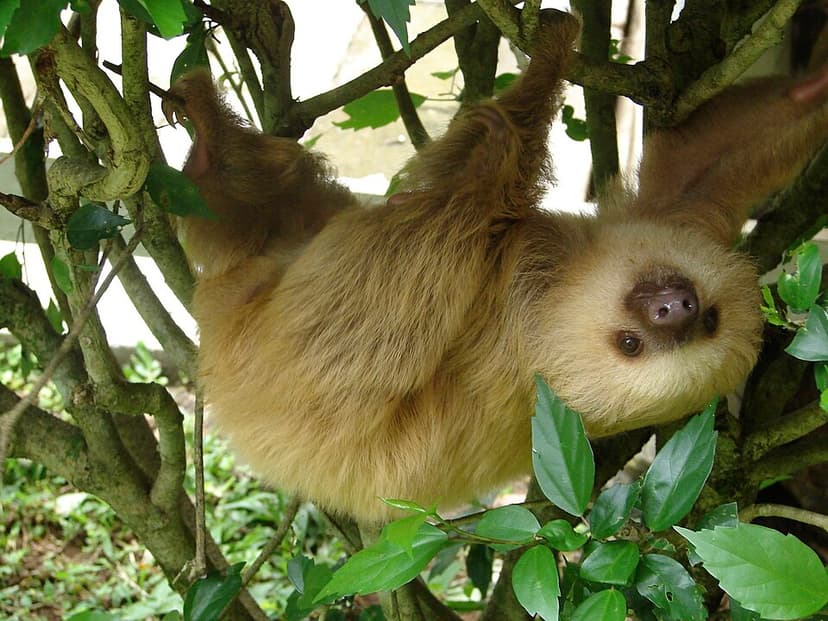
Choloepus
Choloepus is a genus of two-toed sloths native to Central and South America. Unlike their three-toed relatives, they possess two digits on their forelimbs and three on their hindlimbs, and are distinguished by their longer fur, more prominent snout, and absence of a tail. These arboreal mammals are predominantly nocturnal and move by hanging upside down, a behavior that contributes to their extremely slow locomotion.
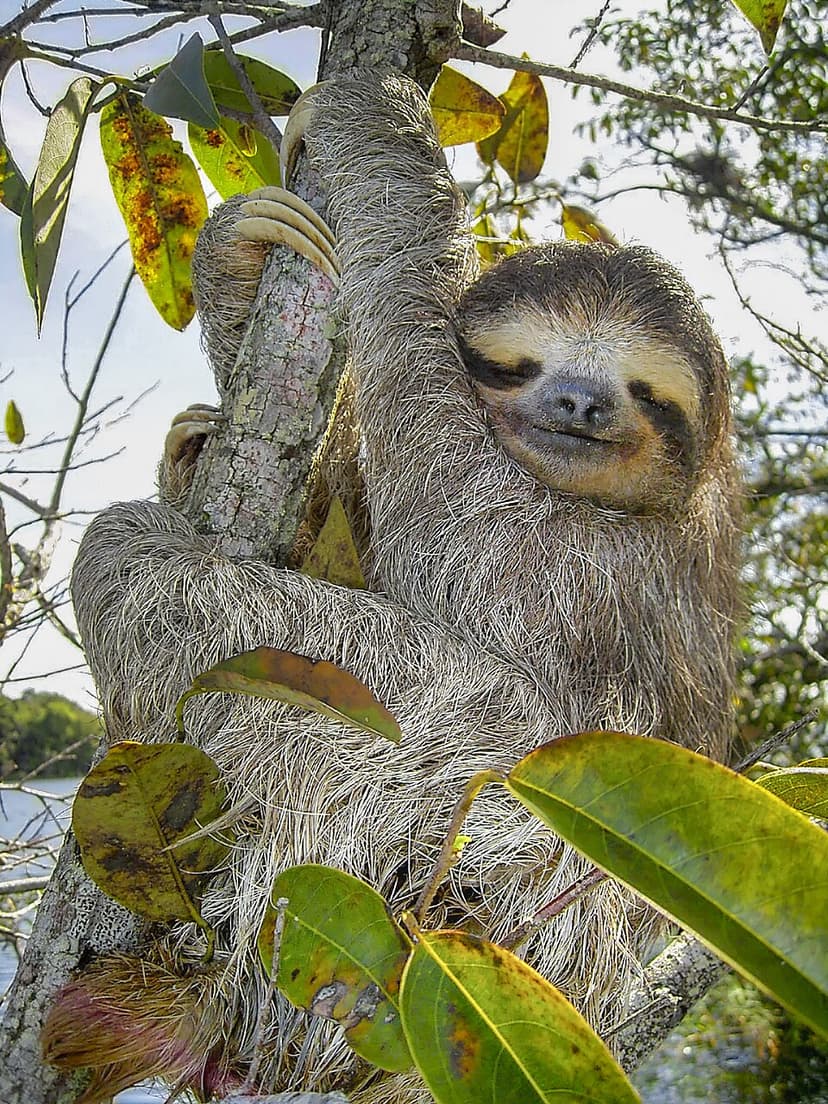
Bradypus
The three-toed sloth, belonging to the genus Bradypus, is an arboreal mammal native to neotropical regions. Distinctive for its incredibly slow movement, it has a unique symbiotic relationship with algae that grows on its fur, providing camouflage and potential nutritional benefits. These sloths are primarily diurnal and solitary, with a specialized digestive system adapted to their low-energy diet of leaves.