
Tamandua
Tamandua are a genus of anteaters native to forests and grasslands in South America. They are semi-arboreal, meaning they spend time both in trees and on the ground, and are distinguished by their long, tubular snouts, partially prehensile tails, and thick, bristly fur that often features a dark lateral band. Primarily feeding on ants and termites, tamanduas are nocturnal and rely heavily on their keen sense of smell and hearing to locate prey.
Key Facts
- ›Tamanduas are semi-arboreal, spending significant time foraging in treetops.
- ›They possess partially prehensile tails that aid in climbing.
- ›Their diet consists mainly of ants and termites, accessed with long, sticky tongues.
- ›Tamanduas are nocturnal and use their strong sense of smell and hearing to find food.
- ›They produce a potent musk from anal glands to mark their territory.
- ›When threatened, tamanduas use their sharp claws and a defensive posture to deter predators.

Tamandua
South America
Forests, Grasslands
- Tapered Head With A Long, Tubular Snout
- Small Eyes
- Protruding Ears
- Tongue Can Reach Upwards of 40 cm
- Hairless, Pink Tail With Black Blotches
- Forefeet With Four Clawed Digits
- Hind Feet With Five Digits
- Thick, Bristly Fur, Yellowish-White To Fawn In Color
- Often Have A Broad Black Lateral Band
Ants, Termites, Bees, Beetles, Insect Larvae, Fruits, Meat
- Nocturnal
- Semi-Arboreal
- Move Awkwardly On the Ground
- Walk On the Sides of Clenched Forefeet To Protect Palms
- Manufacture Potent Musk For Territory Marking
- Rely On Smell and Hearing To Locate Prey
- Use Sharp Claws and Forearms To Tear Open Nests
- Use Elongated, Sticky Tongues To Extract Insects
Musk Secretion For Territory Marking
About Tamandua
The genus Tamandua encompasses two species of anteaters, the southern tamandua (T. tetradactyla) and the northern tamandua (T. mexicana). These animals are native to the diverse forest and grassland ecosystems of South America. Their genus name originates from the Tupi word "tamandûá," a term whose linguistic roots suggest "ant catcher" or "ant hunter."
Physical Characteristics
Tamanduas are characterized by their tapered heads, elongated snouts, and small eyes, complemented by protruding ears. Their mouths house exceptionally long tongues, capable of extending up to 40 cm (16 inches), which are coated in sticky saliva to capture insects. The tail is notably hairless and pink, marked with irregular black blotches, and plays a role in their semi-arboreal lifestyle. Their fur is thick and bristly, typically yellowish-white to fawn in color, and often features a distinctive broad black lateral band that can extend across the body. The forefeet are equipped with four clawed digits, the third being the largest, while the hind feet have five digits.
Behavior and Ecology
Tamanduas are primarily nocturnal creatures, seeking shelter in hollow tree trunks and abandoned burrows during daylight hours. They are semi-arboreal, dedicating a significant portion of their time, sometimes over half, to foraging in treetops for arboreal ants and termites. Their locomotion on the ground is somewhat awkward, and they avoid injury to their palms by walking on the sides of their clenched forefeet. To navigate and locate their insect prey, tamanduas rely heavily on their acute senses of smell and hearing, as their eyesight is limited. They employ their powerful forearms and sharp claws to breach insect nests, then use their long tongues to gather their food.
Defense and Communication
When threatened, tamanduas employ a robust defense strategy. If in a tree, they secure themselves with their hind limbs and tail, rearing up to confront threats with slashing motions of their formidable claws. On the ground, they position themselves against a tree or rock to shield their vulnerable hindquarters while striking with their forearms. Communication is partly achieved through a potent musk secreted from anal glands, which is smeared on prominent landmarks like rocks and trees to signal their presence to other tamanduas.
Reproduction
Female tamanduas reach sexual maturity at approximately one year of age. Following a gestation period of around 160 days, they typically give birth to a single offspring. The young tamandua remains on its mother's back for a period, being left on a branch while the mother ventures out to forage.
Source: Wikipedia ↗
Frequently Asked Questions
What do tamanduas eat?
Tamanduas primarily feed on ants and termites. They occasionally supplement their diet with bees, beetles, and insect larvae. In captivity, they have been observed to eat fruits and meat.
Where do tamanduas live?
Tamanduas inhabit forests and grasslands across South America. They are found in various environments within these regions, often utilizing hollow tree trunks and abandoned burrows for shelter.
How do tamanduas defend themselves?
When threatened in trees, a tamandua will grasp a branch with its hind limbs and tail, then rear up to slash at attackers with its large, curved claws. On the ground, they back against a tree or rock to protect their hindquarters while lashing out with their forearms.
How do tamanduas locate their prey?
Tamanduas have limited vision and rely mainly on their senses of smell and hearing to find insect prey. They use their sharp claws to break open nests and their long, sticky tongues to extract insects.
What is the reproductive behavior of tamanduas?
Female tamanduas reach sexual maturity around one year of age. After a gestation period of approximately 160 days, they typically give birth to a single offspring. The young tamandua rides on its mother's back and is left on a branch while she forages.
What is the conservation status of tamanduas?
The IUCN Red List classifies both tamandua species as species of concern. While currently considered fairly common, they face threats such as being killed due to mistaken beliefs, hunting for meat, capture for the pet trade, and use of their tail tendons.
Related Sloths & Anteaters

Cyclopes
The silky anteater, also known as the pygmy anteater, is the smallest of all known anteaters, belonging to the genus Cyclopes. It inhabits southern Mexico, Central America, and South America, and is distinguished by its nocturnal and arboreal lifestyle, with highly modified hind feet for climbing. Recent taxonomic reviews suggest that what was once considered a single species may actually comprise several distinct species.
Choloepus
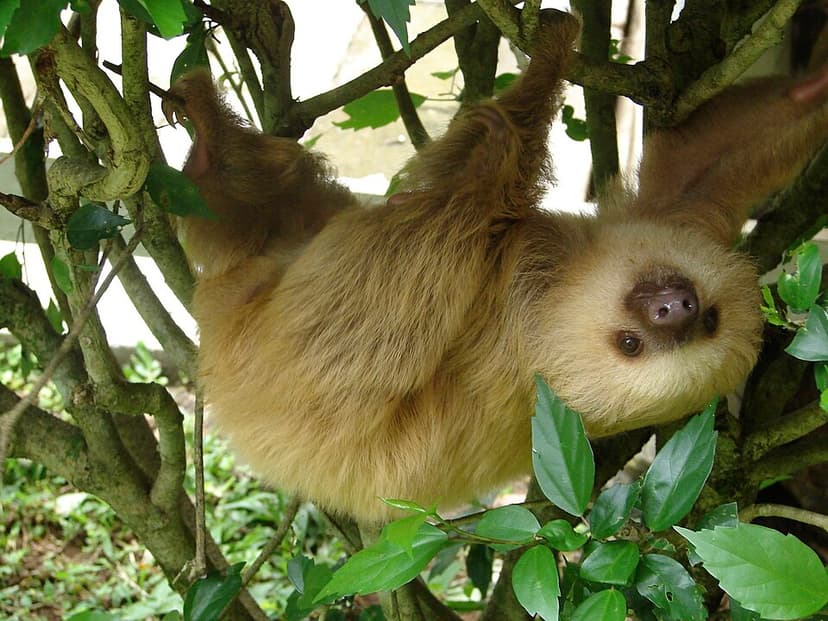
Choloepus is a genus of two-toed sloths native to Central and South America. Unlike their three-toed relatives, they possess two digits on their forelimbs and three on their hindlimbs, and are distinguished by their longer fur, more prominent snout, and absence of a tail. These arboreal mammals are predominantly nocturnal and move by hanging upside down, a behavior that contributes to their extremely slow locomotion.
Bradypus
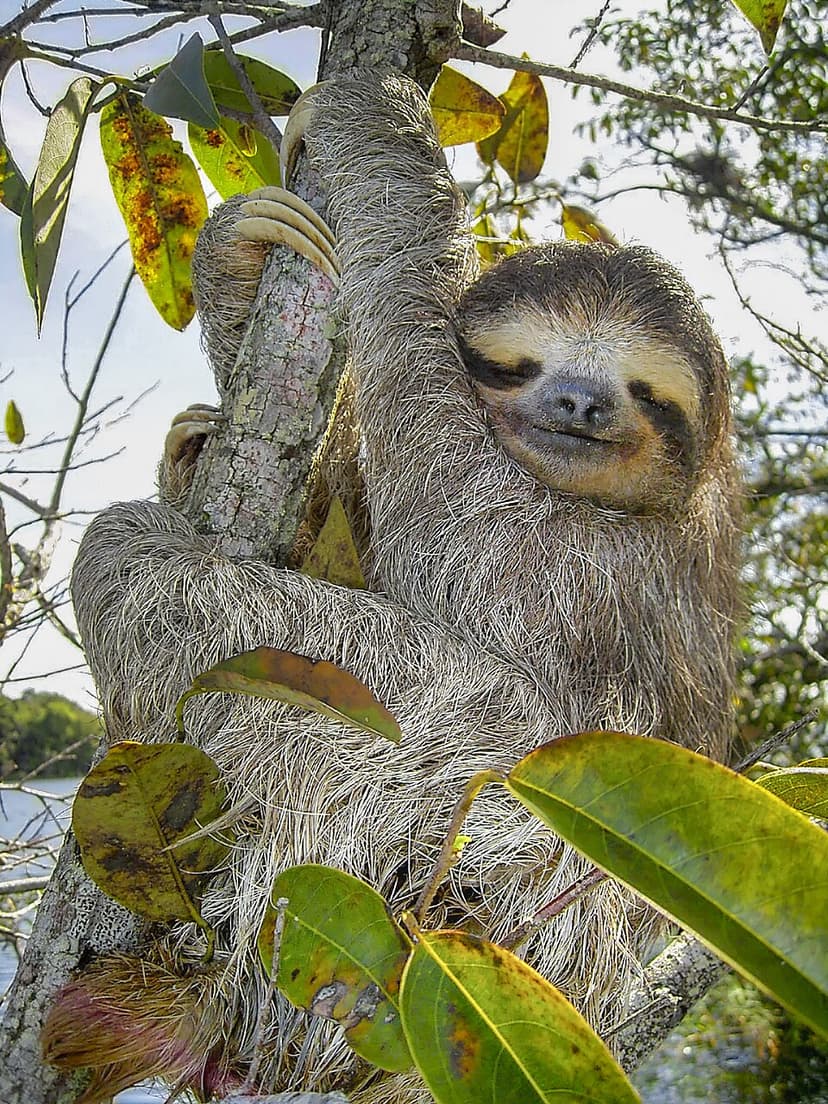
The three-toed sloth, belonging to the genus Bradypus, is an arboreal mammal native to neotropical regions. Distinctive for its incredibly slow movement, it has a unique symbiotic relationship with algae that grows on its fur, providing camouflage and potential nutritional benefits. These sloths are primarily diurnal and solitary, with a specialized digestive system adapted to their low-energy diet of leaves.