
Myrmecophaga
Pilosa·Vulnerable·Myrmecophaga·tridactyla
The giant anteater (Myrmecophaga tridactyla) is a large, insectivorous mammal native to Central and South America. It is distinguished by its elongated snout, bushy tail, long foreclaws, and a unique coloring pattern, and is the largest of the living anteater species. Primarily terrestrial, it feeds on ants and termites, using its specialized anatomy for foraging.
Key Facts
- ›The giant anteater is the largest of the four living anteater species.
- ›It has an elongated snout, a bushy tail, and long foreclaws used for digging.
- ›Its diet consists primarily of ants and termites, collected with a long, sticky tongue.
- ›Giant anteaters are mostly solitary, except for mother-offspring pairs and during mating.
- ›The species is classified as vulnerable by the IUCN due to habitat destruction, fires, and poaching.
- ›It possesses a powerful sense of smell, approximately 40 times that of a human.
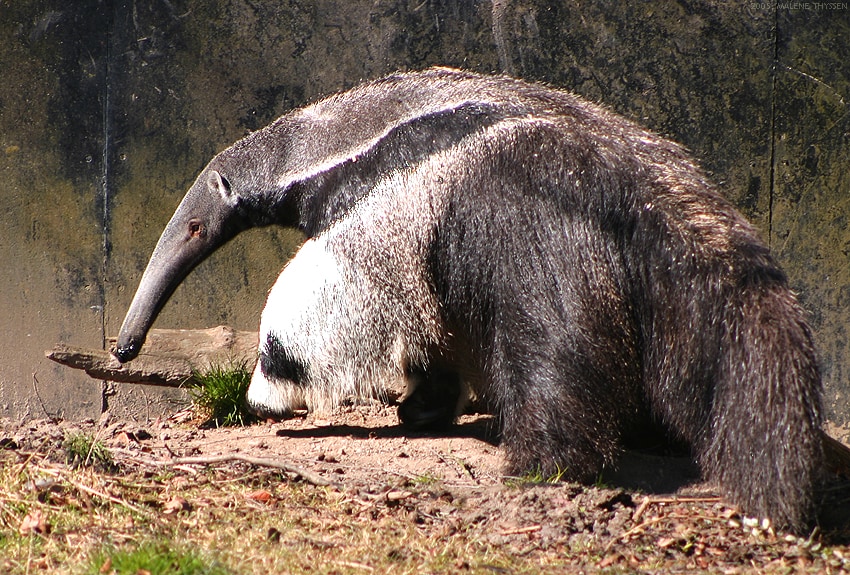
Giant Anteater
Honduras, Bolivia, Northern Argentina, Central America, South America
Grassland, Rainforest, Arid Shrublands, Savanna
- Large Size With A Total Body Length of 182 To 217 cm
- Elongated, Narrow Muzzle Up To 30 cm Long
- Bushy Tail
- Long Foreclaws, Particularly On the Third Digits
- Grayish-Brown Or Black Coat With Mottled White
- Distinctive Black Mark With White Outlines From Throat To Shoulders
- Walks On Front Knuckles
- Poor Eyesight But A Powerful Sense of Smell
- Low Body Temperature For A Mammal
Ants, Termites, Larvae of Beetles, Western Honey Bees
- Mostly Terrestrial
- Mostly Solitary, Except During Mother-Offspring Relationships and Mating
- Can Be Diurnal Or Nocturnal, With Activity Patterns Influenced By Temperature and Human Disturbance
- Forages In Open Areas and Rests In More Forested Habitats
- Carries Offspring On Its Back Until Weaning
- Uses Foreclaws To Dig Into Insect Nests
- Uses Long, Sticky Tongue To Collect Prey
- Communicates Through Anal Gland Secretions and Tree Markings
- Males May Engage In Agonistic Behaviors
- Can Swim and Climb Termite Mounds and Trees
Jaguars, Pumas
Anal Gland Secretions, Tree Markings, Saliva Scent Recognition, Sharp Whistles
About Myrmecophaga
Myrmecophaga: The Giant Anteater
The giant anteater, scientifically known as Myrmecophaga tridactyla, is the largest of the four living anteater species and a prominent member of the order Pilosa. Native to Central and South America, this insectivorous mammal is characterized by its distinctive elongated snout, a long, bushy tail, and exceptionally long foreclaws. It is primarily a terrestrial animal, distinguishing itself from its more arboreal or semi-arboreal relatives like sloths and other anteaters.
Physical Characteristics and Diet
With a total body length reaching up to 2.17 meters, the giant anteater possesses a unique anatomy adapted for its specialized diet. Its head is dominated by a narrow muzzle, housing a tongue that can extend up to 60 cm and flick in and out rapidly, coated in sticky saliva to capture ants and termites. Lacking teeth, it crushes its food with hardened folds in its stomach, aided by ingested sand and soil, and digests using the formic acid from its prey. Its coat is typically grayish-brown with striking black and white markings, and it walks on the knuckles of its front feet to protect its formidable claws, which are used for digging into insect nests.
Habitat and Behavior
The giant anteater inhabits a variety of environments, including grasslands and rainforests, often foraging in open areas and resting in more sheltered, forested locations. While capable of being active during both day and night, their activity patterns can shift based on temperature and human presence. They are generally solitary creatures, with social interactions limited to mother-offspring bonds and mating. Mothers carry their young on their backs until weaning, and pups often camouflage against their mothers' fur. Communication is achieved through scent markings and vocalizations.
Conservation and Interactions
The giant anteater is classified as vulnerable by the IUCN due to significant threats, including habitat destruction, wildfires, and poaching. Its slow movement and coat can make it particularly susceptible to fires, and it faces dangers from vehicle collisions and domestic dogs. Despite these challenges, the species is found in numerous protected areas across its range, and some local governments have designated it as a national heritage species. Historically, the giant anteater has featured in the mythology and folklore of indigenous peoples, often depicted as a trickster or comical figure.
Source: Wikipedia ↗
Frequently Asked Questions
What is the scientific name for the giant anteater?
The scientific name for the giant anteater is Myrmecophaga tridactyla. Its genus name, Myrmecophaga, means 'anteater' in Greek, and its specific name, tridactyla, means 'three fingers'.
Where are giant anteaters found?
Giant anteaters are native to Central and South America, with their range stretching from Honduras to Bolivia and northern Argentina. They have been extirpated from several countries and parts of their former range.
What do giant anteaters eat?
Giant anteaters are insectivores, feeding primarily on ants and termites. They use their long foreclaws to dig into nests and their lengthy, sticky tongues to collect insects.
What are the main threats to giant anteaters?
Major threats to giant anteaters include habitat destruction, wildfires, and poaching for fur and bushmeat. Collisions with vehicles and attacks by dogs also contribute to their decline.
How do giant anteaters protect themselves?
While they typically flee from danger, giant anteaters can defend themselves by rearing up on their hind legs and using their formidable front claws. These claws are capable of inflicting severe wounds and can even be lethal to predators like jaguars.
What are the physical characteristics of a giant anteater?
Giant anteaters are identified by their large size, long and narrow muzzle, and a long, bushy tail. They have grayish-brown fur with distinctive black and white markings, long foreclaws, and walk on their knuckles to protect their claws.
What is the conservation status of the giant anteater?
The giant anteater is listed as vulnerable by the International Union for Conservation of Nature (IUCN). This status reflects significant population declines and regional extirpations.
Related Sloths & Anteaters
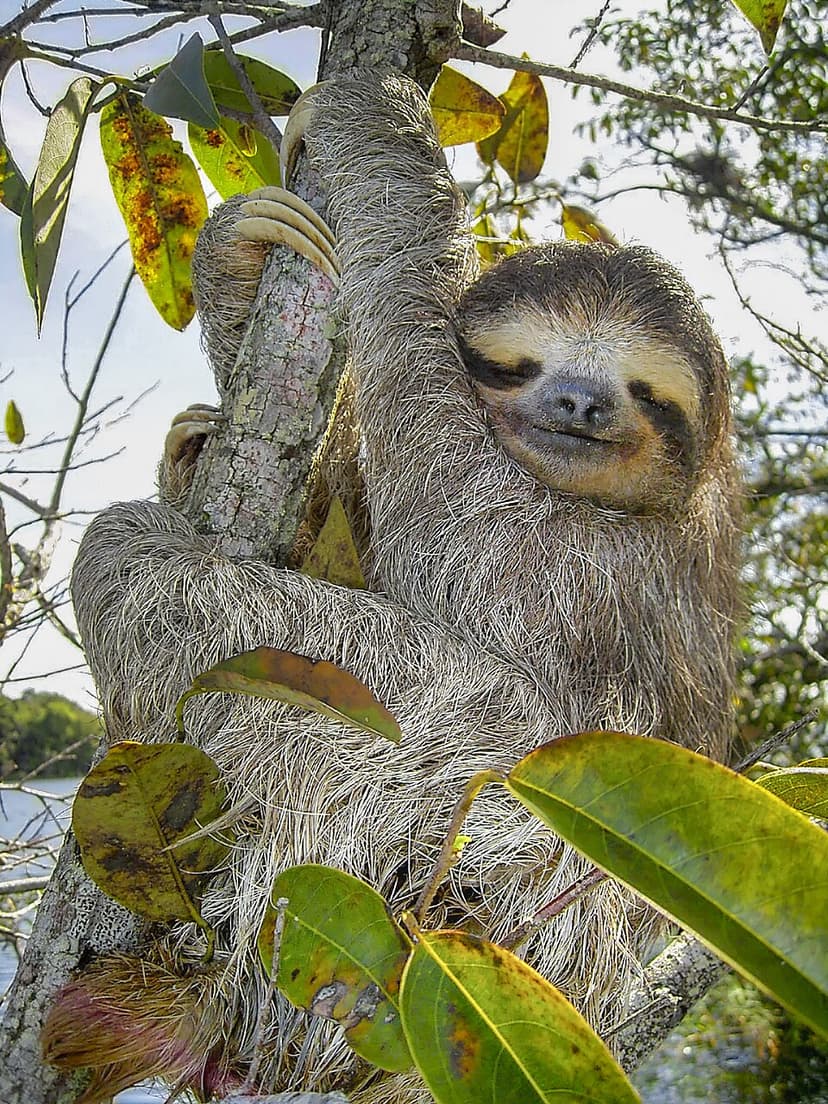
Bradypus
The three-toed sloth, belonging to the genus Bradypus, is an arboreal mammal native to neotropical regions. Distinctive for its incredibly slow movement, it has a unique symbiotic relationship with algae that grows on its fur, providing camouflage and potential nutritional benefits. These sloths are primarily diurnal and solitary, with a specialized digestive system adapted to their low-energy diet of leaves.

Cyclopes
The silky anteater, also known as the pygmy anteater, is the smallest of all known anteaters, belonging to the genus Cyclopes. It inhabits southern Mexico, Central America, and South America, and is distinguished by its nocturnal and arboreal lifestyle, with highly modified hind feet for climbing. Recent taxonomic reviews suggest that what was once considered a single species may actually comprise several distinct species.

Tamandua
Tamandua are a genus of anteaters native to forests and grasslands in South America. They are semi-arboreal, meaning they spend time both in trees and on the ground, and are distinguished by their long, tubular snouts, partially prehensile tails, and thick, bristly fur that often features a dark lateral band. Primarily feeding on ants and termites, tamanduas are nocturnal and rely heavily on their keen sense of smell and hearing to locate prey.