
Antrodiaetidae
Antrodiaetidae·Antrodiaetidae·https://upload.wikimedia.org/wikipedia/commons/thumb/2/2a/Antrodiaetus_sp._%28Watauga_County%2C_NC%29.jpg/320px-Antrodiaetus_sp._%28Watauga_County%2C_NC%29.jpg
Antrodiaetidae, commonly known as folding trapdoor spiders or folding-door spiders, is a small family of mygalomorph spiders closely related to atypical tarantulas. They are primarily found in the western and midwestern United States, with some relict species endemic to Japan. Their name derives from the distinctive way they operate the entrance to their burrows, which they fold or unfold.
Key Facts
- ›Belongs to the Mygalomorphae infraorder, related to tarantulas.
- ›Known for their unique burrow entrances that they fold or unfold.
- ›Primarily inhabit the western and midwestern United States.
- ›Includes genera like Antrodiaetus.
- ›Some species are considered relict, found in Japan.

Folding Trapdoor Spiders, Folding-Door Spiders
Western United States, Midwestern United States, Appalachian Mountains, Japan
- Operates A "Folding Door" For Its Burrow Entrance.
- Construct Burrows With Distinctive Folding Doors.
About Antrodiaetidae
Antrodiaetidae: The Folding Trapdoor Spiders
Antrodiaetidae, commonly referred to as folding trapdoor spiders or folding-door spiders, represent a small but distinctive family within the spider order Mygalomorphae. These spiders are recognized for their close evolutionary relationship to tarantulas and for their unique burrow construction. Their common name directly describes a key characteristic: the specialized door they create to seal the entrance of their underground homes, which they can both fold and unfold.
Geographic Distribution and Habitat
The vast majority of Antrodiaetidae spiders are found within the United States, with their range predominantly covering the western and midwestern regions. Their presence extends from the Pacific coast of California northward to Washington, and they can also be found eastward into the Appalachian Mountains. Notably, two species, Antrodiaetus roretzi and Antrodiaetus yesoensis, are endemic to Japan. These Japanese populations are considered relict species, suggesting a much older and wider distribution for the family's ancestors, with their presence in Japan likely resulting from ancient vicariance events.
Biology and Behavior
Details regarding the specific biology and behavior of Antrodiaetidae, such as their diet, hunting strategies, and lifespan, are not extensively documented in the available information. However, their classification as trapdoor spiders implies a lifestyle centered around subterranean burrows. The defining feature of their behavior is the construction and operation of a hinged or folded door at the entrance of their burrow, which they use for protection and possibly to ambush prey. While venomous, as is characteristic of most spiders, the medical significance of their venom to humans is not specified. They are not generally considered web-building spiders in the typical sense, relying instead on their burrow and trapping mechanisms.
Source: Wikipedia ↗
Frequently Asked Questions
What are folding trapdoor spiders?
Folding trapdoor spiders, scientifically known as Antrodiaetidae, are a small family of spiders related to tarantulas. They are characterized by their unique method of opening and closing the entrance to their burrows, which they fold or unfold.
Where are Antrodiaetidae spiders found?
These spiders are found almost exclusively in the western and midwestern United States, ranging from California up to Washington state and eastward to the Appalachian Mountains. There are also relict species found in Japan.
What is unique about their burrows?
The most distinctive feature of Antrodiaetidae spiders is their burrow entrance. They have a "folding door" that they can unfold or fold to open and close the access to their underground homes.
What is their relationship to tarantulas?
Antrodiaetidae are considered closely related to atypical tarantulas. They belong to the same infraorder, Mygalomorphae, indicating a shared evolutionary lineage.
Related Spider species

Orsolobidae
Orsolobidae is a family of six-eyed spiders comprising approximately 200 described species across thirty genera. First described by J. A. L. Cooke in 1965, it was elevated to family status from the "Dysderidae" classification in 1985. While most of its genera are endemic to New Zealand and Australia, some are also found in southern Africa and South America.
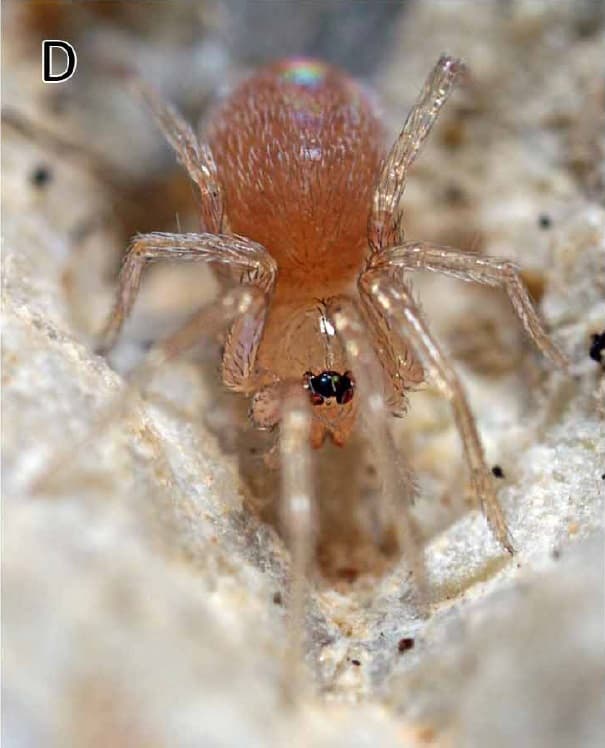
Oonopidae
Oonopidae, commonly known as goblin spiders, are a widespread family of tiny spiders, typically measuring between 1 to 3 millimeters. They are characterized by their small size, often six eyes (though variations exist), and a remarkable array of unusual morphological traits, particularly in males. These spiders are frequently found in leaf litter, under rocks, and in tropical rainforest canopies, with some species even inhabiting termite nests.
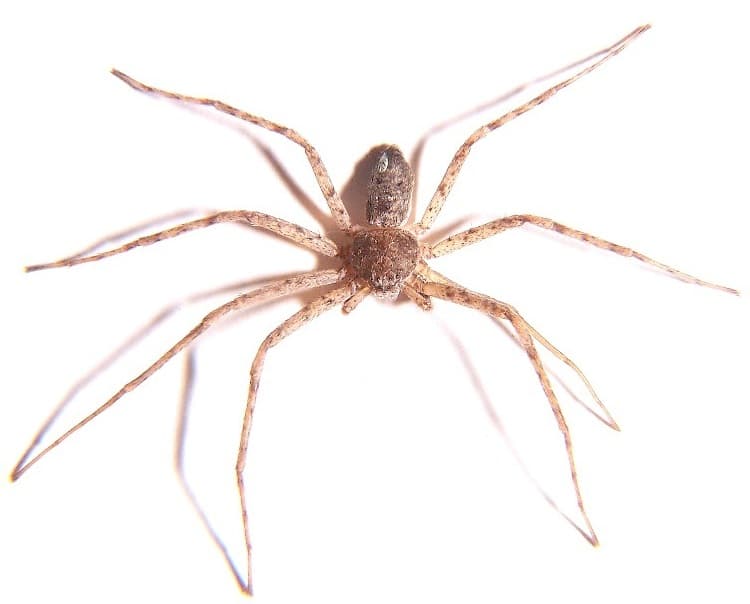
Philodromidae
Philodromidae, commonly known as philodromid crab spiders or running crab spiders, is a diverse family of araneomorph spiders that includes over 500 species across approximately thirty genera. These spiders are characterized by their crab-like body shape and active hunting strategy, preying on insects and other small invertebrates by ambush rather than web-building. They are typically found on plants, from deciduous trees to conifers, and are widespread across various habitats.