
Philodromidae
Ambush predator
Philodromidae, commonly known as philodromid crab spiders or running crab spiders, is a diverse family of araneomorph spiders that includes over 500 species across approximately thirty genera. These spiders are characterized by their crab-like body shape and active hunting strategy, preying on insects and other small invertebrates by ambush rather than web-building. They are typically found on plants, from deciduous trees to conifers, and are widespread across various habitats.
Key Facts
- ›Philodromids possess a crab-like body shape due to their legs being oriented sideways.
- ›Unlike some other crab spiders, their legs are generally similar in size, though the second pair can be notably longer.
- ›They are active predators that hunt by ambush, typically on the stems and leaves of plants.
- ›Their coloration usually ranges from cream to light brown, often with faint longitudinal stripes.
- ›The family comprises over 500 species distributed among about thirty genera.
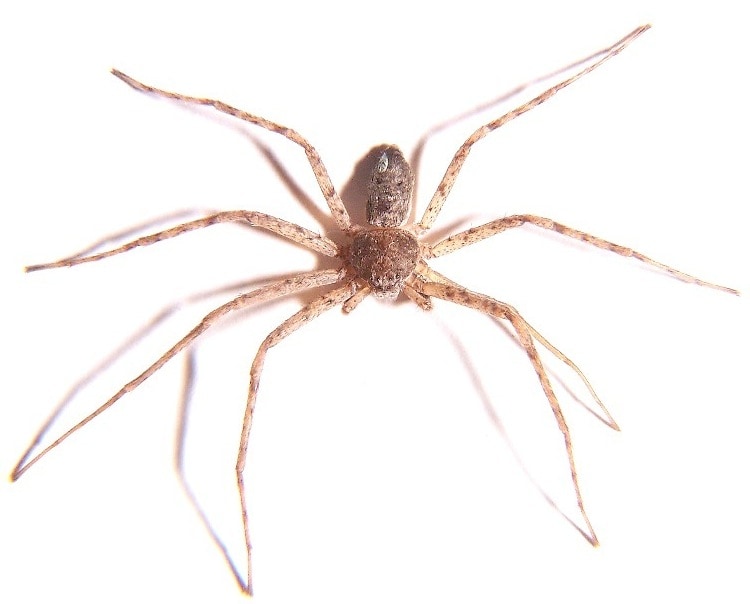
Philodromid Crab Spiders, Running Crab Spiders
- Crab-Like Shape Due To the First Two Pairs of Legs Being Oriented Sideways .
- Legs Are Generally Similar In Size, With the Second Pair Sometimes Being Significantly Longer.
- Scopula Only At the Tips of the Tarsi.
- Eyes In Two Curved Rows With the Posterior Row Wider Than the Anterior Row.
Active Predators, Occur On Plants
About Philodromidae
Philodromidae, also known by the common names philodromid crab spiders and running crab spiders, is a family of araneomorph spiders recognized for their distinctive crab-like body shape and active predatory lifestyle. Established by Tord Tamerlan Teodor Thorell in 1870, this family now encompasses over 500 species organized into approximately thirty genera, including well-known groups like Philodromus and Tibellus.
Description and Characteristics
The most striking feature of Philodromidae is their crab-like posture, a result of the first two pairs of legs being oriented sideways, a characteristic that superficially resembles "true" crab spiders (Thomisidae). However, unlike some related families, the legs of philodromids are generally similar in size, although the second pair can be notably longer in certain species, such as those in the genus Ebo. Their coloration typically ranges from cream to light brown, often adorned with subtle longitudinal stripes. Philodromids possess scopula only at the tips of their tarsi and have their eyes arranged in two curved rows, with the posterior row being wider than the anterior.
Ecology and Behavior
Philodromidae are active hunters that do not construct webs to capture prey. Instead, they rely on an ambush strategy, actively hunting insects and other small invertebrates. They are commonly found on the stems and leaves of various plants, with some species preferring deciduous trees and others conifers. While most are terrestrial, a small number of species have adapted to arid desert environments.
Distribution and Genera
As of early 2026, the family Philodromidae includes 31 genera and 531 species. While the family is widespread, specific geographic distribution details for all species are extensive and vary by genus. Notable genera include Philodromus, which is widely distributed, Ebo, Tibellus (known for its elongated grass-dwelling forms), and Thanatus, which includes species like the house crab spider, frequently observed capturing flies in and around buildings.
Source: Wikipedia ↗
Frequently Asked Questions
What are philodromid crab spiders?
Philodromidae, also known as philodromid crab spiders or running crab spiders, is a family of araneomorph spiders. This family is distinguished by its crab-like posture and active hunting methods, with over 500 species described.
How do philodromid spiders catch their prey?
Instead of building webs, philodromid spiders are active predators that hunt by ambush. They stalk their prey or wait in concealment on plants to capture insects and other small invertebrates.
Where do philodromid spiders typically live?
Philodromids are often found on the stems and leaves of plants, with some species specializing in deciduous trees and others in conifers. A small number of species have also adapted to desert environments.
What do philodromid spiders look like?
They have a crab-like shape, with the first two pairs of legs positioned sideways. Their coloration is usually cream to light brown, often featuring faint longitudinal stripes, and their eyes are arranged in two curved rows.
Are all crab spiders closely related?
While Philodromidae are called crab spiders and have a crab-like appearance similar to Thomisidae (true crab spiders), they are not as closely related as once thought. Their leg proportions and eye arrangements, for instance, differ significantly.
Related Spider species

Orsolobidae
Orsolobidae is a family of six-eyed spiders comprising approximately 200 described species across thirty genera. First described by J. A. L. Cooke in 1965, it was elevated to family status from the "Dysderidae" classification in 1985. While most of its genera are endemic to New Zealand and Australia, some are also found in southern Africa and South America.
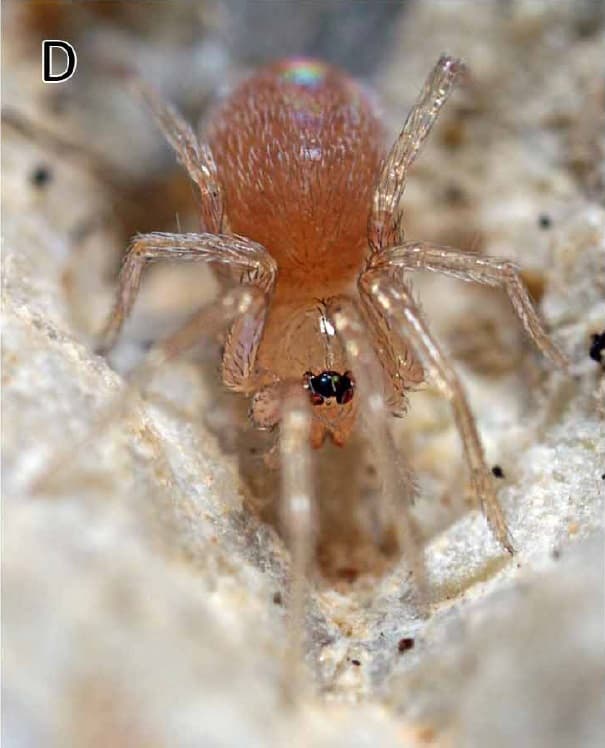
Oonopidae
Oonopidae, commonly known as goblin spiders, are a widespread family of tiny spiders, typically measuring between 1 to 3 millimeters. They are characterized by their small size, often six eyes (though variations exist), and a remarkable array of unusual morphological traits, particularly in males. These spiders are frequently found in leaf litter, under rocks, and in tropical rainforest canopies, with some species even inhabiting termite nests.

Paratropididae
Paratropididae, commonly known as bald-legged spiders, is a small family of mygalomorph spiders first described by Eugène Simon in 1889. These spiders are evolutionarily closer to tarantulas and their relatives than to most other "true" spiders. The family currently encompasses about 50 species distributed across six genera.