
Orsolobidae
Orsolobidae·Orsolobidae·Specific size details for Orsolobidae spiders are not provided in the text.·Coloration details for Orsolobidae spiders are not provided in the text.
Orsolobidae is a family of six-eyed spiders comprising approximately 200 described species across thirty genera. First described by J. A. L. Cooke in 1965, it was elevated to family status from the "Dysderidae" classification in 1985. While most of its genera are endemic to New Zealand and Australia, some are also found in southern Africa and South America.
Key Facts
- ›The family Orsolobidae is characterized by spiders possessing six eyes.
- ›It encompasses around 200 described species organized into thirty distinct genera.
- ›The family was initially described by J. a. L. Cooke in 1965.
- ›Orsolobidae was formally recognized as a distinct family in 1985, having previously been considered part of the Dysderidae.
- ›Geographic distribution is primarily concentrated in New Zealand and the Australian region.
- ›Representatives of this family are also found in southern Africa and South America.

New Zealand, Australia, Southern Africa, South America
Six Eyes
About Orsolobidae
What is known
Orsolobidae represents a distinct family of spiders, readily identified by their characteristic feature of possessing six eyes. This family is a significant component of arachnid diversity, currently encompassing approximately 200 described species that are organized into thirty distinct genera. The scientific classification of this group has seen some evolution; it was first formally described by J. A. L. Cooke in 1965. Later, in 1985, Orsolobidae was recognized and established as its own family, having previously been grouped under the broader classification of "Dysderidae."
Geographic Distribution
The geographical range of Orsolobidae spiders is notably varied. The majority of the genera within this family are endemic, meaning they are found exclusively in specific regions, primarily New Zealand and the Australian continent. Beyond these core areas, the family's presence extends to other parts of the Southern Hemisphere, with several genera also occurring in southern Africa and South America. This distribution pattern suggests a history of diversification and adaptation across different continental landmasses and ecosystems.
Source: Wikipedia ↗
Frequently Asked Questions
How many eyes do Orsolobidae spiders have?
Spiders belonging to the Orsolobidae family are characterized by having six eyes. This is a notable feature that distinguishes them within the broader spider classification.
How many species are in the Orsolobidae family?
As of early 2026, there are approximately 200 described species within the Orsolobidae family. These species are further categorized into thirty different genera.
When was the Orsolobidae family first described?
The Orsolobidae family was first described by J. A. L. Cooke in the year 1965. It was later recognized as its own family in 1985.
Where are Orsolobidae spiders found geographically?
The majority of Orsolobidae genera are endemic to New Zealand and the Australian region. However, some species have also been recorded in southern Africa and South America.
What is the taxonomic history of Orsolobidae?
Orsolobidae was initially described in 1965. It was later elevated to its own family status in 1985, having previously been classified under the Dysderidae family.
Related Spider species
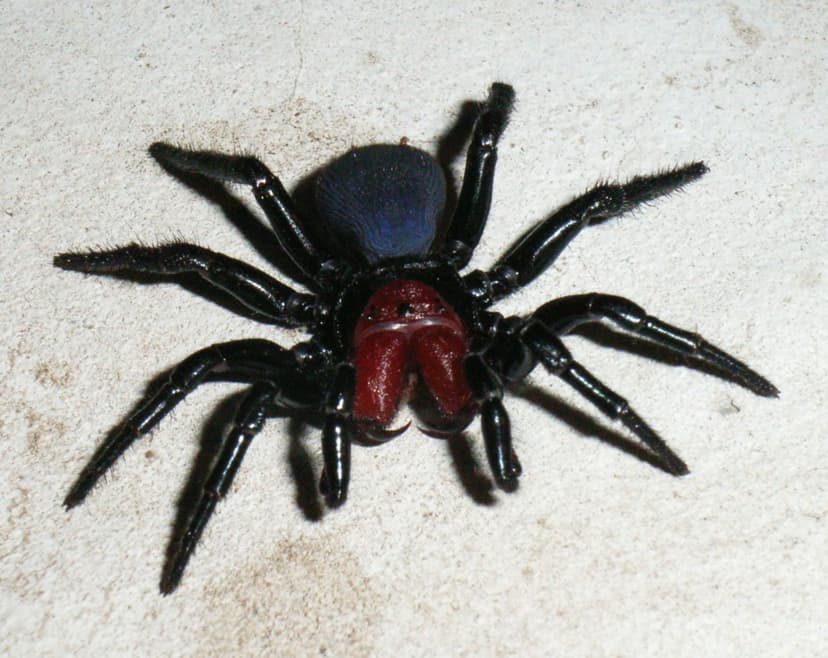
Actinopodidae
Actinopodidae is a family of mygalomorph spiders native to mainland Australia and South America, typically inhabiting open forests. This family includes the mouse spiders (Missulena species), which are notable for their medically significant and potentially dangerous bites.

Agelenidae
The Agelenidae, commonly known as funnel weavers, are a large family of spiders found globally. They are distinguished by their fast running speeds and the construction of flat sheet webs with a funnel-shaped retreat. While most species are solitary, some African species exhibit parasocial behavior, living in communal webs.
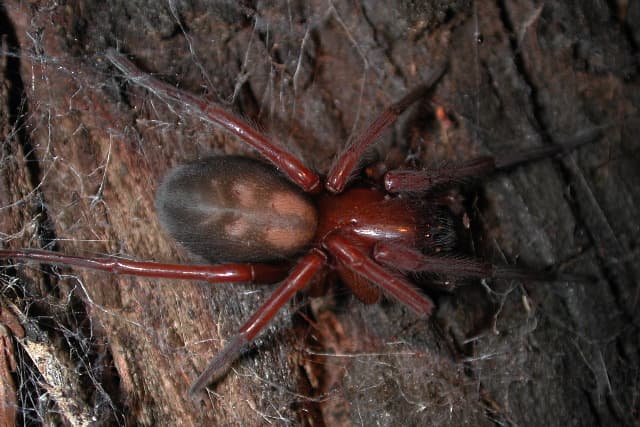
Amaurobiidae
Amaurobiidae is a family of spiders characterized by their three-clawed feet and the presence of either a cribellum or its absence. These spiders are typically found in crevices, hollows, or under stones, where they construct retreats and are often captured in pitfall traps. While widespread, they can be challenging to distinguish from closely related spider families.