
Cithaeronidae
Active hunter, nocturnal.
Cithaeronidae is a small family of fast-moving araneomorph spiders known for actively hunting at night and resting in silken retreats during the day. Primarily found in hot, dry, stony environments, members of this family have a broad distribution that includes Africa, India, parts of Eurasia, and have been introduced to regions like Australia, Brazil, and the United States.
Key Facts
- ›Cithaeronidae are pale yellowish, fast-moving spiders.
- ›They actively hunt at night and build silken retreats during the day.
- ›Their preferred habitat is very hot, dry, stony places.
- ›The family is found across Africa, India, and parts of Eurasia.
- ›Some species have been accidentally introduced to other continents, including Australia, Brazil, and the USA.
- ›The family currently includes two genera and ten species.

Africa, India, Eurasia, Australia, Brazil, United States
Fast-Moving, Build Silken Retreats, Rest During the Day
About Cithaeronidae
Quick Summary
Cithaeronidae is a small family of araneomorph spiders recognized for their rapid movements and nocturnal hunting habits. These spiders construct silken retreats beneath rocks, emerging at night to seek prey. They are typically found in arid, stony environments.
Distribution and Habitat
The natural geographic range of Cithaeronidae spiders includes Africa, India, and various parts of Eurasia. Notably, certain species, such as C. praedonius, have been introduced to other continents, with established populations found in Teresina, Brazil, and Florida, USA, likely through accidental human transport. They thrive in extremely hot and dry conditions, preferring stony terrains.
Physical Characteristics and Behavior
Females of the Cithaeronidae family generally measure between 5 to 7 millimeters in body length, while males are slightly smaller at approximately 4 millimeters. Their coloration is typically a pale yellowish hue. These spiders are characterized by their speed and their behavior of actively hunting at night, retreating to silken shelters during daylight hours. While they build silken retreats, they are not considered web builders in the traditional sense for prey capture.
Taxonomy and Species
The family Cithaeronidae was first described by Simon in 1893. As of early 2026, it comprises two genera and a total of ten known species. Research has focused on revising and understanding the relationships within this family and related spider groups.
Source: Wikipedia ↗
Frequently Asked Questions
What are Cithaeronidae spiders?
Cithaeronidae are a small family of araneomorph spiders, first described in 1893. They are characterized by their fast movement and nocturnal hunting habits.
Where are Cithaeronidae spiders found?
Naturally, Cithaeronidae members are found in Africa, India, and parts of Eurasia. However, they have also been accidentally introduced to regions like Australia, Brazil, and Florida in the USA.
What do Cithaeronidae spiders eat?
As active hunters, Cithaeronidae spiders likely prey on various insects and other small invertebrates found in their environment. Specific dietary details are not extensively documented in the provided information.
How big are Cithaeronidae spiders?
Female Cithaeronidae spiders typically measure between 5 to 7 millimeters in body length, while males are slightly smaller, around 4 millimeters.
What color are Cithaeronidae spiders?
Cithaeronidae spiders are generally pale yellowish in coloration.
What is the hunting behavior of Cithaeronidae spiders?
These spiders are fast-moving and actively hunt their prey during the night. During the day, they rest in silken retreats constructed below rocks.
Related Spider species
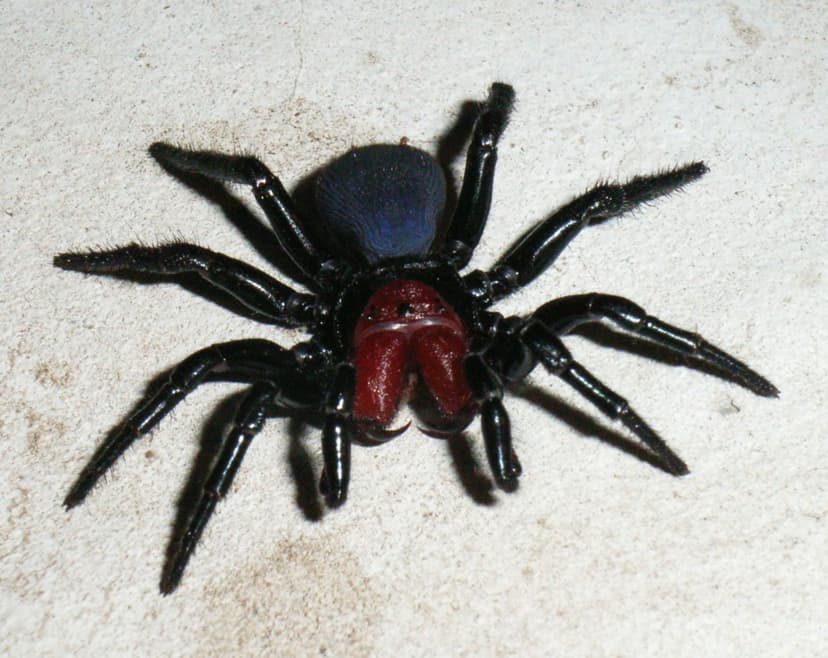
Actinopodidae
Actinopodidae is a family of mygalomorph spiders native to mainland Australia and South America, typically inhabiting open forests. This family includes the mouse spiders (Missulena species), which are notable for their medically significant and potentially dangerous bites.

Araneidae
The Araneidae, commonly known as orb-weaver spiders, are a widespread family of spiders renowned for constructing distinctive spiral wheel-shaped webs. Found globally, these spiders are characterized by their eight eyes, hairy or spiny legs, and the absence of stridulating organs. With nearly 5,000 described species, they represent one of the largest spider families, playing a significant role in controlling insect populations.

Clubionidae
The sac spiders of the family Clubionidae are a diverse group of nocturnal, sac-building hunting spiders found globally. While historically a broad classification, the family now encompasses fewer than 700 described species across 18 genera, with the genus Clubiona being the most species-rich. These spiders are distinctive for their silken retreats where they shelter during the day.