
Clubionidae
Nocturnal wandering predators that build "sacs" to retreat to during the day.
The sac spiders of the family Clubionidae are a diverse group of nocturnal, sac-building hunting spiders found globally. While historically a broad classification, the family now encompasses fewer than 700 described species across 18 genera, with the genus Clubiona being the most species-rich. These spiders are distinctive for their silken retreats where they shelter during the day.
Key Facts
- ›Nocturnal, sac-building hunting spiders.
- ›Found in a near-worldwide distribution.
- ›Build silken sacs for daytime shelter.
- ›The family currently contains fewer than 700 described species across 18 genera.
- ›Clubiona is the most species-rich genus within the family.
- ›Their taxonomy has undergone significant revisions over time.

Sac Spiders
Worldwide
Eight Eyes Arranged In Two Rows, Conical Anterior Spinnerets That Touched
Build Silken Sacs For Shelter, Wander At Night To Hunt
About Clubionidae
What is Clubionidae?
The family Clubionidae, commonly known as sac spiders, comprises a group of spiders characterized by their nocturnal hunting habits and the construction of silken sacs. These silken retreats serve as shelters where the spiders hide during daylight hours. Sac spiders are found globally, exhibiting a near-worldwide distribution.
Taxonomy and Classification
The taxonomic history of the Clubionidae is complex. Historically, the family was a broad classification for various spiders sharing similar traits, including eight eyes arranged in two rows, conical anterior spinnerets that touched, and their nocturnal, sac-building predatory behavior. However, significant revisions have occurred, with many genera being moved to other families and former subfamilies now recognized as separate families. Research indicates that, in its current definition, the family contains fewer than 700 described species distributed across 18 genera. The genus Clubiona is by far the most species-rich within this family.
Habitat and Behavior
Sac spiders inhabit diverse environments, constructing their silken sacs in various locations. These can include spaces between folded leaves or grass blades, under tree bark, or beneath rocks and other ground litter. Their behavior is primarily nocturnal, emerging from their sacs to hunt during the night. They are considered wandering predators, actively seeking out prey rather than relying solely on stationary webs for capture.
Source: Wikipedia ↗
Frequently Asked Questions
What are sac spiders?
Sac spiders, belonging to the family Clubionidae, are a group of spiders known for their nocturnal habits and for building silken sacs. These sacs serve as their retreats during the daytime.
Where do sac spiders live?
Sac spiders have a near-worldwide distribution, meaning they can be found in many different regions across the globe. They typically construct their silken sacs in various locations, such as between folded leaves, under bark, or beneath ground litter.
How many species of sac spiders are there?
As of recent classifications, the family Clubionidae contains fewer than 700 described species, organized into 18 genera. The genus Clubiona is the largest, housing a significant portion of these species.
What makes sac spiders distinctive?
Sac spiders are characterized by their nocturnal hunting behavior and their habit of constructing silken sacs for shelter. Historically, they were grouped based on shared traits like eight eyes in two rows, conical anterior spinnerets, and their predatory, sac-building lifestyle.
Has the classification of sac spiders changed?
Yes, the taxonomy of the Clubionidae family has a complex history. It was once a broad category for many spiders, but numerous genera have since been transferred to other families, and some former subfamilies are now recognized as separate families.
Related Spider species

Araneidae
The Araneidae, commonly known as orb-weaver spiders, are a widespread family of spiders renowned for constructing distinctive spiral wheel-shaped webs. Found globally, these spiders are characterized by their eight eyes, hairy or spiny legs, and the absence of stridulating organs. With nearly 5,000 described species, they represent one of the largest spider families, playing a significant role in controlling insect populations.

Deinopidae
Deinopidae, commonly known as net-casting spiders, are a family of circumtropical cribellate spiders recognized for their unique hunting strategy. These stick-like spiders catch prey by stretching a specialized web between their front legs and then propelling themselves forward, entangling their victims. Their exceptional night vision, facilitated by large posterior median eyes, allows them to hunt effectively in low-light conditions.
Desidae
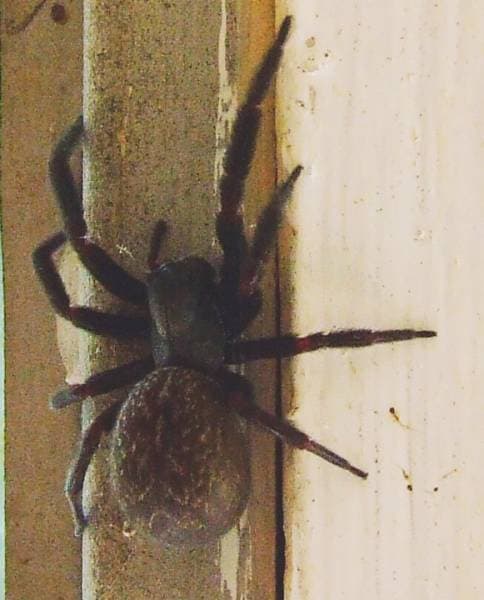
Desidae is a family of spiders, with some species notably adapted to intertidal zones. While historically known for its marine-dwelling members, the family now also encompasses numerous inland genera. The vast majority of Desidae are native to Australia, New Zealand, or New Caledonia, with a significant presence also in South America.