
Corinnidae
Wandering predators that build silken retreats
Corinnidae, also known as corinnid sac spiders, is a family of araneomorph spiders characterized by eight eyes in two rows and conical, touching anterior spinnerets. They are generally wandering predators that construct silken retreats, often found on plants, under bark, or rocks. The family is now recognized in a restricted sense, comprising the subfamilies Corinninae and Castianeirinae, and includes over 800 species across 71 genera.
Key Facts
- ›Corinnidae are often called corinnid sac spiders.
- ›They possess eight eyes arranged in two rows.
- ›Their anterior spinnerets are conical and touch each other.
- ›Most species are wandering predators that construct silken retreats.
- ›The family currently includes 76 genera and 892 species worldwide.
- ›Some genera, like Castianeira, exhibit mimicry of ants and velvet ants.
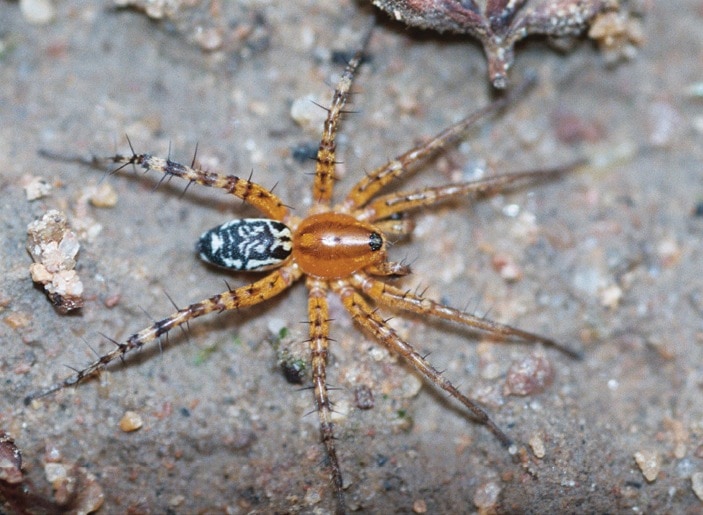
Corinnid Sac Spiders
Worldwide
Eight Eyes Arranged In Two Rows, Conical Anterior Spinnerets That Touch
Wandering Predators, Build Silken Retreats, Some Exhibit Mimicry of Ants
About Corinnidae
Corinnidae: Wandering Predators with a Confusing Past
Corinnidae, commonly referred to as corinnid sac spiders, is a family of araneomorph spiders recognized for their general predatory lifestyle and the construction of silken retreats. Historically, the family has undergone significant taxonomic revisions, making its classification complex. As currently understood, Corinnidae encompasses the subfamilies Corinninae and Castianeirinae, containing a substantial number of species distributed globally.
Key Characteristics
A defining characteristic of Corinnidae spiders is their visual apparatus, possessing eight eyes arranged in two distinct rows. Additionally, their anterior spinnerets are conical in shape and touch each other, a feature that aids in their silk production for retreats. These spiders are primarily wandering predators, meaning they actively hunt their prey rather than relying solely on intricate webs. They construct silken sacs or retreats, typically found in sheltered locations such as on plants, between leaves, beneath bark, or under rocks, providing them with a safe place to rest and molt.
Diversity and Mimicry
The family Corinnidae is remarkably diverse, with current estimates indicating 76 genera and over 892 species worldwide. Among these, certain genera, most notably Castianeira, have evolved striking mimicry of ants and velvet ants. This remarkable adaptation likely serves as a protective measure against potential predators. Other genera exhibiting ant-like traits include Mazax, Myrmecium, and Myrmecotypus. The type genus for the family, Corinna, comprises small running spiders that are characteristic of the family's general traits.
Source: Wikipedia ↗
Frequently Asked Questions
What are corinnid sac spiders?
Corinnidae, or corinnid sac spiders, are a family of araneomorph spiders known for their wandering predatory habits and the silken retreats they build. They are characterized by specific arrangements of their eyes and spinnerets.
What is distinctive about corinnid spiders?
Corinnids typically have eight eyes arranged in two rows, and their anterior spinnerets are conical and touch each other. Many species are wandering predators, and some exhibit remarkable mimicry of ants.
Where do corinnid spiders live?
These spiders are found worldwide. They typically construct their silken sacs or retreats on plants, often between leaves, or in sheltered locations such as under bark or rocks.
What do corinnid spiders eat?
As wandering predators, corinnids primarily feed on insects and other small invertebrates that they actively hunt. Their diet consists of whatever prey they can capture in their environment.
Are all corinnid spiders ant mimics?
Not all corinnid spiders are ant mimics, but some genera, notably Castianeira, are known for their striking resemblance to ants and velvet ants. This mimicry likely serves as a defense mechanism.
Related Spider species

Orsolobidae
Orsolobidae is a family of six-eyed spiders comprising approximately 200 described species across thirty genera. First described by J. A. L. Cooke in 1965, it was elevated to family status from the "Dysderidae" classification in 1985. While most of its genera are endemic to New Zealand and Australia, some are also found in southern Africa and South America.
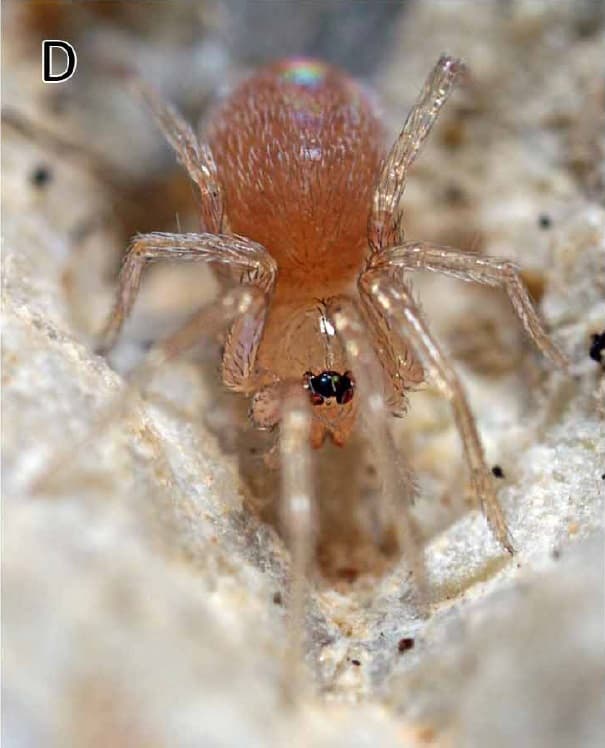
Oonopidae
Oonopidae, commonly known as goblin spiders, are a widespread family of tiny spiders, typically measuring between 1 to 3 millimeters. They are characterized by their small size, often six eyes (though variations exist), and a remarkable array of unusual morphological traits, particularly in males. These spiders are frequently found in leaf litter, under rocks, and in tropical rainforest canopies, with some species even inhabiting termite nests.
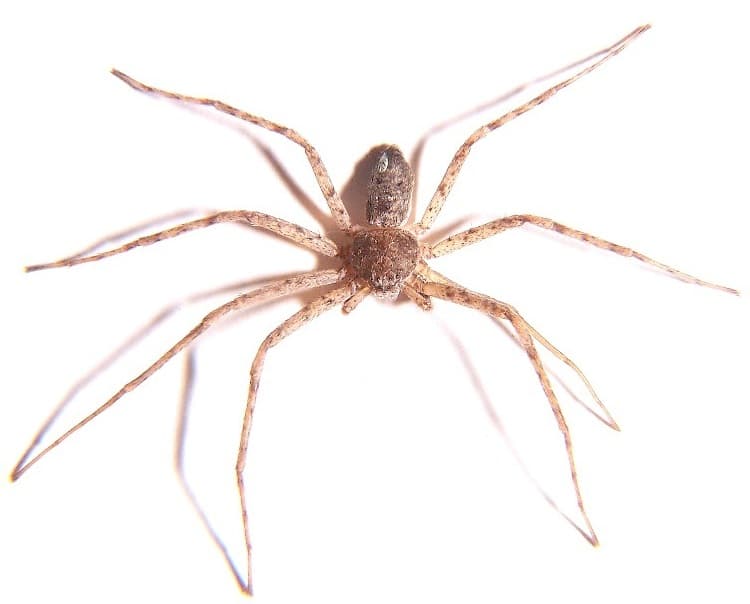
Philodromidae
Philodromidae, commonly known as philodromid crab spiders or running crab spiders, is a diverse family of araneomorph spiders that includes over 500 species across approximately thirty genera. These spiders are characterized by their crab-like body shape and active hunting strategy, preying on insects and other small invertebrates by ambush rather than web-building. They are typically found on plants, from deciduous trees to conifers, and are widespread across various habitats.