
Cyatholipidae
Hanging beneath sheet webs.
Cyatholipidae is a family of spiders first described by Eugène Simon in 1894. Primarily inhabiting moist montane forests, some species have adapted to drier savannah environments. A distinctive characteristic of most members is their habit of hanging beneath sheet webs.
Key Facts
- ›The family was first described by Eugène Simon in 1894.
- ›Most species are found in moist montane forests.
- ›Some species inhabit dry savannah regions.
- ›They are distributed across Africa (including Madagascar), New Zealand, and Australia.
- ›A fossil record suggests a wider past geographic distribution.
- ›Members typically hang beneath sheet webs.
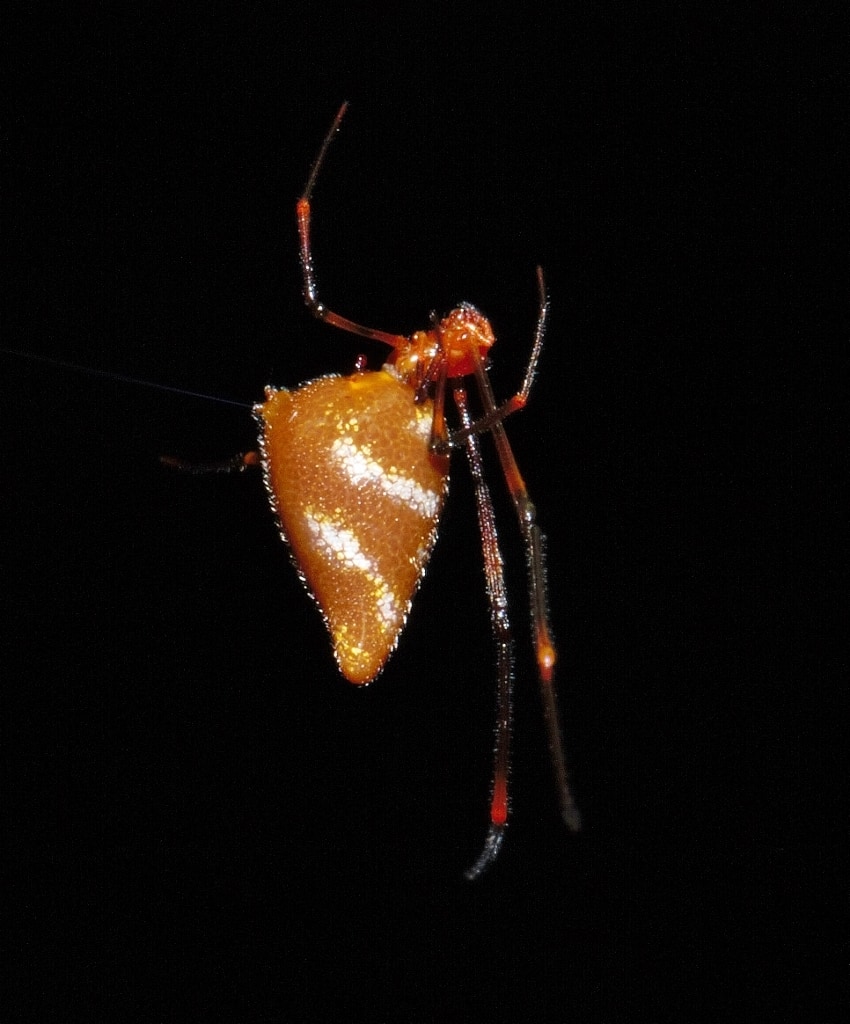
Africa, Madagascar, New Zealand, Australia, Jamaica
Hang Beneath Sheet Webs
Hang Beneath Sheet Webs
About Cyatholipidae
The family Cyatholipidae encompasses a group of spiders first formally described by Eugène Simon in 1894. These arachnids are primarily known for their characteristic habitat and hunting strategy. While most species thrive in the damp environments of montane forests, a notable exception includes species like Scharffia rossi, which have adapted to drier savannah ecosystems.
Geographic Distribution and Fossil Record
The natural range of Cyatholipidae spiders extends across several continents. They are found in Africa, including the island nation of Madagascar, as well as in New Zealand and Australia. Notably, one species, Pokennips dentipes, has established itself in Jamaica. The presence of fossil genera, such as †Balticolipus and †Spinilipus, found in Eocene-aged Bitterfield and Baltic Ambers, strongly suggests that the geographic distribution of this family was significantly wider in prehistoric times.
Genera and Species
As of January 2026, the Cyatholipidae family is recognized to include 23 extant genera and a total of 58 species. In addition to these living species, five fossil genera have been identified, providing further insight into the evolutionary history of the group.
Habitat and Behavior
Cyatholipidae spiders exhibit a distinctive behavior related to their feeding habits. The majority of members within this family are known to hang beneath sheet webs they construct. This strategy allows them to efficiently capture unsuspecting prey that ventures into their silken traps.
Source: Wikipedia ↗
Frequently Asked Questions
Where do Cyatholipidae spiders typically live?
Most Cyatholipidae spiders are found in moist montane forests. However, some species, such as Scharffia rossi, have adapted to live in dry savannah regions.
What is a notable hunting behavior of Cyatholipidae spiders?
A key characteristic of most Cyatholipidae spiders is that they hang beneath sheet webs. This is their primary method for capturing prey.
What is the geographic distribution of Cyatholipidae spiders?
Cyatholipidae spiders are found in Africa, including Madagascar, as well as in New Zealand and Australia. One species, Pokennips dentipes, is found in Jamaica.
Are there any fossil species of Cyatholipidae?
Yes, fossil species of Cyatholipidae have been found in Eocene-aged Bitterfield and Baltic Ambers. This suggests that the family once had a broader geographic distribution.
How many genera and species are currently recognized in the Cyatholipidae family?
As of January 2026, the Cyatholipidae family includes 23 genera and 58 species. Additionally, five fossil genera are known.
Related Spider species

Agelenidae
The Agelenidae, commonly known as funnel weavers, are a large family of spiders found globally. They are distinguished by their fast running speeds and the construction of flat sheet webs with a funnel-shaped retreat. While most species are solitary, some African species exhibit parasocial behavior, living in communal webs.
Amaurobiidae
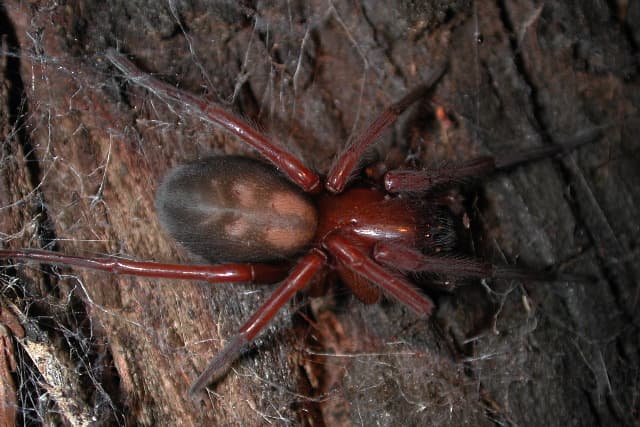
Amaurobiidae is a family of spiders characterized by their three-clawed feet and the presence of either a cribellum or its absence. These spiders are typically found in crevices, hollows, or under stones, where they construct retreats and are often captured in pitfall traps. While widespread, they can be challenging to distinguish from closely related spider families.
Anapidae
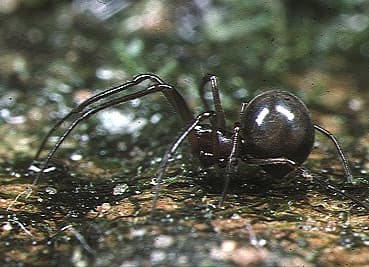
Anapidae is a diverse family of small spiders, with most species measuring less than two millimeters in length. These spiders are found worldwide, inhabiting leaf litter and moss in rainforest environments. A distinctive characteristic of many Anapidae species is their ability to build small orb webs, often less than three centimeters in diameter.