
Dictynidae
Web builder, constructing irregular webs on or near the ground.
Dictynidae is a family of cribellate spiders, first described in 1871, known for producing hackled bands. These spiders typically construct irregular webs on or near the ground, weaving a tangle of silk among plant branches or stems. Recent taxonomic revisions in 2025 have led to the transfer of several genera to the families Argyronetidae and Lathyidae.
Key Facts
- ›Belongs to the cribellate spider group, meaning they produce silk with a hackled band texture.
- ›Most species build irregular, tangled webs on or near the ground.
- ›These webs are often situated among plant branches or stems.
- ›The family was established by Octavius Pickard-Cambridge in 1871.
- ›As of October 2025, the family comprises 45 genera and 339 species.
- ›Recent taxonomic changes in 2025 have reclassified some formerly included genera.
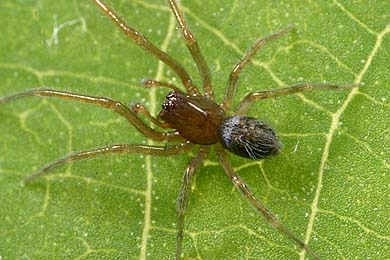
Cribellate Silk Production, Hackled Band Webs
About Dictynidae
Dictynidae is a family of spiders characterized by their production of cribellate silk, which forms distinctive hackled bands. This family was first formally described by Octavius Pickard-Cambridge in 1871. The spiders within this family are known for their specific web-building habits, typically constructing irregular webs situated on or near the ground.
Web Construction and Habitat
Species in the Dictynidae family generally create a tangled network of silken fibers. These webs are often found among the branches or stems of a single plant, creating a somewhat haphazard structure. Their preferred habitat is therefore closely associated with vegetation where they can anchor their irregular webs.
Taxonomy and Classification
As of October 2025, the Dictynidae family is a substantial group, encompassing 45 genera and a total of 339 species. However, the classification of this family has seen recent adjustments. In 2025, several genera that were previously classified under Dictynidae were transferred to the families Argyronetidae and Lathyidae, reflecting ongoing research and understanding of spider phylogeny.
Source: Wikipedia ↗
Frequently Asked Questions
What are Dictynidae spiders known for?
Dictynidae spiders are known for their cribellate silk, which they use to produce hackled bands. They are also recognized for building irregular, tangled webs typically found on or near the ground, often among plant stems and branches.
When was the Dictynidae family established?
The Dictynidae family was first described and established in the year 1871. The description was made by Octavius Pickard-Cambridge.
How large is the Dictynidae family?
As of October 2025, the Dictynidae family is recognized as containing 45 genera. Within these genera, there are a total of 339 described species.
Have there been any recent changes to the Dictynidae family classification?
Yes, significant taxonomic revisions occurred in 2025. Several genera that were previously part of the Dictynidae family have since been transferred to other families, specifically Argyronetidae and Lathyidae.
Related Spider species
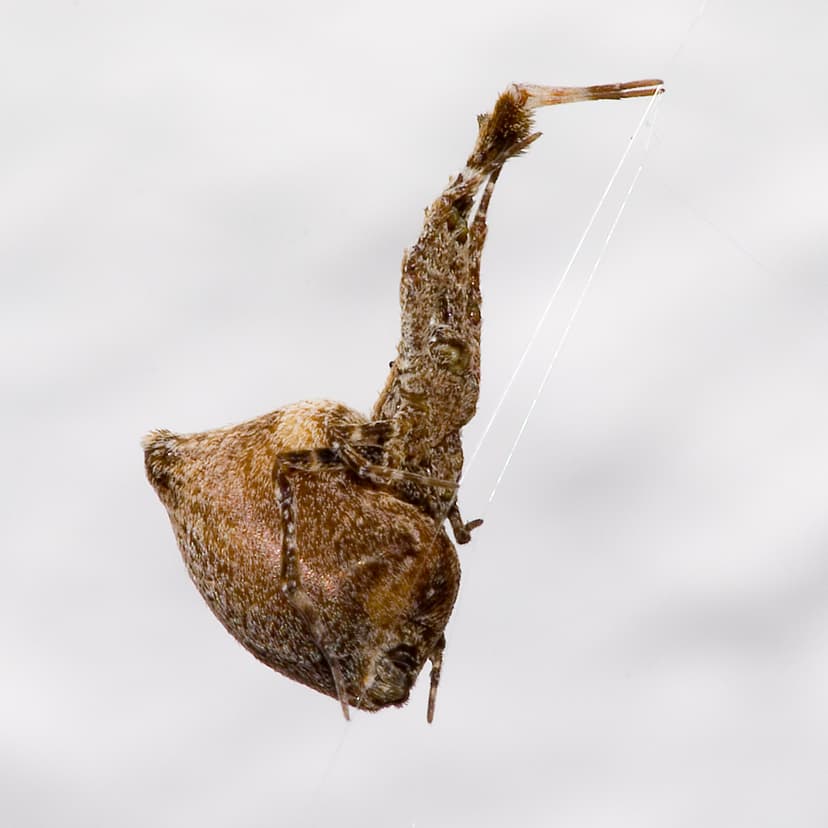
Uloboridae
Uloboridae, also known as cribellate orb weavers or hackled orb weavers, are a family of non-venomous spiders found almost worldwide. Their most distinctive trait is the complete absence of venom glands, a trait that evolved secondarily, leading them to rely on a unique hunting strategy involving specialized silk and digestive fluids.

Dipluridae
Dipluridae, commonly known as curtain-web spiders, are a family of mygalomorph spiders characterized by two pairs of booklungs and stabbing chelicerae. While historically encompassing genera now moved to other families, the current Dipluridae are primarily found in South America and the Caribbean, known for building messy funnel-webs or silk-lined burrows.

Cyatholipidae
Cyatholipidae is a family of spiders first described by Eugène Simon in 1894. Primarily inhabiting moist montane forests, some species have adapted to drier savannah environments. A distinctive characteristic of most members is their habit of hanging beneath sheet webs.