
Uloboridae
Web builder using cribellate silk that ensnares prey, followed by wrapping and external digestion.
Uloboridae, also known as cribellate orb weavers or hackled orb weavers, are a family of non-venomous spiders found almost worldwide. Their most distinctive trait is the complete absence of venom glands, a trait that evolved secondarily, leading them to rely on a unique hunting strategy involving specialized silk and digestive fluids.
Key Facts
- ›They are non-venomous spiders, lacking venom glands.
- ›They build webs using cribellate silk, which is fuzzy and ensnares prey without being sticky.
- ›Prey is captured, thoroughly wrapped in silk, and then liquefied by digestive enzymes before ingestion.
- ›Some species, like Philoponella congregabilis, can form large, messy communal webs.
- ›They have an almost worldwide distribution, with fossils dating back to the Late Jurassic.
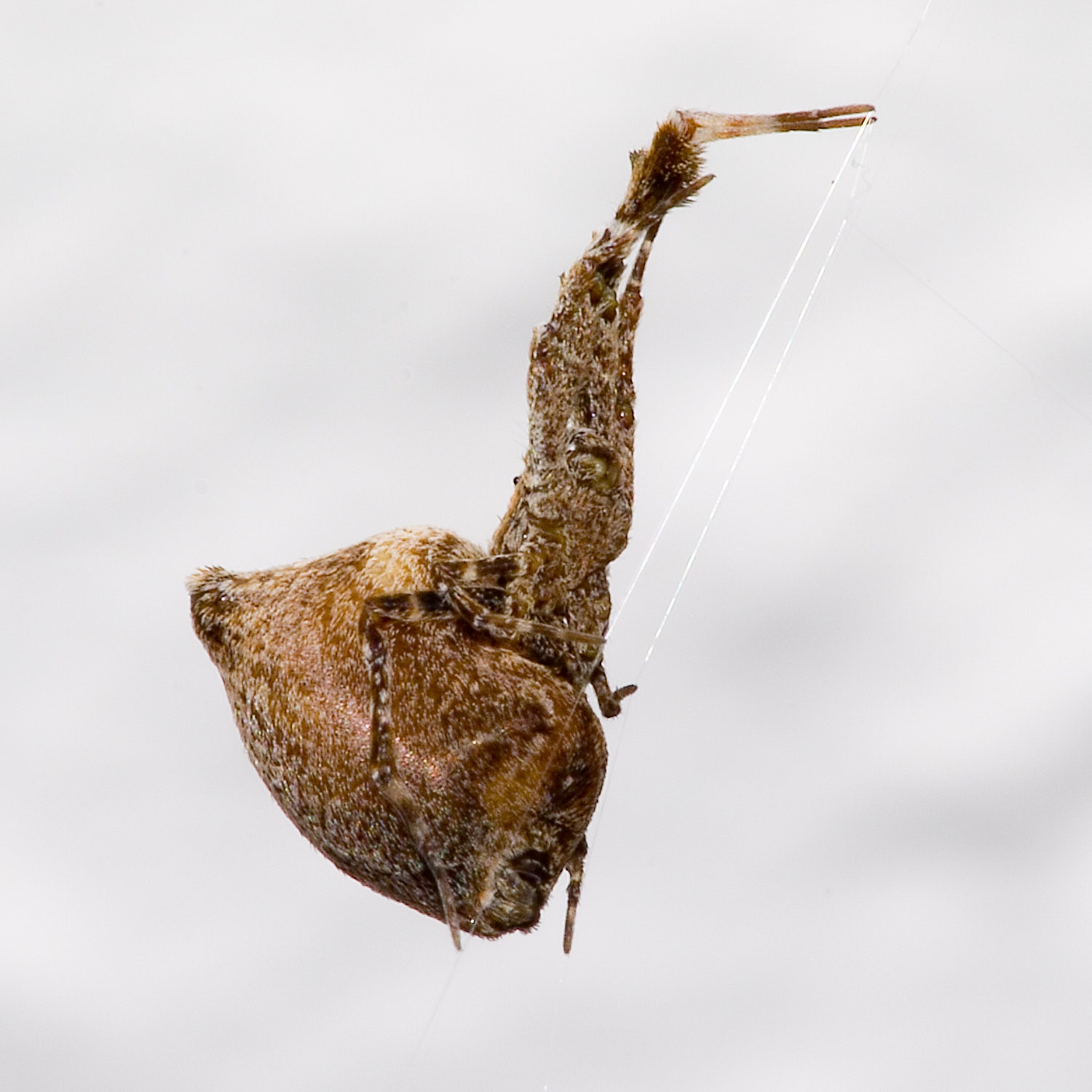
Cribellate Orb Weavers, Hackled Orb Weavers
Worldwide, Northern Europe
- Lack of Venom Glands
- Three Claws
- Humped Opisthosoma More Pronounced Than the Carapace
- Rear Eyes Tend To Curve
- Some Genera Have Only Four Eyes
Some Species Form Colonies, Communal Web Building In Some Species
About Uloboridae
Uloboridae: The Non-Venomous Orb Weavers
Uloboridae is a fascinating family of spiders, commonly referred to as cribellate orb weavers or hackled orb weavers. These arachnids are distinguished by a remarkable evolutionary trait: they completely lack venom glands, a characteristic that is rare among spiders. This absence of venom means they have developed unique methods for capturing and consuming their prey, setting them apart in the spider world.
Description and Habitat
These spiders are typically medium to large in size and possess three claws. Their coloration is generally dull, which serves as an effective camouflage against their natural backgrounds. A notable physical characteristic is their humped opisthosoma, which is often more pronounced than their carapace. While most uloborid spiders have eight eyes, some genera, such as Miagrammopes, have only four. Their webs are constructed using a specialized, fuzzy silk called cribellate silk, which ensnares prey without being adhesive.
Hunting Strategy
The hunting method of Uloboridae is particularly unique. Instead of relying on venom, they construct orb webs from cribellate silk. The fine, fuzzy fibers of this silk trap insects that come into contact with it. Once prey is ensnared, the spider wraps it thoroughly in more silk, compresses it, and then covers it with regurgitated digestive enzymes. The liquefied body of the prey is then ingested, with the spider's mouthparts never directly touching the victim. It is thought that specialized hairs protect the spider from its own digestive fluids.
Distribution and Social Behavior
The Uloboridae family boasts an almost worldwide distribution, making them a common sight in various ecosystems. Fossils of uloborid spiders have been found dating back to the Late Jurassic period. While many species are solitary, some uloborids exhibit social behavior. For instance, species like Philoponella congregabilis can form colonies, constructing large, often messy, communal webs that can house from a few individuals to hundreds. These colonies can be dominated by nymphs or adults, and males are typically found in larger aggregations.
Source: Wikipedia ↗
Frequently Asked Questions
Are Uloboridae spiders venomous?
No, Uloboridae spiders are not venomous. They are a family of non-venomous spiders, a trait that evolved secondarily. Instead of venom, they rely on their specialized silk and digestive enzymes to subdue and consume their prey.
How do Uloboridae spiders catch their prey?
Uloboridae spiders use a unique hunting strategy. They build orb webs with cribellate silk, which is fuzzy and catches insects by ensnarement rather than stickiness. Once prey is caught, they wrap it thoroughly in silk, compress it, and then cover it with digestive fluid to liquefy it for ingestion.
What do Uloboridae spiders eat?
The diet of Uloboridae spiders consists primarily of insects and other small invertebrates that become ensnared in their webs. They do not actively hunt but rely on their web construction to capture prey.
Do all Uloboridae spiders build webs?
Most Uloboridae spiders build orb webs. However, some species may construct simpler webs, such as a single line web, while others create more complex structures. Newly hatched spiders, lacking the cribellum for specialized silk, build webs with a different structure.
Where are Uloboridae spiders found?
The Uloboridae family has an almost worldwide distribution. They can be found across many continents, with only a couple of species known from Northern Europe.
Can Uloboridae spiders live in colonies?
Yes, some species of Uloboridae spiders are social and can form colonies. Philoponella congregabilis is known to create large, communal webs where colonies can range from a few individuals to hundreds.
Related Spider species

Agelenidae
The Agelenidae, commonly known as funnel weavers, are a large family of spiders found globally. They are distinguished by their fast running speeds and the construction of flat sheet webs with a funnel-shaped retreat. While most species are solitary, some African species exhibit parasocial behavior, living in communal webs.
Amaurobiidae
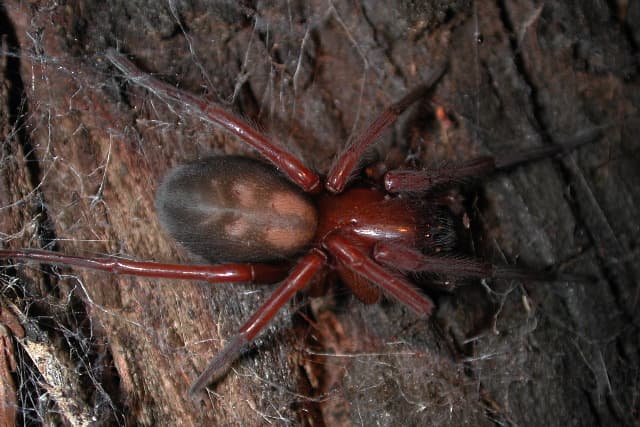
Amaurobiidae is a family of spiders characterized by their three-clawed feet and the presence of either a cribellum or its absence. These spiders are typically found in crevices, hollows, or under stones, where they construct retreats and are often captured in pitfall traps. While widespread, they can be challenging to distinguish from closely related spider families.
Anapidae
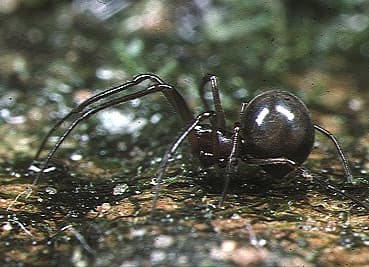
Anapidae is a diverse family of small spiders, with most species measuring less than two millimeters in length. These spiders are found worldwide, inhabiting leaf litter and moss in rainforest environments. A distinctive characteristic of many Anapidae species is their ability to build small orb webs, often less than three centimeters in diameter.