
Diguetidae
Coneweb spiders, belonging to the family Diguetidae, are a small group of six-eyed haplogyne spiders. They are distinguished by their characteristic tangled space webs that feature a cone-like central retreat for hiding and egg-laying. This family is found in two distinct geographic regions: one in the Southwestern United States and Mexico, and another in South America.
Key Facts
- ›Six-eyed haplogyne spiders.
- ›Construct tangled space webs with a cone-like central retreat.
- ›Found in two separate geographic regions: Southwestern North America and South America.
- ›Includes two genera and sixteen species.
- ›Possess the same eye arrangement as recluse spiders (family Sicariidae).
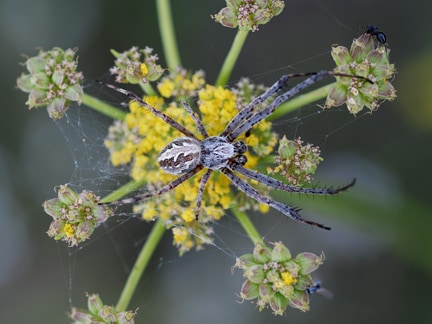
Coneweb Spiders
Southwestern United States, Mexico, South America
Six Eyes, Haplogyne Nature, Cone-Like Central Retreat In Webs
- Live In Tangled Space Webs
- Fashion A Cone-Like Central Retreat For Hiding and Egg-Laying
About Diguetidae
What is known about Coneweb Spiders (Diguetidae)
Coneweb spiders, scientifically classified under the family Diguetidae, are a small and distinctive group of spiders characterized by their six eyes and haplogyne nature. These arachnids are renowned for their unique web construction, which involves creating tangled space webs that incorporate a prominent cone-like central retreat. This specialized structure serves as a safe haven for the spiders to hide and for them to lay their eggs.
Geographic Distribution and Habitat
The family Diguetidae is found in two geographically separated regions. One significant range includes the Southwestern United States and Mexico, while another population inhabits South America. Within these areas, members of the genus Diguetia specifically tend to build their webs in shrubs or between the pads of cacti, indicating an adaptation to arid or semi-arid environments with available plant structures for support.
Taxonomy and Distinguishing Features
The taxonomic history of the Diguetidae family has seen some variation, having been initially established as a subfamily and later elevated to family rank. Importantly, coneweb spiders share the same eye arrangement as the venomous recluse spiders, belonging to the family Sicariidae. This shared characteristic is a notable feature of their morphology.
As of recent counts, the Diguetidae family comprises two genera and sixteen known species. While the article text does not detail their specific coloration, size, diet, venom effects, lifespan, or natural predators, their primary hunting strategy is that of a web builder, relying on their intricate webs to capture prey.
Source: Wikipedia ↗
Frequently Asked Questions
What are coneweb spiders?
Coneweb spiders, scientifically known as Diguetidae, are a small family of spiders characterized by their six eyes and haplogyne nature. They are recognized for building intricate, tangled webs that include a distinctive cone-shaped central area.
Where do coneweb spiders live?
The geographic distribution of Diguetidae is divided into two main areas. One population resides in the Southwestern United States and Mexico, while another is found in South America. Members of the genus Diguetia typically build their webs in shrubs or between cactus pads.
What makes coneweb spiders unique?
Coneweb spiders are notable for their specialized web structures, which feature a cone-like retreat where they shelter and deposit their eggs. They also share the same eye arrangement as the recluse spiders, a feature that distinguishes them within the spider world.
How many species of coneweb spiders are there?
As of current records, the Diguetidae family encompasses two genera and a total of sixteen species. Ongoing research and observations may lead to adjustments in these numbers over time.
Related Spider species

Tetragnathidae
Tetragnathidae, commonly known as long-jawed orb weavers or long jawed spiders, are a family of araneomorph spiders characterized by their elongated bodies, legs, and chelicerae. These spiders are found near water, often in long vegetation, and construct small orb webs with open hubs.
Titanoecidae
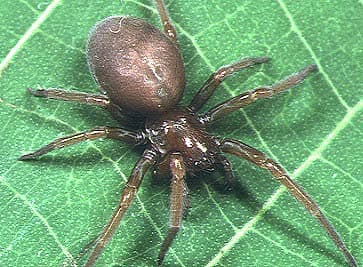
Titanoecidae is a family of araneomorph spiders first described in 1967. These spiders are found across the New World and Eurasia, and are characterized by their mostly dark coloration and the construction of "woolly" cribellate silk webs. Several species inhabit high altitudes in mountain ranges, where they can be quite abundant.

Oecobiidae
Oecobiidae, also known as disc web spiders, are a family of small to moderately sized araneomorph spiders found globally. They are distinguished by their unique leg placement, which gives them a wheel-like scurrying motion, and their characteristic star-shaped webs constructed on or under various surfaces. These spiders are notable for their diet, primarily consisting of ants, leading to common names like 'anteater'.