
Dysderidae
These spiders are adept hunters, utilizing their exceptionally large chelicerae to pierce the armored bodies of their prey, such as woodlice and beetles.
The Dysderidae, commonly known as woodlouse hunters or sowbug-eating spiders, are a family of araneomorph spiders primarily found in Eurasia and North Africa. These spiders are distinguished by their six eyes arranged in a semicircle and their exceptionally large chelicerae, which they use to subdue their preferred prey, woodlice and beetles. One notable species, *Dysdera crocata*, has been introduced to many parts of the world.
Key Facts
- ›Primarily found in Eurasia and North Africa, with some species in South America.
- ›Possess six eyes arranged in a semicircle.
- ›Characterized by very large chelicerae used for piercing prey.
- ›Main diet consists of woodlice and beetles.
- ›Some species, like *Dysdera crocata*, have been introduced globally.
- ›Females are haplogyne, lacking a sclerotized epigyne.

Woodlouse Hunters, Sowbug-Eating Spiders, Cell Spiders
Eurasia, North Africa, South America
Six Eyes Arranged In A Semicircle, Very Large Chelicerae
About Dysderidae
Dysderidae: The Woodlouse Hunters
The Dysderidae family, commonly referred to as woodlouse hunters, sowbug-eating spiders, or cell spiders, comprises a group of araneomorph spiders first formally described in 1837. Their natural range is predominantly across Eurasia and extends into North Africa, although a very limited number of species have been found in South America. Notably, Dysdera crocata, a representative species, has been introduced to numerous regions worldwide, often facilitated by the transport of its preferred food source.
Key Characteristics
Dysderid spiders are generally characterized by having six eyes, a feature that, along with their haplogyne nature (females lack a sclerotized epigyne), sets them apart. Their most striking physical attribute is their exceptionally large chelicerae, which are robust appendages used with great effectiveness to pierce the tough, armored bodies of their prey. This specialized anatomy is crucial for their hunting success.
Diet and Hunting
The primary diet of Dysderidae spiders consists of woodlice (also known as sowbugs or pillbugs) and beetles. Their powerful chelicerae allow them to subdue these prey items, which are often more heavily protected than the typical insects targeted by many other spider families. This dietary specialization is reflected in their common names.
Diversity and Distribution
The family contains a substantial number of genera, with Dysdera and Harpactea being particularly widespread and accounting for a significant portion of the described species within the family's geographical distribution. As of October 2025, the Dysderidae family is documented to include 24 genera and 665 species. While their venom is considered mildly toxic to humans, potentially causing localized reactions, it is not typically regarded as medically significant.
Notable Species
Dysdera crocata, the woodlouse hunter, is perhaps the most well-known member of this family due to its extensive introduction across the globe. This species exhibits a distinctive coloration, featuring a dull red-brown carapace and a gray or tan abdomen, which helps in its identification, though it can be confused with certain other spider genera.
Source: Wikipedia ↗
Frequently Asked Questions
What are woodlouse hunters?
Woodlouse hunters are a family of spiders known scientifically as Dysderidae. Their common name comes from their specialized diet, which primarily consists of woodlice.
Where do Dysderidae spiders live?
The natural geographic distribution of Dysderidae spiders is mainly across Eurasia and North Africa. However, species like *Dysdera crocata* have been introduced to many other regions around the world.
What makes Dysderidae spiders distinctive?
These spiders are easily recognized by their six eyes, which are arranged in a semicircle. They also possess very large chelicerae, which are crucial for their hunting strategy against armored prey.
What do Dysderidae spiders eat?
The primary diet of Dysderidae spiders includes woodlice (sowbugs) and beetles. Their strong chelicerae are adapted to pierce the hard exoskeletons of these prey items.
Are Dysderidae spiders dangerous to humans?
While Dysderidae spiders are venomous, their venom is reported to be only mildly toxic to humans. Bites may cause local reactions, but they are not generally considered medically significant.
How many species are in the Dysderidae family?
As of October 2025, the Dysderidae family includes a substantial number of species, with 24 genera and 665 species documented. The genera *Dysdera* and *Harpactea* contain a large proportion of these species.
Related Spider species
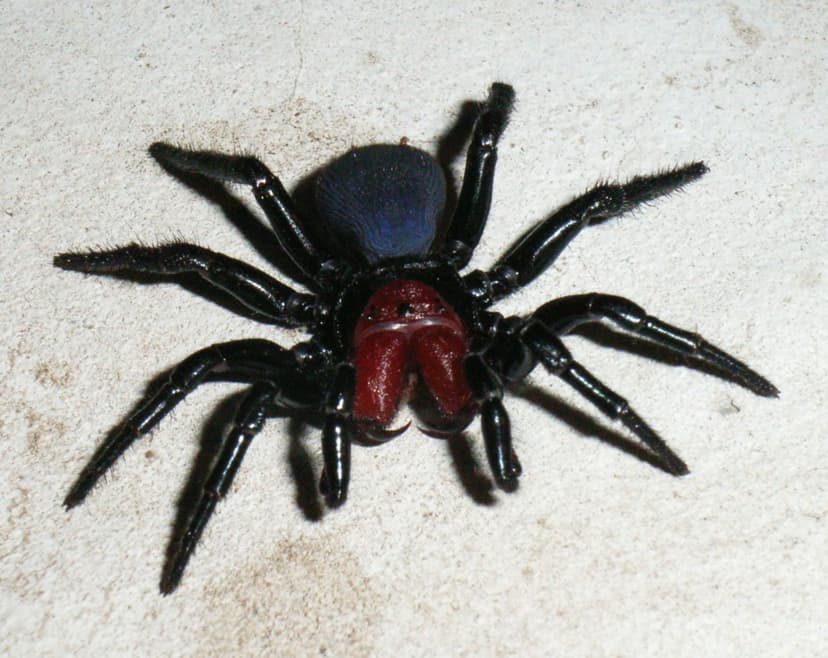
Actinopodidae
Actinopodidae is a family of mygalomorph spiders native to mainland Australia and South America, typically inhabiting open forests. This family includes the mouse spiders (Missulena species), which are notable for their medically significant and potentially dangerous bites.

Agelenidae
The Agelenidae, commonly known as funnel weavers, are a large family of spiders found globally. They are distinguished by their fast running speeds and the construction of flat sheet webs with a funnel-shaped retreat. While most species are solitary, some African species exhibit parasocial behavior, living in communal webs.
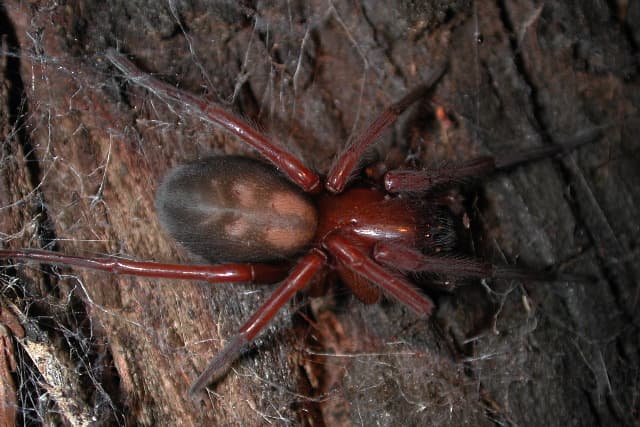
Amaurobiidae
Amaurobiidae is a family of spiders characterized by their three-clawed feet and the presence of either a cribellum or its absence. These spiders are typically found in crevices, hollows, or under stones, where they construct retreats and are often captured in pitfall traps. While widespread, they can be challenging to distinguish from closely related spider families.