
Eresidae
They live in silken tubes or nests and likely ambush prey that comes into proximity, though specific hunting strategies beyond web construction are not detailed.
Velvet spiders, belonging to the family Eresidae, are a small group of spiders predominantly found in the Old World, with a single exception in Brazil. They are characterized by their smooth, velvety appearance, often black or brown, and construct silken tubes or nests, with some species exhibiting remarkable eusocial behavior and unique maternal care.
Key Facts
- ›Eresidae spiders are commonly known as velvet spiders.
- ›They are almost entirely limited to the Old World, with one species found in Brazil.
- ›Many species have a smooth, velvety appearance and are black or brown, but some can be brightly colored.
- ›Some velvet spiders exhibit near-eusocial behavior, cooperating in brood rearing.
- ›Females provide a unique form of maternal care by regurgitating liquefied internal organs as food for their young.
- ›The genus Stegodyphus is known for building elaborate, robust communal nests.
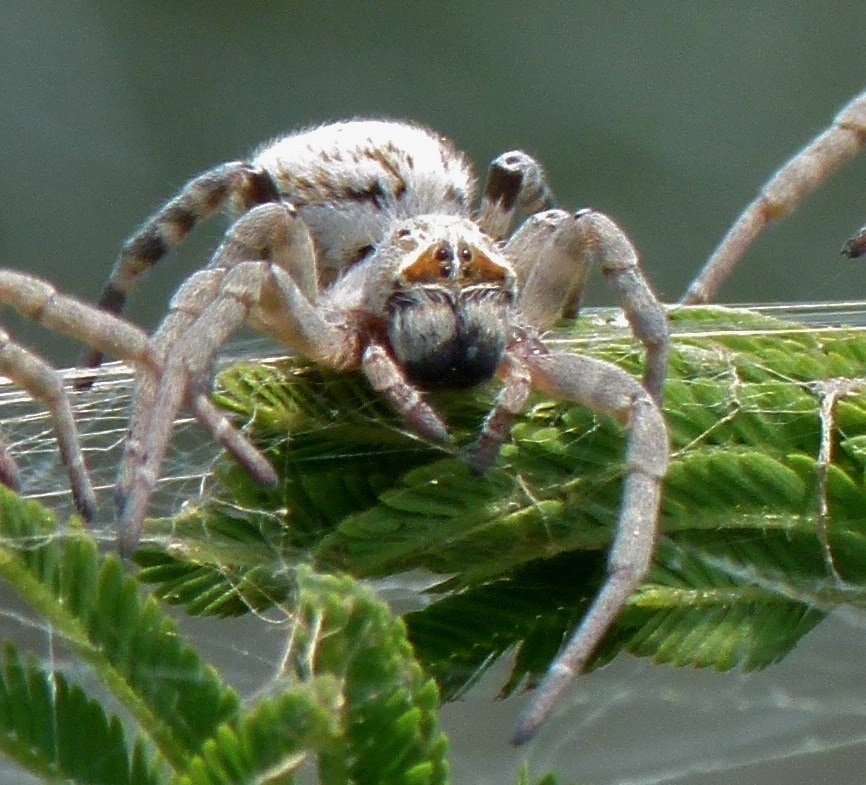
Velvet Spiders, Ladybird Spiders
Old World, Brazil
Semi-Rectangular Carapace, Clypeal Hood, Straight Anterior Eye Row, Strongly Recurved Posterior Eye Row, Median Eyes Close Together
- Live In Silken Tubes Or Underground
- Some Species Build Communal Nests
- Exhibit Eusocial-Like Behavior In Brood Rearing
- Unique Maternal Care Involving Regurgitation of Internal Organs
About Eresidae
Velvet Spiders (Eresidae)
Velvet spiders, scientifically classified under the family Eresidae, represent a modest group of approximately 100 species distributed across nine genera. Their natural range is almost exclusively confined to the Old World, with a single species documented in Brazil. In Europe, some members of this family are colloquially referred to as ladybird spiders.
Description and Habitat
These spiders are often distinguished by their smooth and velvety texture, typically appearing in shades of black or brown, although brighter coloration is also observed. They construct silken tubes, often situated under objects or underground, serving as their dwelling. Notably, the genus Stegodyphus is known for building more elaborate communal nests.
Identification
Distinguishing velvet spiders from other families can be achieved by examining their semi-rectangular carapace and clypeal hood. Further identification involves observing their eye arrangement, which features a straight anterior eye row and a strongly recurved posterior eye row, with the median eyes positioned close together.
Social Behavior and Maternal Care
Certain velvet spider species exhibit social behaviors that approach eusociality, lacking only a specialized caste system and a queen. They cooperate in the rearing of their broods, a trait uncommon among most spiders. A remarkable and unique aspect of their maternal care involves the female liquefying her internal organs and regurgitating this material to feed her young. Upon exhaustion of her internal resources, the young spiders consume the mother.
Genera and Distribution
As of October 2025, the Eresidae family comprises nine genera and 119 species. The genus Penestomus, previously considered a subfamily within Eresidae, was elevated to its own family, Penestomidae, in 2010.
Source: Wikipedia ↗
Frequently Asked Questions
What are velvet spiders?
Velvet spiders are a family of spiders, Eresidae, known for their smooth, velvety appearance. They are mostly found in the Old World and are characterized by their silken tubes or nests.
Where do velvet spiders live?
Velvet spiders are predominantly found in the Old World, meaning Europe, Asia, and Africa. There is one known species that resides in Brazil.
What makes velvet spiders distinctive?
Their velvety texture and coloration, often black or brown but sometimes brighter, are distinctive. Some species also exhibit unique social behaviors and maternal care, which are uncommon in the spider world.
Do velvet spiders build webs?
While they don't build capture webs in the typical sense, velvet spiders do construct silken tubes for shelter or underground living. The genus Stegodyphus is noted for building elaborate communal nests.
What is unique about velvet spider maternal care?
Female velvet spiders engage in a remarkable form of maternal care where they liquefy their internal organs and regurgitate this material to feed their young. The young then consume the mother once her internal resources are depleted.
Are velvet spiders social?
Some species of velvet spiders display near-eusocial behavior, cooperating in raising their young. This communal behavior is rare among spiders, with only a few other groups exhibiting similar traits.
Related Spider species

Agelenidae
The Agelenidae, commonly known as funnel weavers, are a large family of spiders found globally. They are distinguished by their fast running speeds and the construction of flat sheet webs with a funnel-shaped retreat. While most species are solitary, some African species exhibit parasocial behavior, living in communal webs.
Amaurobiidae
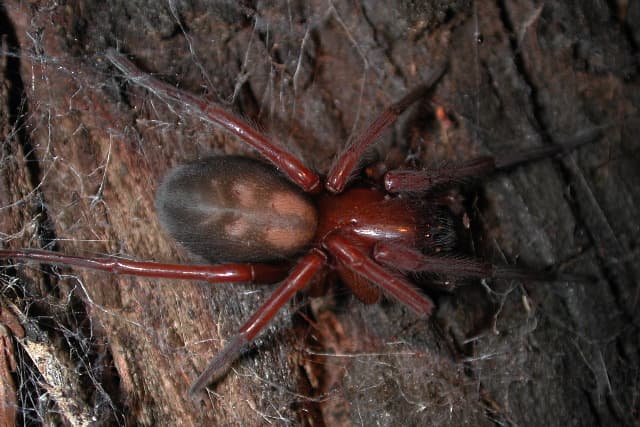
Amaurobiidae is a family of spiders characterized by their three-clawed feet and the presence of either a cribellum or its absence. These spiders are typically found in crevices, hollows, or under stones, where they construct retreats and are often captured in pitfall traps. While widespread, they can be challenging to distinguish from closely related spider families.
Anapidae
Anapidae is a diverse family of small spiders, with most species measuring less than two millimeters in length. These spiders are found worldwide, inhabiting leaf litter and moss in rainforest environments. A distinctive characteristic of many Anapidae species is their ability to build small orb webs, often less than three centimeters in diameter.