
Hahniidae
Web builder, constructing delicate sheet webs.
Hahniidae, commonly known as dwarf sheet spiders, is a family of araneomorph spiders first described in 1878. These spiders are characterized by their small size, typically 1-5 mm in body length, and the construction of extremely delicate sheet webs. They are found worldwide and have a preference for moist environments.
Key Facts
- ›Body size ranges from 1 to 5 MM.
- ›Builds extremely delicate, difficult-to-spot sheet webs.
- ›Webs are found in leaf litter, mosses, or on trees.
- ›Possesses six spinnerets arranged in a transverse row.
- ›Found worldwide, with genera in the Northern and Southern Hemispheres showing genital structure differences.
- ›Prefers locations near water or moss.
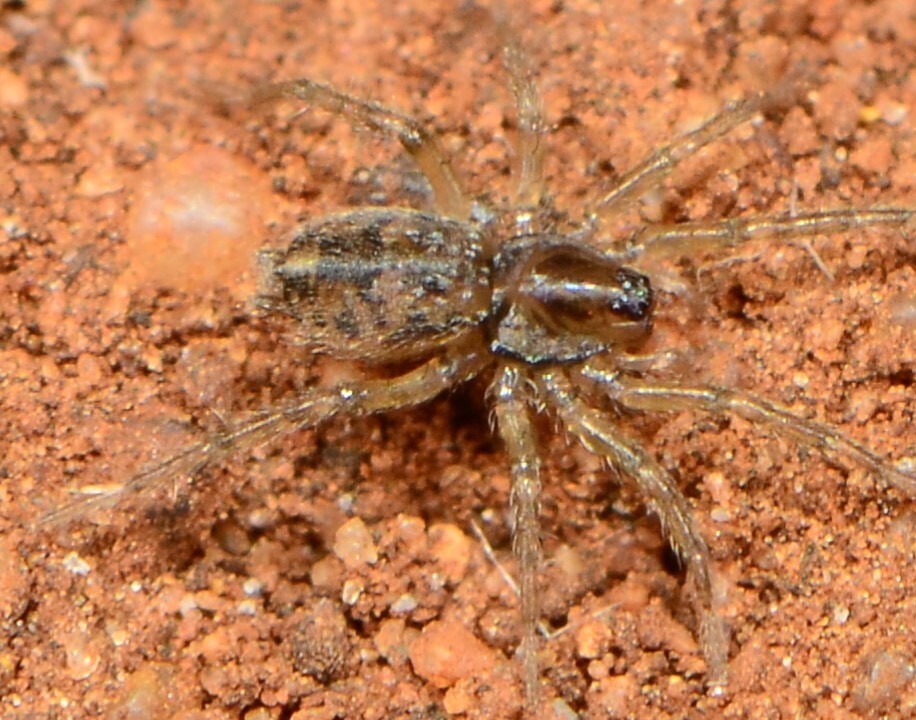
Dwarf Sheet Spiders
Worldwide
- Arrangement of Six Spinnerets In A Transverse Row.
- the Last Segment of the Outer Spinnerets Is Quite Long and Stands Out Above All the Others.
About Hahniidae
Dwarf Sheet Spiders (Hahniidae)
Dwarf sheet spiders, scientifically classified as the family Hahniidae, represent a group of small araneomorph spiders that were first formally described by Philipp Bertkau in 1878. Characterized by their diminutive size, with bodies typically measuring between 1 and 5 millimeters, these spiders are notable for the exceptionally delicate sheet webs they construct. These webs are often difficult to detect unless coated with dew due to their fine silk.
Lifestyle and Habitat
Hahniidae spiders exhibit a strong preference for environments situated near water or moss. They are frequently encountered within leaf litter, detritus, and on the foliage of shrubs and trees. Their webs, which do not lead to a specific retreat for the spider, are typically found in these same microhabitats. A key physical characteristic of this family is the arrangement of their six spinnerets in a transverse row, with the final segment of the outer spinnerets being notably elongated and protruding.
Distribution
The Hahniidae family boasts a worldwide distribution, indicating their presence across various continents. There are observed differences in the genital structures of genera found in the Northern Hemisphere and Africa compared to those in the Southern Hemisphere. While a considerable number of species are believed to exist in southeast Asia, relatively few have been formally described from this region to date.
Naming
The family name, Hahniidae, is derived from its type genus, Hahnia. This genus was established in honor of the German zoologist Carl Wilhelm Hahn.
Genera and Species
As of October 2025, the Hahniidae family encompasses 29 genera and a total of 244 described species, highlighting the diversity within this spider group.
Source: Wikipedia ↗
Frequently Asked Questions
What are dwarf sheet spiders?
Dwarf sheet spiders, belonging to the family Hahniidae, are a group of small araneomorph spiders. They are known for their tiny size and for building very fine, sheet-like webs.
Where are Hahniidae spiders found?
Hahniidae spiders are a worldwide family, meaning they can be found across many different continents and regions. They tend to favor habitats near water or moss.
What do Hahniidae spiders look like?
These spiders are very small, with bodies measuring between 1 and 5 mm in length. A distinctive feature is their arrangement of six spinnerets in a transverse row, with the last segment of the outer spinnerets being notably long.
What kind of webs do Hahniidae spiders build?
They construct extremely delicate webs in the form of a sheet. These webs are so fine that they are hard to see unless they are covered in dew. The webs do not lead to a retreat for the spider.
What environments do Hahniidae spiders inhabit?
Hahniidae spiders greatly favor locations near water or moss. They are commonly found in leaf litter and detritus, or on the leaves of shrubs and trees.
Related Spider species

Agelenidae
The Agelenidae, commonly known as funnel weavers, are a large family of spiders found globally. They are distinguished by their fast running speeds and the construction of flat sheet webs with a funnel-shaped retreat. While most species are solitary, some African species exhibit parasocial behavior, living in communal webs.
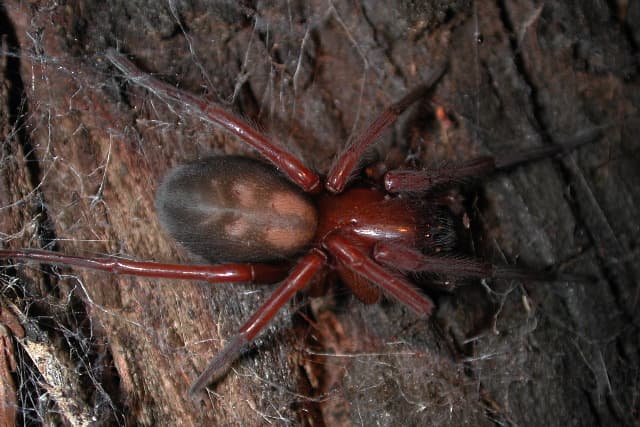
Amaurobiidae
Amaurobiidae is a family of spiders characterized by their three-clawed feet and the presence of either a cribellum or its absence. These spiders are typically found in crevices, hollows, or under stones, where they construct retreats and are often captured in pitfall traps. While widespread, they can be challenging to distinguish from closely related spider families.
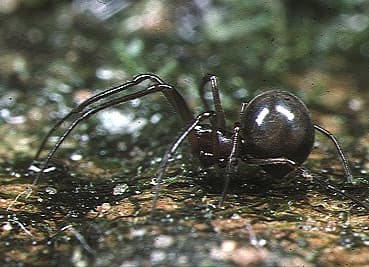
Anapidae
Anapidae is a diverse family of small spiders, with most species measuring less than two millimeters in length. These spiders are found worldwide, inhabiting leaf litter and moss in rainforest environments. A distinctive characteristic of many Anapidae species is their ability to build small orb webs, often less than three centimeters in diameter.