
Hersiliidae
Lays a light coating of threads over an area of tree bark to trap insects, then immobilizes prey with silk and bites.
The Hersiliidae, commonly known as tree trunk spiders or "two-tailed spiders," are a family of tropical and subtropical spiders recognized by their exceptionally long spinnerets. They are found globally in warm regions and are characterized by their unique hunting strategy of laying silk patches on tree bark to immobilize prey.
Key Facts
- ›Commonly known as tree trunk spiders or "two-tailed spiders."
- ›Possess two prominent spinnerets nearly as long as their abdomen.
- ›Found in tropical and subtropical regions worldwide.
- ›Hunt by laying silk patches on tree bark to trap insects.
- ›Active both day and night and are well camouflaged on tree trunks.
- ›Comprise about 206 species across sixteen genera.

Tree Trunk Spiders, Two-Tailed Spiders
Global
- Two Prominent Spinnerets That Are Almost As Long As Their Abdomen.
Active Day and Night, Well Camouflaged On Tree Trunks, Lay Silk Patches On Bark To Trap Prey
About Hersiliidae
What is the Hersiliidae Family?
The Hersiliidae, widely known as tree trunk spiders or the "two-tailed spiders," represent a distinct family of spiders found in tropical and subtropical environments globally. Described by Tamerlan Thorell in 1869, this family is characterized by a unique morphological feature: a pair of exceptionally long spinnerets that extend to nearly the length of the spider's abdomen. This prominent characteristic is the source of one of their common nicknames.
Habitat and Distribution
Hersiliidae spiders inhabit warm regions across the globe, thriving in tropical and subtropical climates. They are typically found on the surfaces of tree trunks, where their coloration and sedentary behavior provide excellent camouflage against the bark. While their distribution is broad, only a limited number of species venture north of the 40°N parallel.
Description and Behavior
These spiders are classified as ecribellate, meaning they lack the cribella used to produce exceptionally fine silk strands. Their physical appearance includes eight eyes arranged in two curved rows. Hersiliidae members are small to medium-sized, with body lengths generally ranging from 10 to 18 mm. They are notable for being active both during the day and at night, and their ability to blend seamlessly with tree bark makes them difficult to spot when stationary.
Hunting Strategy
Unlike many spider families that construct intricate capture webs, Hersiliidae employ a more passive yet effective hunting method. They do not build webs to ensnare prey directly. Instead, they strategically lay a light coating of silk threads over a specific area of tree bark. When an unsuspecting insect wanders onto this silken patch, the spider quickly encircles its prey with its elongated spinnerets, casting silk to immobilize it before delivering a bite.
Source: Wikipedia ↗
Frequently Asked Questions
What are Hersiliidae spiders commonly called?
Hersiliidae spiders are commonly referred to as tree trunk spiders. They also earn the nickname "two-tailed spiders" due to their distinctive, elongated spinnerets.
Where are tree trunk spiders found?
Tree trunk spiders have a global distribution in tropical and subtropical regions. While they are widespread in these warm climates, only a few species are found north of the 40°N parallel.
What makes Hersiliidae spiders unique?
Their most striking feature is a pair of exceptionally long spinnerets located at the tip of their abdomen, which are almost as long as the abdomen itself. This unique morphology contributes to their common name, "two-tailed spiders."
How do Hersiliidae spiders hunt for prey?
Instead of building capture webs, Hersiliidae spiders lay a light coating of silk threads over an area of tree bark. When an insect wanders onto this patch, the spider encircles it with its spinnerets and casts silk to immobilize the prey before biting it.
What is the typical size of a Hersiliidae spider?
Members of the Hersiliidae family are generally small to medium-sized spiders. Their body length typically ranges from 10 to 18 mm (0.4 to 0.7 inches).
Are Hersiliidae spiders active during the day or night?
Hersiliidae spiders are active during both the day and night. They are also very well camouflaged when stationary on tree trunks, aligning themselves with the bark markings.
Related Spider species
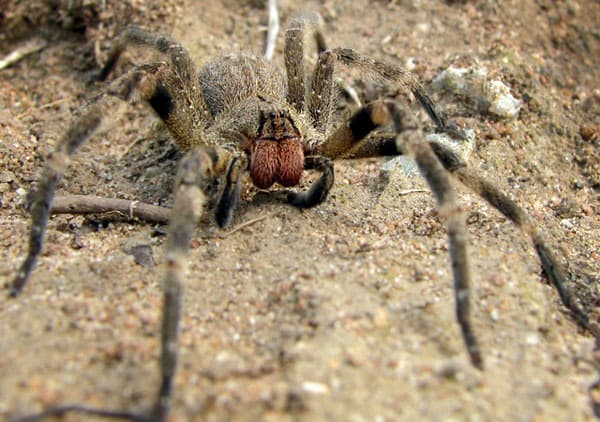
Ctenidae
Ctenidae, commonly known as wandering spiders, are a family of highly defensive and venomous nocturnal hunters. They are characterized by a distinctive longitudinal groove on the top-rear of their oval carapace. While many members are known for their potent venom, only a few species within the genus Phoneutria are confirmed to be hazardous to humans, though caution is advised for all larger ctenids due to poorly understood venoms.

Deinopidae
Deinopidae, commonly known as net-casting spiders, are a family of circumtropical cribellate spiders recognized for their unique hunting strategy. These stick-like spiders catch prey by stretching a specialized web between their front legs and then propelling themselves forward, entangling their victims. Their exceptional night vision, facilitated by large posterior median eyes, allows them to hunt effectively in low-light conditions.

Liphistiinae
Liphistius is a genus of basal trapdoor spiders belonging to the family Liphistiidae, notable for their segmented abdomens and mid-ventral spinnerets, a trait shared only with other members of the suborder Mesothelae. These spiders, found across Japan, China, and Southeast Asia, are characterized by their unique burrowing behavior, constructing silk-lined traps with a distinctive door.