
Liphistiinae
Ambush predator using silk tripwires from a disguised trapdoor burrow.·Endangered (for some species like Liphistius batuensis)
Liphistius is a genus of basal trapdoor spiders belonging to the family Liphistiidae, notable for their segmented abdomens and mid-ventral spinnerets, a trait shared only with other members of the suborder Mesothelae. These spiders, found across Japan, China, and Southeast Asia, are characterized by their unique burrowing behavior, constructing silk-lined traps with a distinctive door.
Key Facts
- ›They are among the most ancient lineage of spiders, belonging to the suborder Mesothelae.
- ›Liphistius spiders possess segmented abdomens with spinnerets located in the middle of the underside.
- ›They construct burrows in earthen banks, often sealed with a disguised, woven door.
- ›Their diet consists of insects, woodlice, and similar small invertebrates.
- ›Adult males may wander to find females, while females tend to remain in their burrows.
- ›Some species have been shown to possess venom glands, dispelling past beliefs of them lacking venom.

Trapdoor Spiders
Japan, China, Southeast Asia
- Segmented Abdomen With Tergites On the Upper Surface of All Abdominal Segments.
- Spinnerets Are Placed In the Middle of the Underside of the Abdomen.
- Downward Pointing, Daggerlike Chelicerae.
- Eyes Are Distinctly Clustered Together On A Single Nodule.
- Male Palp Has A Tibial Apophysis.
- Construct Trapdoor Burrows.
- Females Rarely Leave Their Burrows.
- Adult Males Sometimes Wander In Search of Females.
- Reluctant To Leave Their Burrows.
About Liphistiinae
What is Liphistius?
Liphistius is a genus of basal trapdoor spiders, representing the sole genus within the subfamily Liphistiinae. This genus is significant as it belongs to the family Liphistiidae, which is the only family within the suborder Mesothelae, making these spiders some of the most ancient lineages of living spiders. They are distinguished by a suite of archaic features, including a segmented abdomen with plates (tergites) on its upper surface and spinnerets located in the middle of the abdomen's underside, a characteristic shared only with other members of the Mesothelae.
Habitat and Distribution
Species of Liphistius are found across a broad geographical range encompassing Japan, China, and Southeast Asia. Their preferred habitat involves constructing burrows in earthen banks, on certain cave walls, and likely within forest environments. These burrows are a defining feature of their lifestyle, often sealed with a thin, circular, woven door that is skillfully disguised with soil and moss to blend into its surroundings.
Biology and Hunting
Liphistius spiders are medium to large in size, with females reaching body lengths between 9 to 29 mm, and males being slightly smaller. They possess distinct physical traits such as downward-pointing, daggerlike chelicerae and a unique eye arrangement clustered on a single nodule. Their respiratory system relies solely on book lungs, which may contribute to their relatively inactive nature. While they spend their days deep within their burrows, they become active at night. Their hunting strategy involves waiting just below the burrow door for prey, such as insects and woodlice, to trigger one of the seven silken lines radiating from the entrance. Upon detection, they quickly emerge to capture their meal. Historically, they were thought to be non-venomous, but it has since been demonstrated that at least some species possess venom glands.
Conservation
Some species of Liphistius face significant conservation challenges. Three species found in Malaysia are endemic to very limited cave systems. Liphistius batuensis, for example, is found exclusively in Batu Caves and is classified as endangered, with a population estimated to be under 250 individuals. These Malaysian trapdoor spiders are protected by local laws, but continue to be threatened by habitat loss and collection for the exotic pet trade.
Source: Wikipedia ↗
Frequently Asked Questions
What is Liphistius?
Liphistius is a genus of basal trapdoor spiders, recognized as the sole genus within the subfamily Liphistiinae. They are distinguished by their ancient lineage and unique physical characteristics, placing them in the suborder Mesothelae.
Where are Liphistius spiders found?
Species of Liphistius are naturally distributed across Japan, China, and various regions of Southeast Asia. Their specific habitats often involve burrows dug into earthen banks or cave walls.
What makes Liphistius spiders unique?
Liphistius spiders are unique due to their segmented abdomens and mid-ventral spinnerets, a characteristic of the ancient Mesothelae suborder. They also construct elaborate trapdoor burrows, unlike many other spider families.
What do Liphistius spiders eat?
These spiders primarily prey on insects, woodlice, and other small invertebrates. They ambush their prey by waiting near the entrance of their burrows for unsuspecting victims to trigger their silken tripwires.
Are Liphistius spiders venomous?
Historically, it was believed that Liphistius spiders lacked venom. However, research in 2010 demonstrated that at least some species within the genus do possess venom glands.
What is the habitat of Liphistius spiders?
Liphistius spiders typically inhabit burrows dug into earthen banks, on some cave walls, and likely in forest environments. These burrows are often sealed with a disguised, woven door.
What is the conservation status of some Liphistius species?
Some Liphistius species, particularly those endemic to Malaysia, face conservation concerns. For instance, Liphistius batuensis, found in Batu Caves, is classified as endangered with a population under 250 individuals.
Related Spider species
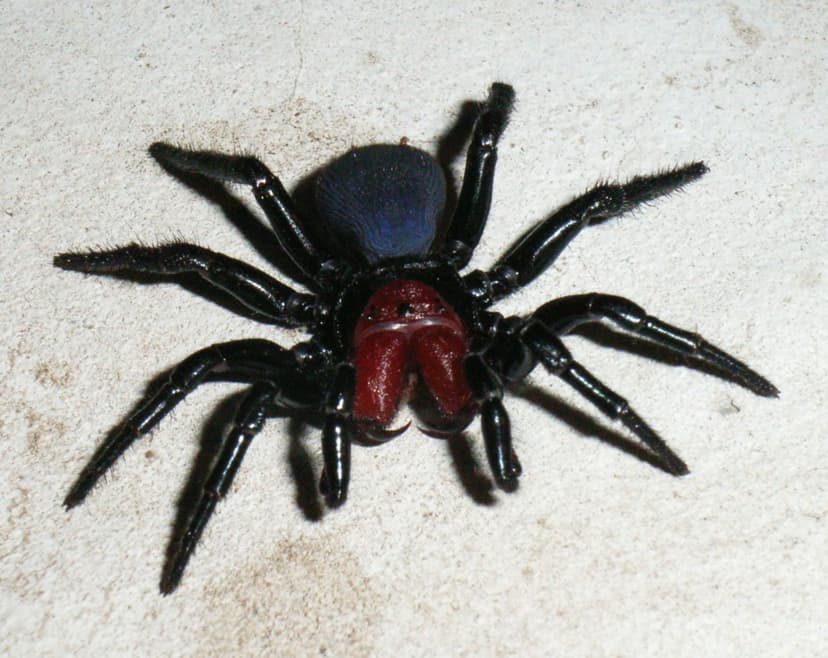
Actinopodidae
Actinopodidae is a family of mygalomorph spiders native to mainland Australia and South America, typically inhabiting open forests. This family includes the mouse spiders (Missulena species), which are notable for their medically significant and potentially dangerous bites.

Araneidae
The Araneidae, commonly known as orb-weaver spiders, are a widespread family of spiders renowned for constructing distinctive spiral wheel-shaped webs. Found globally, these spiders are characterized by their eight eyes, hairy or spiny legs, and the absence of stridulating organs. With nearly 5,000 described species, they represent one of the largest spider families, playing a significant role in controlling insect populations.
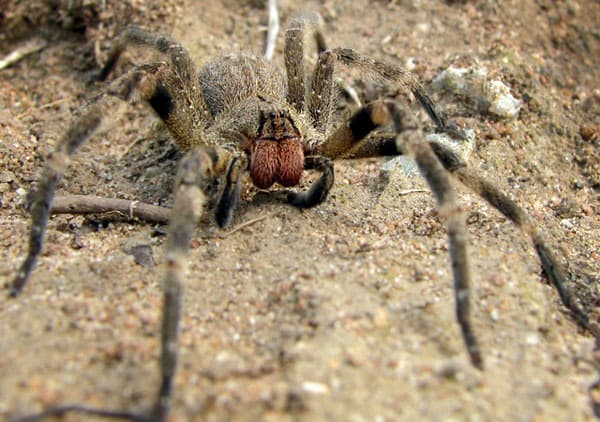
Ctenidae
Ctenidae, commonly known as wandering spiders, are a family of highly defensive and venomous nocturnal hunters. They are characterized by a distinctive longitudinal groove on the top-rear of their oval carapace. While many members are known for their potent venom, only a few species within the genus Phoneutria are confirmed to be hazardous to humans, though caution is advised for all larger ctenids due to poorly understood venoms.