
Idiopidae
Ambush predator, using silk-lined burrows and trapdoors to capture prey.
Idiopidae, commonly known as armored or spiny trapdoor spiders, is a family of mygalomorph spiders first described in 1889. These spiders are characterized by their large bodies, similar to tarantulas, and many species construct burrows, some featuring silk-lined trapdoors for defense and ambushing prey. Idiopidae are adaptable and inhabit diverse environments, and their bites are not considered dangerous to humans.
Key Facts
- ›Idiopidae are mygalomorph spiders first described by Eugène Simon in 1889.
- ›They are often called armored or spiny trapdoor spiders.
- ›Many species build burrows, some equipped with silk-lined trapdoors.
- ›Males often possess a spur on their legs used to immobilize females during mating.
- ›The oldest known idiopid lived to be 43 years old.
- ›Their bites are not dangerous to humans.

Armored Trapdoor Spiders, Spiny Trapdoor Spiders
- Males Have A Spur On Their Legs Used To Immobilize Females During Mating.
- Lateral Posterior Spinnerets Are Elongated.
- Build Burrows.
- Some Species Close Burrows With A Trapdoor Lined With Silk.
- Adaptable To Various Environments.
- Males Use Leg Spurs To Immobilize Females During Mating.
About Idiopidae
Idiopidae: The Armored and Spiny Trapdoor Spiders
Idiopidae, commonly referred to as armored or spiny trapdoor spiders, constitute a family within the mygalomorph infraorder of spiders. This family was first formally described by Eugène Simon in 1889. Spiders within the Idiopidae family are known for their substantial body size, often drawing comparisons to tarantulas. They exhibit a remarkable adaptability, thriving in a variety of environments, which allows different species to coexist with other arachnids.
Behavior and Habitat
A defining characteristic of many Idiopidae species is their burrow-building behavior. Some members of the family construct intricate retreats that are sealed with a silk-lined trapdoor. This trapdoor serves a dual purpose: providing a secure refuge and facilitating the ambush of unsuspecting prey. An example of this specialized behavior is seen in Prothemenops siamensis from Thailand, a species approximately 2 cm in length that creates its burrow in the vertical earth banks of streamside locations within lower montane rainforests. These burrows often feature multiple entrances leading to a central tube.
Physical Characteristics and Reproduction
Physically, Idiopidae spiders possess large bodies. A notable sexual dimorphism exists in many species, where males are equipped with a spur on their legs. This appendage is crucial during mating, as it is used to immobilize the female, thereby preventing her from attacking the male during the reproductive process. Furthermore, the lateral posterior spinnerets of these spiders are elongated.
Lifespan and Venom
Idiopidae spiders are not considered a threat to human health. Their venom, while present, does not pose a danger to people. The family includes species with notable longevity; the oldest recorded idiopid spider lived for an impressive 43 years, suggesting a potentially long lifespan for individuals within this group.
Source: Wikipedia ↗
Frequently Asked Questions
What are Idiopidae spiders?
Idiopidae are a family of mygalomorph spiders, also known as armored or spiny trapdoor spiders. They are characterized by their large bodies and their tendency to build burrows.
Do Idiopidae spiders build webs?
While they are web builders in the sense that they line their burrows with silk, Idiopidae do not construct aerial webs for catching prey. Instead, they utilize their silk-lined burrows, sometimes with trapdoors, for ambushing unsuspecting victims.
Are Idiopidae spiders dangerous to humans?
No, Idiopidae spiders do not deliver a bite that is dangerous to humans. While they possess venom, it is not considered medically significant for people.
What are some distinctive features of Idiopidae?
Spiders in this family have large bodies, similar to tarantulas. A notable feature in many species is that males have a spur on their legs, which is used to immobilize the female during mating. Their posterior spinnerets are also elongated.
Where do Idiopidae spiders live?
Idiopidae spiders are adaptable and can be found in many various environments. An example is Prothemenops siamensis, which builds its retreat in streamside vertical earth banks in lower montane rainforests.
How long can Idiopidae spiders live?
The oldest known idiopid spider lived to be 43 years old, indicating a potentially long lifespan for some members of this family.
Related Spider species

Agelenidae
The Agelenidae, commonly known as funnel weavers, are a large family of spiders found globally. They are distinguished by their fast running speeds and the construction of flat sheet webs with a funnel-shaped retreat. While most species are solitary, some African species exhibit parasocial behavior, living in communal webs.
Amaurobiidae
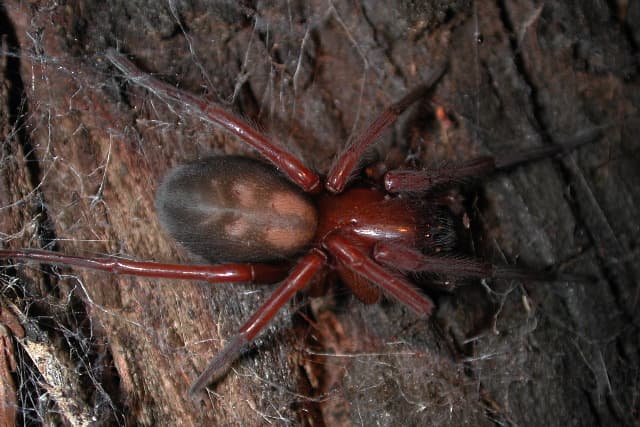
Amaurobiidae is a family of spiders characterized by their three-clawed feet and the presence of either a cribellum or its absence. These spiders are typically found in crevices, hollows, or under stones, where they construct retreats and are often captured in pitfall traps. While widespread, they can be challenging to distinguish from closely related spider families.
Anapidae
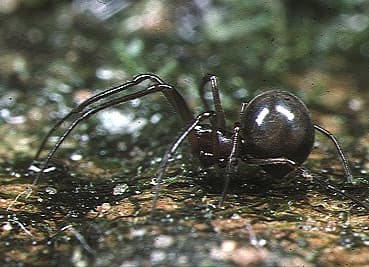
Anapidae is a diverse family of small spiders, with most species measuring less than two millimeters in length. These spiders are found worldwide, inhabiting leaf litter and moss in rainforest environments. A distinctive characteristic of many Anapidae species is their ability to build small orb webs, often less than three centimeters in diameter.