
Leptonetidae
Likely ambush predators or active hunters within their dark, moist environments.
Leptonetidae is a family of small, relatively primitive spiders that are adapted to living in dark, moist environments like caves. First described by Eugène Simon in 1890, these spiders are typically pale with a distinctive greenish or bluish sheen.
Key Facts
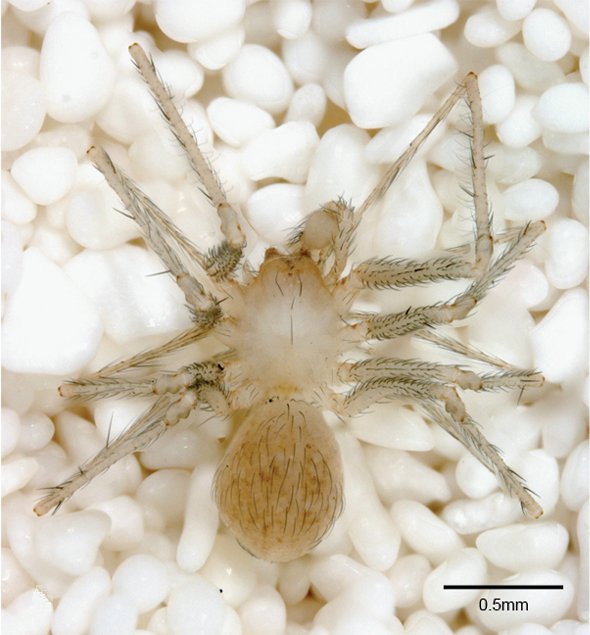
- ›They are small spiders, with most species measuring between 2 and 5 MM in total length.
- ›Leptonetids are generally pale in coloration with a greenish or bluish shine due to microscopic texture on their exoskeleton.
- ›Species that retain their eyes typically have six eyes arranged in a specific pattern, with the posterior pair set back.
- ›If a leg is lost, it usually detaches between the patella and tibia, not at the coxa/trochanter joint.
- ›Their habitat includes caves and leaf litter, with distributions around the Mediterranean, Eurasia, Japan, and southern North America.
- ›The family is considered relatively primitive, having diverged around the Middle Jurassic period.
Mediterranean Region, Eurasia, Japan, Southern North America
- Six Eyes Set In A Distinctive Pattern In Species That Retain Eyes
- Legs Typically Separate Between the Patella and Tibia When Lost
About Leptonetidae
The Leptonetidae family comprises small spiders renowned for their adaptation to dark and moist habitats, most notably caves. This family is considered relatively primitive, with evolutionary divergence estimated to have occurred around the Middle Jurassic period. The scientific classification of Leptonetidae was first established by Eugène Simon in 1890.
Distinguishing Characteristics
Spiders within the Leptonetidae family are characterized by their diminutive size, with the majority measuring between 2 and 5 millimeters in total length. Their coloration is typically pale, often exhibiting a subtle greenish or bluish iridescence. This sheen is attributed to the microscopic texture present on the cuticle of their exoskeleton. For species that have retained their eyes, a distinctive arrangement of six eyes is observed, featuring a posterior pair that is set back from the others. A peculiar characteristic of Leptonetids is the manner in which they shed limbs; if a leg is lost, it commonly separates between the patella and tibia, rather than at the coxa/trochanter joint.
Habitat and Distribution
Leptonetid spiders are predominantly found in environments that are both dark and humid. Their preferred habitats include caves and the layer of leaf litter found on the ground. Geographically, they are distributed across several regions, including areas surrounding the Mediterranean, throughout Eurasia, in Japan, and in southern parts of North America. The family currently encompasses 22 genera and approximately 400 species, though some genera have been reclassified to the family Archoleptonetidae.
Source: Wikipedia ↗
Frequently Asked Questions
What are Leptonetidae spiders?
Leptonetidae is a family of small spiders that are adapted to live in dark and moist environments, such as caves. They are considered a relatively primitive group within the spider order.
What is the typical size of a Leptonetid spider?
Most spiders in the Leptonetidae family are quite small, typically falling between 2 and 5 millimeters in total body length. This makes them difficult to spot in their natural habitats.
What color are Leptonetid spiders?
Leptonetid spiders are generally pale in color. They often exhibit a distinctive greenish or bluish shine on their exoskeleton, which is caused by microscopic textures.
Where are Leptonetid spiders found?
These spiders are commonly found in dark and moist places, including caves and leaf litter. Their geographic distribution includes areas around the Mediterranean, Eurasia, Japan, and southern North America.
Do all Leptonetid spiders have eyes?
Not all species within the Leptonetidae family have retained their eyes. However, those that do have six eyes arranged in a characteristic pattern, with the posterior pair set further back from the others.
How do Leptonetid spiders differ in leg detachment?
A notable characteristic of Leptonetid spiders is how they shed limbs. If a leg is lost, it typically separates between the patella and tibia, rather than detaching at the coxa/trochanter joint.
When did the Leptonetidae family first appear?
The Leptonetidae family is considered relatively primitive and is believed to have diverged around the Middle Jurassic period. They were first formally described by Eugène Simon in 1890.
Related Spider species
Actinopodidae
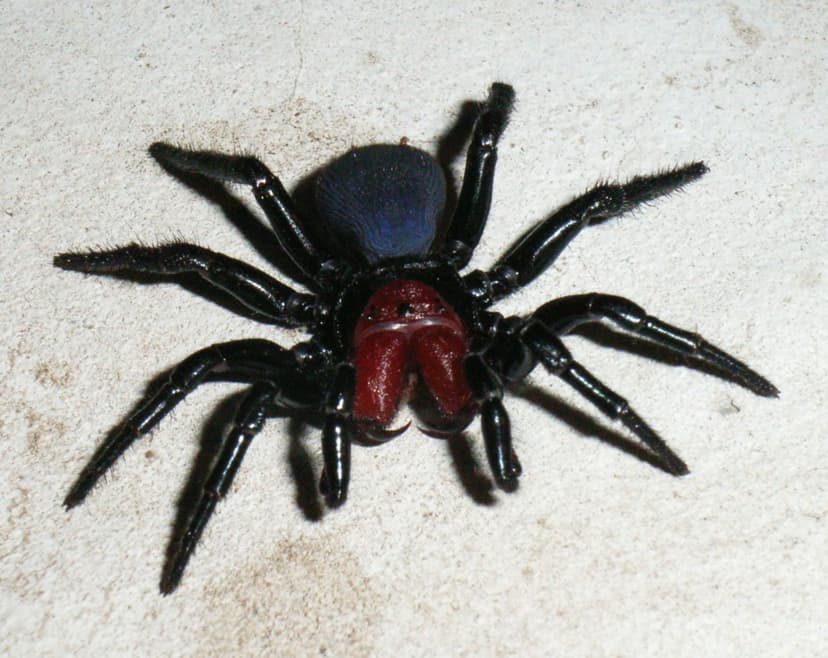
Actinopodidae is a family of mygalomorph spiders native to mainland Australia and South America, typically inhabiting open forests. This family includes the mouse spiders (Missulena species), which are notable for their medically significant and potentially dangerous bites.

Agelenidae
The Agelenidae, commonly known as funnel weavers, are a large family of spiders found globally. They are distinguished by their fast running speeds and the construction of flat sheet webs with a funnel-shaped retreat. While most species are solitary, some African species exhibit parasocial behavior, living in communal webs.
Amaurobiidae
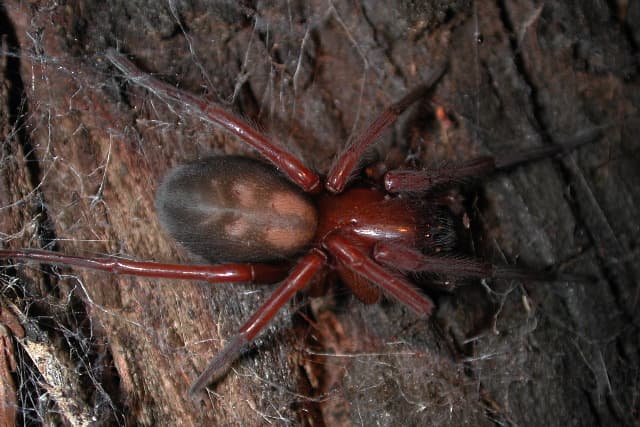
Amaurobiidae is a family of spiders characterized by their three-clawed feet and the presence of either a cribellum or its absence. These spiders are typically found in crevices, hollows, or under stones, where they construct retreats and are often captured in pitfall traps. While widespread, they can be challenging to distinguish from closely related spider families.