
Mimetidae
Aggressive mimicry, involving plucking web strands to lure prey, and ambush predation.
Pirate spiders, belonging to the family Mimetidae, are araneomorph spiders renowned for their specialized diet of other spiders. Found in forests worldwide, they are particularly diverse in Central and Tropical South America. These spiders are recognizable by the unique rows of spine-like hairs on their long front legs and employ a strategy of aggressive mimicry to hunt their prey.
Key Facts
- ›Primarily feed on other spiders using aggressive mimicry.
- ›Found in forests across the globe, with high diversity in South America.
- ›Characterized by rows of spine-like hairs on their long front legs.
- ›Typically measure between 3 to 7 millimeters in body length.
- ›Some species have been observed to also consume insects.
- ›Males of the genus Gelanor possess significantly long appendages for insemination.
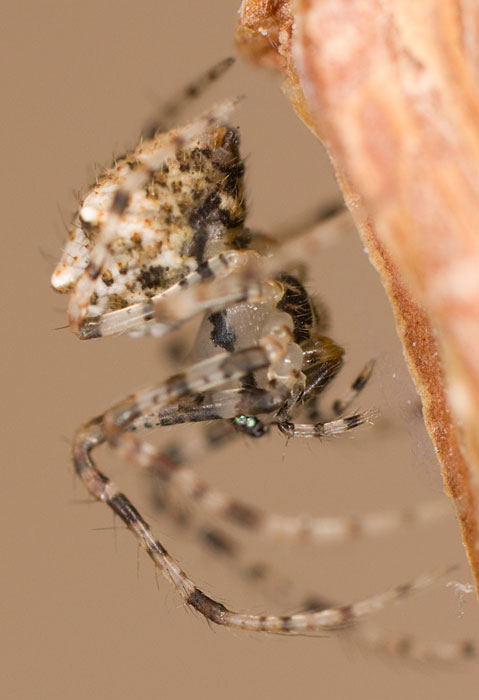
Pirate Spiders
Global, Central America, Tropical South America
Rows of Spine-Like Hairs On Long Front Legs
- Hunt Other Web-Building Spiders
- Employ Aggressive Mimicry
- Some Are Nocturnal Hunters
- Males of Genus Gelanor Use Long Appendages For Insemination
About Mimetidae
Pirate Spiders
Pirate spiders, scientifically classified under the family Mimetidae, are a group of araneomorph spiders distinguished by their predatory behavior, which often targets other spiders. They are found in forest habitats across the globe, with a notable concentration of species diversity in Central and Tropical South America. The family comprises approximately 200 species distributed among 12 genera, with Mimetus and Ero being among the most frequently encountered.
Physical Characteristics and Hunting
Mimetids are typically characterized by their coloration, usually appearing in shades of yellow and brown, and their small size, with body lengths generally ranging from 3 to 7 millimeters. A distinctive physical trait is the presence of specialized rows of spine-like hairs on their elongated front legs. These rows are composed of a long central spine accompanied by a series of progressively shorter spines. Their hunting strategy is a fascinating form of aggressive mimicry. Pirate spiders manipulate the strands of their prey's web, simulating the movements of either a struggling insect caught in the silk or a potential mate. This deceptive tactic lures the unsuspecting spider closer, at which point it is ambushed and consumed by the pirate spider.
Habitat and Distribution
These spiders inhabit forests worldwide, benefiting from the abundance of their preferred prey. The highest levels of Mimetidae diversity are observed in the tropical regions of Central and South America, suggesting a particular adaptation to these environments. While their primary diet consists of other spiders, some species have been documented to also prey on insects, broadening their food sources.
Reproduction and Behavior
The specialized predatory habits of Mimetidae can present challenges during mating, and much remains to be understood about how males successfully court females without becoming prey themselves. However, in certain species within the genus Gelanor, found in South America, males possess remarkably elongated appendages. These specialized structures are utilized to inseminate the females, a unique adaptation to their reproductive cycle.
Source: Wikipedia ↗
Frequently Asked Questions
What do pirate spiders eat?
Pirate spiders primarily feed on other spiders. They employ a hunting strategy known as aggressive mimicry, where they simulate the movements of a trapped insect or a potential mate on their prey's web to lure it closer.
Where are pirate spiders found?
Pirate spiders are distributed in forests all around the globe. The highest diversity of these spiders is found in Central and Tropical South America.
What distinguishes pirate spiders physically?
A key distinguishing feature of pirate spiders is the presence of rows of spine-like hairs on their long front legs. These rows typically consist of one long spine followed by a series of progressively shorter ones.
How large are pirate spiders?
Mimetidae spiders are generally small, with most species measuring between 3 to 7 millimeters in body length. Leg span information is not specifically detailed in available records.
Do pirate spiders build webs to catch prey?
While some pirate spiders hunt other web-building spiders, they do not typically spin webs for passive prey capture like many other spiders. Some species, like Gelanor siquirres, construct capture webs using dry silk lines to anchor their prey's web strands.
What is the hunting strategy of pirate spiders?
Pirate spiders employ aggressive mimicry. They pick at the strands of a prey spider's web to imitate the signals of a trapped insect or a potential mate. When the prey investigates, it is captured and eaten.
Related Spider species
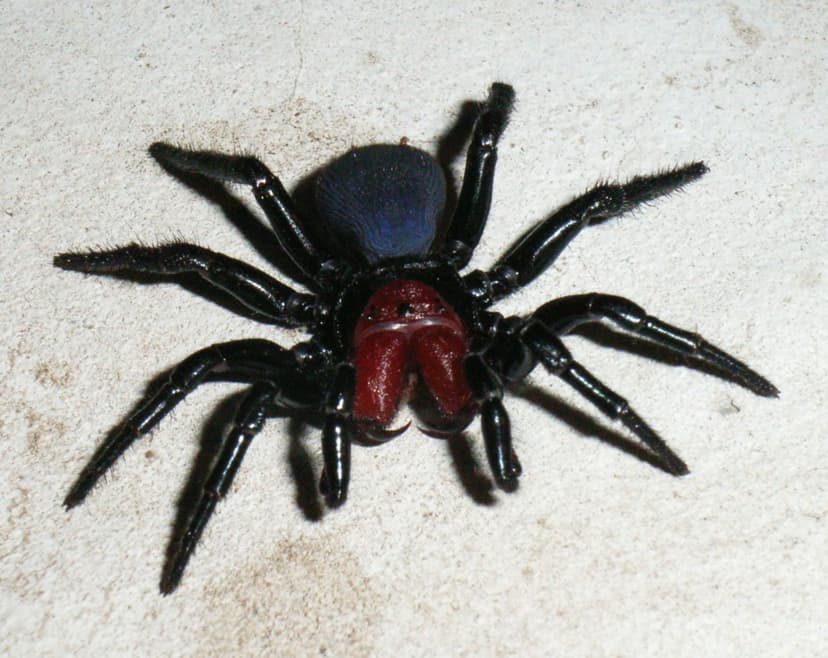
Actinopodidae
Actinopodidae is a family of mygalomorph spiders native to mainland Australia and South America, typically inhabiting open forests. This family includes the mouse spiders (Missulena species), which are notable for their medically significant and potentially dangerous bites.

Araneidae
The Araneidae, commonly known as orb-weaver spiders, are a widespread family of spiders renowned for constructing distinctive spiral wheel-shaped webs. Found globally, these spiders are characterized by their eight eyes, hairy or spiny legs, and the absence of stridulating organs. With nearly 5,000 described species, they represent one of the largest spider families, playing a significant role in controlling insect populations.
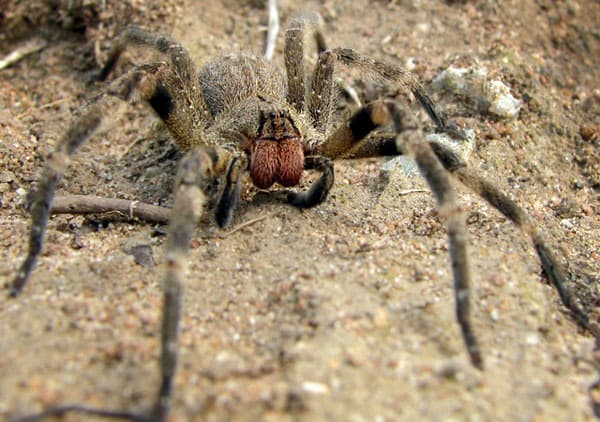
Ctenidae
Ctenidae, commonly known as wandering spiders, are a family of highly defensive and venomous nocturnal hunters. They are characterized by a distinctive longitudinal groove on the top-rear of their oval carapace. While many members are known for their potent venom, only a few species within the genus Phoneutria are confirmed to be hazardous to humans, though caution is advised for all larger ctenids due to poorly understood venoms.