
Nemesiidae
Ambush predator, utilizing burrows often equipped with a hinged trapdoor to catch prey.
Nemesiidae is a family of mygalomorph spiders known for their robust build and dark coloration, often described as wishbone spiders due to the characteristic shape of their burrows. These spiders are relatively large, with some females exceeding 4 centimeters in body length, and they predominantly inhabit burrows, often equipped with a hinged trapdoor, from which they ambush prey.
Key Facts
- ›Nemesiidae are mygalomorph spiders first described by Eugène Simon in 1889.
- ›They are sometimes called wishbone spiders because of the shape of their burrows.
- ›These spiders are relatively large, with robust legs and a body nearly three times as long as it is wide.
- ›Coloration is typically dark brown to black, sometimes with silvery hairs on the carapace.
- ›They inhabit burrows, frequently featuring a hinged trapdoor, from which they ambush prey.
- ›The family currently includes ten genera and 195 species.
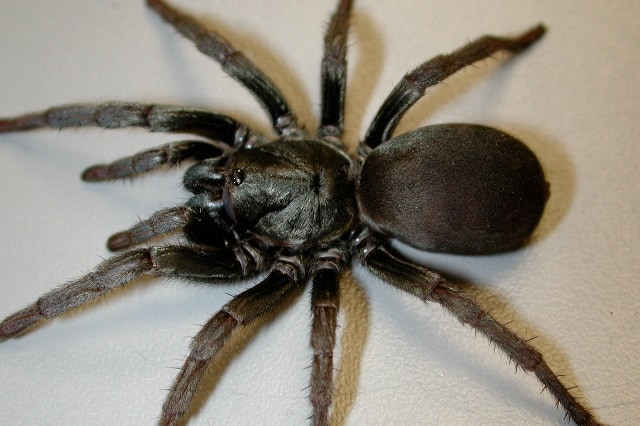
Wishbone Spiders
Hinged Trapdoor On Burrows, Robust Legs, Body Nearly Three Times As Long As It Is Wide
Rarely Leave Their Burrows, Catch Prey and Withdraw Quickly, Some Burrows Have Side Tubes
About Nemesiidae
Nemesiidae is a family of mygalomorph spiders first formally described by Eugène Simon in 1889. Prior to being established as its own family in 1985, it was considered part of the Dipluridae family. The common name "wishbone spiders" is sometimes applied to members of this family, referencing the distinctive shape of their burrows.
Description and Habitat
Spiders belonging to the Nemesiidae family are characterized by their relatively large size, robust legs, and a body shape that is nearly three times as long as it is wide. Their coloration is typically dark, ranging from brown to black, though some individuals may exhibit silvery hairs on their carapace. A notable feature of many Nemesiidae is their burrow-dwelling habit. These burrows often incorporate a hinged trapdoor, which the spider uses to ambush passing prey. They are known to rarely leave their burrows, quickly capturing prey and retreating. Some of these burrows are also documented to have side tubes. For the east-Asian genus Sinopesa, it remains uncertain whether they construct burrows.
Genera and Species
As of January 2026, the Nemesiidae family encompasses ten genera and a total of 195 species. This includes extinct genera, such as †Eodiplurina, which is known from the Eocene Florissant Formation in the United States. Research continues to expand the understanding of this family, with new species and genera being described from various regions, including the Brazilian Cerrado and Araucaria forests.
Source: Wikipedia ↗
Frequently Asked Questions
What are Nemesiidae spiders?
Nemesiidae is a family of mygalomorph spiders, first described in 1889. They are often called wishbone spiders due to the shape of their burrows and are known for their robust build and dark coloration.
What is distinctive about Nemesiidae burrows?
Nemesiidae spiders are known for living in burrows, which often have a distinctive hinged trapdoor. They use these burrows to wait for and ambush passing prey.
How large do Nemesiidae spiders get?
Nemesiidae spiders are relatively large. Some females can grow to be over 4 centimeters (1.6 inches) in body length, and they possess robust legs.
What color are Nemesiidae spiders?
These spiders are typically darkly colored, ranging from brown to black. Some species may also have silvery hairs present on their carapace.
How do Nemesiidae spiders hunt?
Nemesiidae spiders are primarily ambush predators that live in burrows. They wait near the entrance of their burrow, often with a trapdoor, and quickly seize passing prey.
Related Spider species
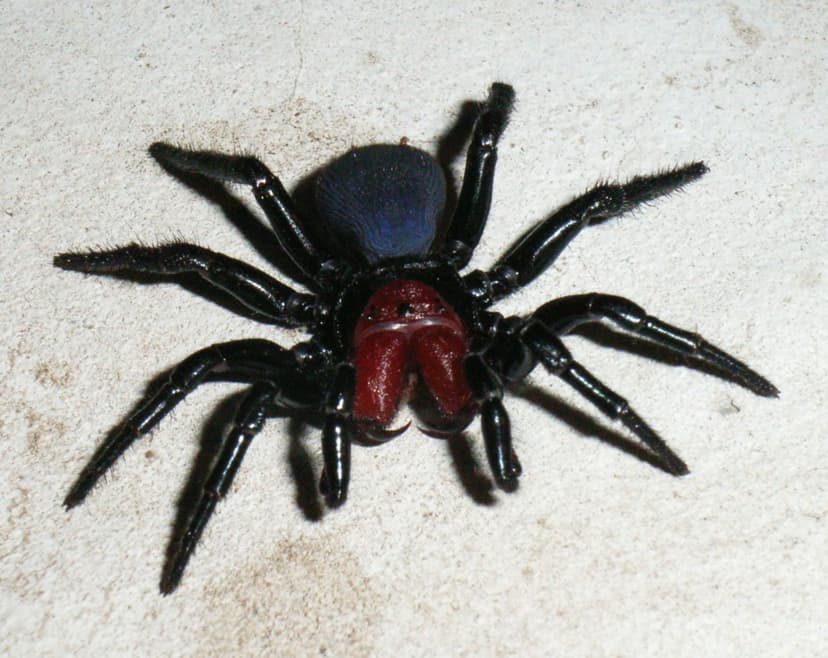
Actinopodidae
Actinopodidae is a family of mygalomorph spiders native to mainland Australia and South America, typically inhabiting open forests. This family includes the mouse spiders (Missulena species), which are notable for their medically significant and potentially dangerous bites.

Agelenidae
The Agelenidae, commonly known as funnel weavers, are a large family of spiders found globally. They are distinguished by their fast running speeds and the construction of flat sheet webs with a funnel-shaped retreat. While most species are solitary, some African species exhibit parasocial behavior, living in communal webs.
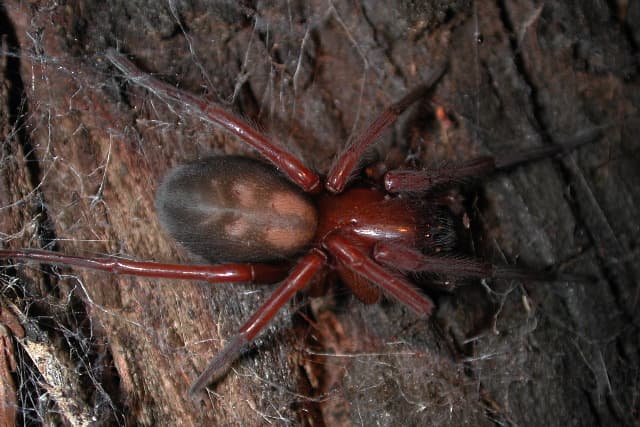
Amaurobiidae
Amaurobiidae is a family of spiders characterized by their three-clawed feet and the presence of either a cribellum or its absence. These spiders are typically found in crevices, hollows, or under stones, where they construct retreats and are often captured in pitfall traps. While widespread, they can be challenging to distinguish from closely related spider families.