
Palpimanidae
Active hunter; they walk slowly, often at night, holding their strong first legs forward, and will feel potential prey before rapidly and powerfully grabbing it.
Palpimanidae, commonly known as palp-footed spiders, are a family of araneomorph spiders recognized by their disproportionately powerful and heavily sclerotized front legs. These spiders are found in tropical and subtropical regions worldwide, as well as the Mediterranean, with a notable degree of endemism and a generally subdued coloration.
Key Facts
- ›Characterized by exceptionally strong and hardened front legs.
- ›Possess only two spinnerets, unlike the usual six found in most spiders.
- ›Primarily ground dwellers that do not spin webs for hunting.
- ›Many species are nocturnal, actively hunting or seeking mates at night.
- ›Their abdomen is typically round to oval, sometimes elongated into an olive shape.
- ›Found in tropical and subtropical regions globally, plus the Mediterranean.
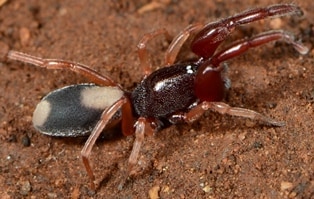
Palp-Footed Spiders
Tropical Regions, Subtropical Regions, Mediterranean, Uzbekistan
- Disproportionately Powerful and Heavily Sclerotised Front Legs
- Only Two Spinnerets
- Eight Eyes In Two Rows of Four
Ground Dwellers, Wander At Night, Use Ecribellate Silk For Shelters
About Palpimanidae
Palpimanidae, commonly referred to as palp-footed spiders, constitute a family of araneomorph spiders first described by Tamerlan Thorell in 1890. These arachnids are widely distributed across the tropical and subtropical regions of the globe, with additional populations found in the Mediterranean and Uzbekistan. A notable characteristic of this family is a high degree of endemism, meaning many species are unique to specific geographic locations, and they are generally not considered common.
Physical Characteristics
The most striking feature of the Palpimanidae is their disproportionately powerful and heavily sclerotized front legs, which are a defining trait. Their abdomen is typically round to oval, and in many species, it is elongated, giving the spider a vaguely torpedo-shaped appearance. Unlike most spiders which possess six spinnerets, palp-footed spiders have only two. They have eight eyes arranged in two rows of four, though in some species, the outer anterior and posterior eyes are closely positioned, which can lead to them being mistaken for having only six eyes.
Biology and Behavior
The biology of Palpimanidae spiders is not extensively documented. They are ground dwellers and do not spin webs for hunting; instead, they may construct shelters for themselves in burrows or beneath rocks using ecribellate silk. Many, if not most, species are nocturnal, venturing out at night to hunt or search for mates. When moving, they often keep their robust first legs held forward. Upon encountering prey, they may first gently feel it before seizing it with remarkable speed and power. Some species possess unique stimulatory organs on their chelicerae, which are believed to play a role in courtship signaling, though they might also serve a defensive purpose.
Distribution and Genera
Palpimanidae spiders are found in diverse warm climates worldwide. As of September 2025, the family encompasses twenty genera and 182 species. Fossil evidence indicates their presence even in the Early Cretaceous period, with genera like Cretapalpus discovered in the Crato Formation of Brazil.
Source: Wikipedia ↗
Frequently Asked Questions
What are the most distinctive physical features of Palpimanidae spiders?
The most striking feature of Palpimanidae spiders is their disproportionately powerful and heavily sclerotized front legs. Additionally, they have only two spinnerets, which is unusual for spiders, and their abdomen is often round to oval, sometimes elongated.
Where are Palpimanidae spiders found?
These spiders are widely distributed throughout the tropical and subtropical regions of the world. They are also found in the Mediterranean region and in Uzbekistan, though they are notably absent from Australia.
Do Palpimanidae spiders build webs to catch prey?
No, Palpimanidae spiders are ground dwellers and do not spin webs for hunting. While they may construct shelters for themselves in holes or under rocks using ecribellate silk, their hunting strategy does not involve webs.
What is the typical coloration of Palpimanidae spiders?
Their coloration patterns are generally subdued and simple. Most species are brownish or reddish to dark in general color, with the cephalothorax often being glossier and darker than the abdomen.
How do Palpimanidae spiders hunt?
Palpimanidae spiders are active hunters, often wandering at night. They keep their strong first legs held up in front while walking and will feel prey gently before rapidly and powerfully grabbing it.
Are there many species of Palpimanidae spiders?
As of September 2025, the family Palpimanidae includes twenty genera and 182 species. They are not common and exhibit a high degree of endemism, meaning many species are found only in very specific locations.
Related Spider species
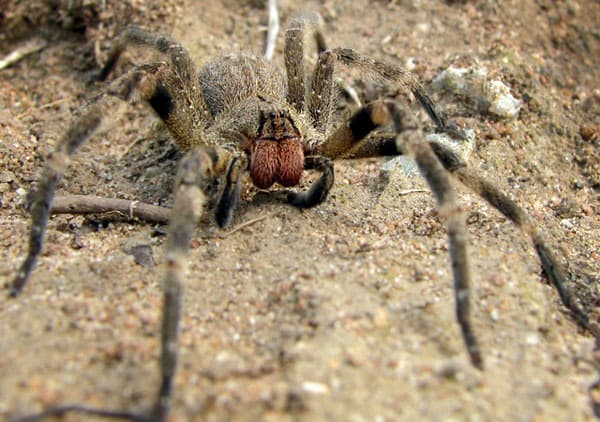
Ctenidae
Ctenidae, commonly known as wandering spiders, are a family of highly defensive and venomous nocturnal hunters. They are characterized by a distinctive longitudinal groove on the top-rear of their oval carapace. While many members are known for their potent venom, only a few species within the genus Phoneutria are confirmed to be hazardous to humans, though caution is advised for all larger ctenids due to poorly understood venoms.

Deinopidae
Deinopidae, commonly known as net-casting spiders, are a family of circumtropical cribellate spiders recognized for their unique hunting strategy. These stick-like spiders catch prey by stretching a specialized web between their front legs and then propelling themselves forward, entangling their victims. Their exceptional night vision, facilitated by large posterior median eyes, allows them to hunt effectively in low-light conditions.

Liphistiinae
Liphistius is a genus of basal trapdoor spiders belonging to the family Liphistiidae, notable for their segmented abdomens and mid-ventral spinnerets, a trait shared only with other members of the suborder Mesothelae. These spiders, found across Japan, China, and Southeast Asia, are characterized by their unique burrowing behavior, constructing silk-lined traps with a distinctive door.