
Selenopidae
Ambush predator and active hunter, utilizing their speed and camouflage to capture prey.
Selenopidae, commonly known as wall crab spiders or flatties, is a family of nocturnal, free-ranging araneomorph spiders first described in 1897. Characterized by their flattened bodies and laterigrade legs that face different directions, these spiders are found worldwide in tropical and subtropical regions, often on walls or under rocks. Their distinctive coloration aids in camouflage, and they are renowned for their remarkable speed and agility, making them among the fastest terrestrial animals.
Key Facts
- ›Selenopidae spiders are known for their extremely flattened bodies, earning them the nickname 'flatties'.
- ›They possess laterigrade legs, with each leg facing a different direction, contributing to their unique stance.
- ›These spiders are among the fastest terrestrial animals, capable of incredibly rapid running and turning maneuvers.
- ›Their coloration, often mimicking lichens or rocks, provides excellent camouflage against their habitat.
- ›Selenopidae are found globally in tropical and subtropical climates, frequently inhabiting walls and rocky areas.

Wall Crab Spiders, Wall Spiders, Flatties
Worldwide
Very Flat Dorsoventrally, Laterigrade Legs Facing Different Directions, Eight Eyes Arranged In Two Rows
Nocturnal, Free-Ranging, Sedentary , But Capable of Rapid Movement, Mimicry of Lichens Or Rocks
About Selenopidae
Selenopidae: The Wall Crab Spiders
Selenopidae, commonly referred to as wall crab spiders, wall spiders, or 'flatties,' represent a distinct family of araneomorph spiders. First formally described by Eugène Simon in 1897, this family is characterized by its members' nocturnal habits, free-ranging lifestyle, and remarkable physical adaptations. The name 'flatties' aptly describes their most striking feature: a highly flattened dorsoventral profile, which allows them to easily navigate narrow crevices and remain inconspicuous.
Description and Adaptation
The coloration of Selenopidae spiders varies, encompassing shades of grey, brown, yellow, and orange. These colors are often enhanced by darker markings on the cephalothorax and spotted or mottled patterns on the abdomen, with many species also exhibiting annulations on their legs. This intricate patterning is believed to serve as camouflage, helping them to mimic the appearance of lichens or rocks within their environment. A key physical characteristic is their laterigrade legs, which are oriented to face different directions, contributing to their unique stance and exceptional agility.
Speed and Hunting
Despite their often sedentary nature when at rest, Selenopidae spiders are renowned for their incredible speed. They are considered among the world's fastest terrestrial animals, capable of rapid running and striking maneuvers that make them difficult to capture. Their speed is so significant that their leg-driven turning maneuvers are being studied for applications in robotics. This swiftness is crucial for their hunting strategy, enabling them to ambush or pursue small prey efficiently. Their eyes, arranged in two rows with six eyes in one and two in the other, likely aid in detecting prey and navigating their surroundings.
Habitat and Distribution
Selenopidae spiders are found globally, thriving in tropical and subtropical climates. They inhabit a wide range of elevations, from sea level to over 2,500 meters (8,200 ft), and are frequently observed on walls or beneath rocks. While the genus Selenops is the most widely distributed, other genera have more specific geographic ranges, with some species known only from fossilized remains. This broad distribution underscores their adaptability to diverse environmental conditions.
Source: Wikipedia ↗
Frequently Asked Questions
What are Selenopidae spiders commonly called?
Selenopidae spiders are commonly known as wall crab spiders, wall spiders, and 'flatties.' The name 'flatties' refers to their distinctly flattened body shape.
Where are Selenopidae spiders typically found?
These spiders occur worldwide, predominantly in tropical and subtropical regions. They are commonly found on walls or under rocks, inhabiting environments from sea level to high altitudes.
What makes Selenopidae spiders so fast?
Selenopidae spiders are among the world's fastest animals due to their running and striking speeds. Their 'outward stance,' allowing for unrestricted motion, enables them to perform rapid turning maneuvers, striking prey in a fraction of a second.
How do Selenopidae spiders camouflage themselves?
Their coloration, which includes shades of grey, brown, yellow, and orange with darker markings and mottling, is thought to mimic lichens or rocks. This coloring helps them blend seamlessly into their surroundings, making them difficult to spot.
What is distinctive about the legs of Selenopidae spiders?
Selenopidae spiders have laterigrade legs, meaning each leg faces a different direction. This unique leg arrangement, combined with their flattened bodies, contributes to their agility and speed.
Related Spider species
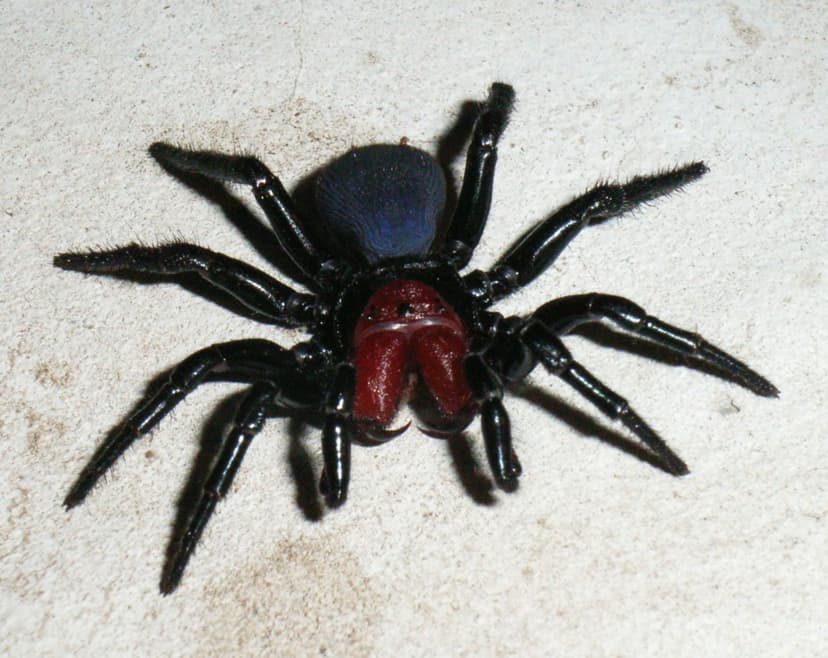
Actinopodidae
Actinopodidae is a family of mygalomorph spiders native to mainland Australia and South America, typically inhabiting open forests. This family includes the mouse spiders (Missulena species), which are notable for their medically significant and potentially dangerous bites.

Araneidae
The Araneidae, commonly known as orb-weaver spiders, are a widespread family of spiders renowned for constructing distinctive spiral wheel-shaped webs. Found globally, these spiders are characterized by their eight eyes, hairy or spiny legs, and the absence of stridulating organs. With nearly 5,000 described species, they represent one of the largest spider families, playing a significant role in controlling insect populations.
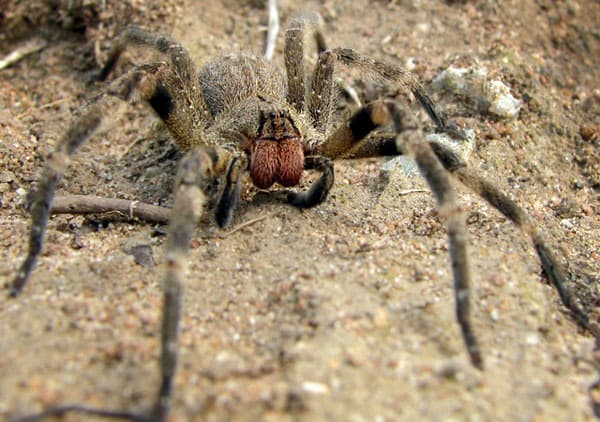
Ctenidae
Ctenidae, commonly known as wandering spiders, are a family of highly defensive and venomous nocturnal hunters. They are characterized by a distinctive longitudinal groove on the top-rear of their oval carapace. While many members are known for their potent venom, only a few species within the genus Phoneutria are confirmed to be hazardous to humans, though caution is advised for all larger ctenids due to poorly understood venoms.