
Sparassidae
Active hunting and foraging rather than web-building.
Huntsman spiders, belonging to the family Sparassidae, are large, fast-moving arachnids known for their hunting prowess rather than web-building. Found in warm, temperate to tropical regions worldwide, they are often recognized by their crab-like leg posture and impressive size, with some species reaching leg spans of up to 30 cm. While generally not considered dangerous to humans, they can inflict painful bites when provoked, particularly when defending their young.
Key Facts
- ›Sparassidae are eight-eyed spiders that hunt prey rather than build webs.
- ›They are known for their large size, with some species having leg spans up to 30 CM.
- ›Their legs extend forward in a crab-like fashion, distinguishing them from tarantulas.
- ›Found in most warm, temperate to tropical regions globally.
- ›Females are aggressive defenders of their egg sacs and young.
- ›Some species can produce substrate-borne sounds for mating rituals.
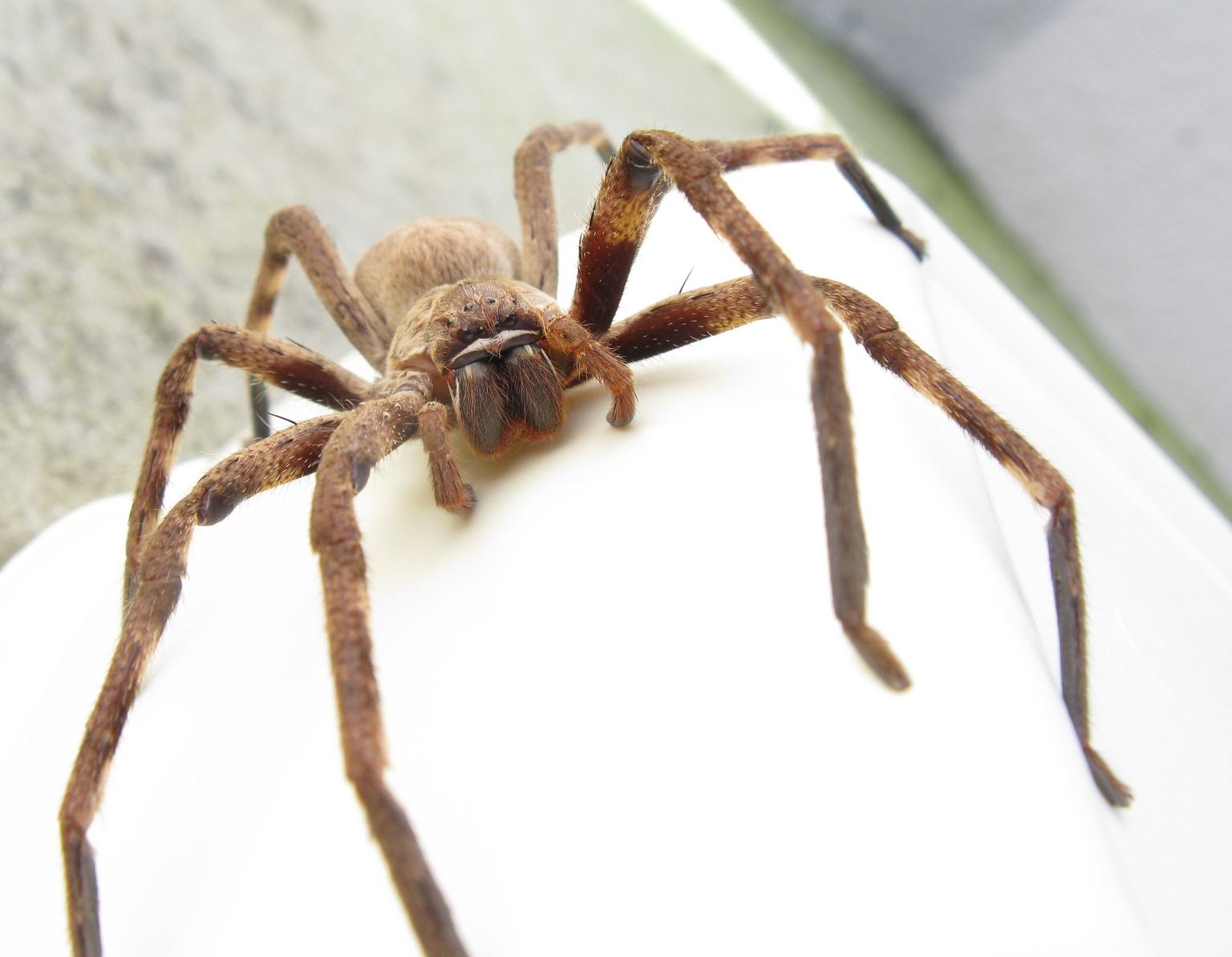
Huntsman Spiders, Giant Crab Spiders, Wood Spiders, Rain Spiders, Lizard-Eating Spiders
Australia, Africa, Asia, Mediterranean Basin, Americas, Northern and Central Europe
- Legs Extend Forward In A Crab-Like Fashion.
- Eight Eyes In Two Forward-Facing Rows of Four.
- Legs Bear Fairly Prominent Spines.
- Travel Extremely Quickly, Using A Springing Jump While Running.
- Can Walk On Walls and Ceilings.
- Exhibit A 'Cling' Reflex If Picked Up.
- Females Are Fierce Defenders of Their Egg Sacs and Young.
- Make A Threat Display If Provoked.
About Sparassidae
What is Sparassidae?
Huntsman spiders, scientifically classified within the family Sparassidae (formerly Heteropodidae), are a diverse group of arachnids renowned for their speed and hunting prowess. Unlike many other spider families, they do not construct webs to capture prey. Instead, they actively pursue and hunt their food, which primarily consists of insects and other invertebrates, though larger species may occasionally prey on small vertebrates like lizards and geckos. Their common names, such as "giant crab spiders" or "wood spiders," reflect their considerable size and their preference for woody habitats like forests, mine shafts, and woodpiles.
Distribution and Habitat
Members of the Sparassidae family are found in most warm, temperate, and tropical regions across the globe. Their natural range includes much of Australia, Africa, Asia, the Mediterranean Basin, and the Americas. While many species inhabit warmer climates, some, like the green huntsman spider (Micrommata virescens), are native to colder regions such as Northern and Central Europe. They typically reside under rocks, bark, and similar sheltered locations, but are frequently encountered by humans in sheds, garages, and other human-made structures that are not frequently disturbed.
Description and Identification
Sparassids are characterized by their eight eyes, arranged in two forward-facing rows of four. They are often mistaken for tarantulas due to their hairy appearance and size, but can be distinguished by their legs. Rather than being held vertically, their legs are twisted, allowing them to extend forward in a manner reminiscent of a crab. This "crab-like" posture is a key identifier. Many species are large, with some males of the giant huntsman spider (Heteropoda maxima) achieving leg spans of up to 30 cm (11.8 inches). Their coloration is typically subdued, with upper surfaces in shades of brown or grey, while undersides may be marked with contrasting black and white patterns. Their legs are often spiny.
Behavior and Reproduction
These spiders are known for their remarkable speed and agility, often employing a springing jump while running and capable of traversing walls and ceilings. Females are particularly known for their fierce defense of their egg sacs and young, often exhibiting threat displays when provoked. Egg sac carrying varies by genus; some females carry them under their bodies, while others attach them to vegetation. Interestingly, some male huntsman spiders, such as those in the genus Heteropoda, have been observed to produce vibrations transmitted through surfaces as a form of substrate-borne sound, used to attract females for mating. This sound can sometimes be heard by humans as a rhythmic ticking.
Venom and Significance
Like most spiders, Sparassidae utilize venom to subdue their prey. While their venom is effective for their hunting purposes, bites to humans are generally not considered medically significant and rarely require professional medical attention. However, some species, particularly from genera like Palystes and Neosparassus, have been reported to inflict bites causing localized swelling, pain, and in more severe cases, systemic symptoms like nausea, headache, and palpitations. It is important to note that the study of spider bites is complex, with factors like infection, shock, and misidentification potentially influencing outcomes.
Source: Wikipedia ↗
Frequently Asked Questions
What are Huntsman spiders?
Huntsman spiders are members of the family Sparassidae, characterized by their large size and hunting behavior. They are known for their speed and ability to move quickly, often with a springing jump.
Where do Huntsman spiders live?
Sparassidae are native to tropical and warm temperate regions across the globe, including Australia, Africa, Asia, the Mediterranean Basin, and the Americas. Some species have also been introduced to subtropical areas.
Are Huntsman spiders dangerous to humans?
While Huntsman spiders do possess venom to immobilize prey, their bites are generally not considered medically significant to humans and usually do not require hospital treatment. However, bites can be painful and cause localized swelling.
How large can Huntsman spiders get?
Some species of Huntsman spiders can grow very large. For example, male giant huntsman spiders have been recorded with leg spans of 25–30 cm (9.8–11.8 inches).
How do Huntsman spiders hunt?
Huntsman spiders are active hunters and do not build webs to catch their prey. Their diet primarily consists of insects and other invertebrates, and occasionally small vertebrates like lizards.
What makes Huntsman spiders distinctive?
They are distinguished by their large size, eight eyes arranged in two rows, and their legs, which are twisted to allow for a crab-like, forward-extending posture. Their speed and hunting strategy also set them apart.
Related Spider species

Orsolobidae
Orsolobidae is a family of six-eyed spiders comprising approximately 200 described species across thirty genera. First described by J. A. L. Cooke in 1965, it was elevated to family status from the "Dysderidae" classification in 1985. While most of its genera are endemic to New Zealand and Australia, some are also found in southern Africa and South America.
Oonopidae
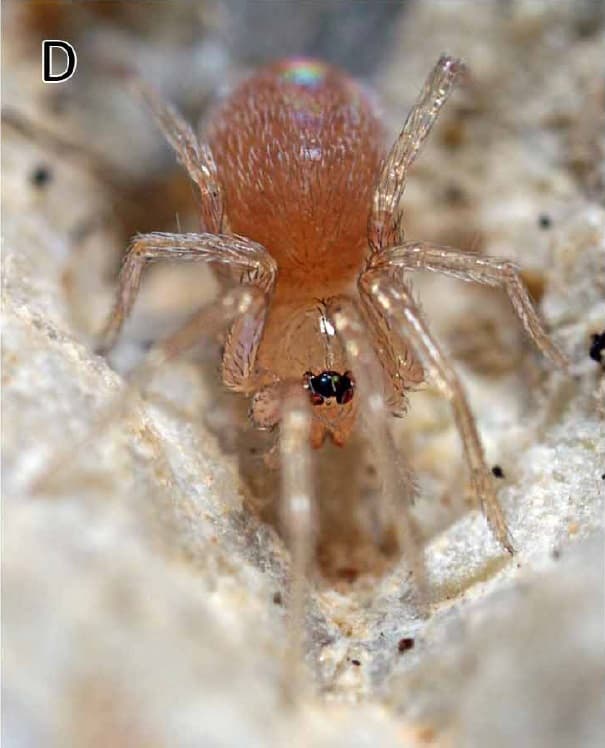
Oonopidae, commonly known as goblin spiders, are a widespread family of tiny spiders, typically measuring between 1 to 3 millimeters. They are characterized by their small size, often six eyes (though variations exist), and a remarkable array of unusual morphological traits, particularly in males. These spiders are frequently found in leaf litter, under rocks, and in tropical rainforest canopies, with some species even inhabiting termite nests.
Philodromidae
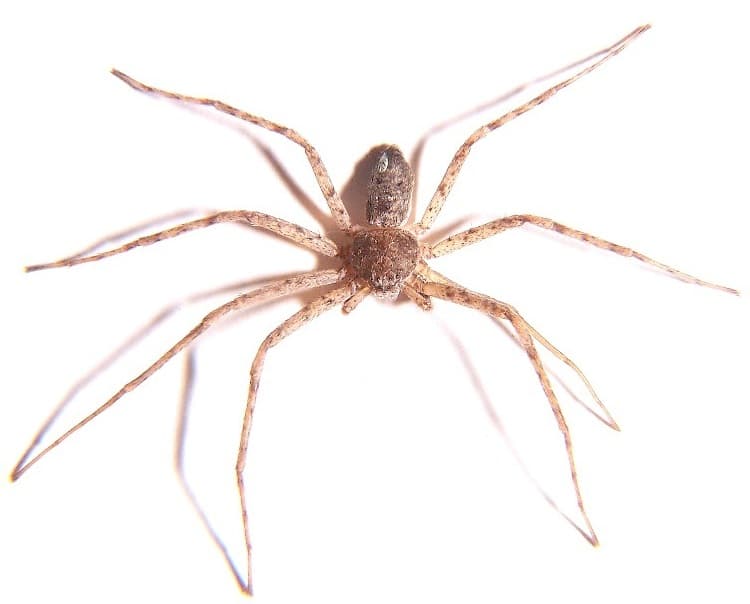
Philodromidae, commonly known as philodromid crab spiders or running crab spiders, is a diverse family of araneomorph spiders that includes over 500 species across approximately thirty genera. These spiders are characterized by their crab-like body shape and active hunting strategy, preying on insects and other small invertebrates by ambush rather than web-building. They are typically found on plants, from deciduous trees to conifers, and are widespread across various habitats.