
Stiphidiidae
Web builder, using a horizontal sheet-like web to ensnare prey.
Stiphidiidae, commonly known as sheetweb spiders, is a family of araneomorph spiders first described in 1917. Primarily found in New Zealand and Australia, these spiders are distinguished by their horizontal, sheet-like webs built under rocks. Most species are medium-sized, speckled brown, and possess long legs.
Key Facts
- ›Sheetweb spiders are characterized by their horizontal, sheet-like webs constructed beneath rocks.
- ›The family is predominantly found in Australia and New Zealand, with the exception of the genus Asmea.
- ›Most species are medium-sized, typically around 8 millimeters in body length.
- ›They are recognized by their speckled brown coloration and long, slender legs.
- ›Stiphidiidae was first formally described as a family in 1917.

Sheetweb Spiders
Australia, New Zealand
Build Horizontal Sheet-Like Webs Under Rocks
Web Construction
About Stiphidiidae
What is Stiphidiidae?
Stiphidiidae, commonly referred to as sheetweb spiders, represents a family of araneomorph spiders that was first formally described in 1917. These spiders are primarily recognized for their distinctive method of web construction, creating horizontal, sheet-like webs that are typically situated beneath rocks. This unique hunting strategy and habitat preference give rise to their common name.
Distribution and Characteristics
The geographical range of Stiphidiidae is largely concentrated in Australia and New Zealand, with the genus Asmea being the sole exception to this pattern. In terms of physical appearance, most species within this family are medium-sized, with an average body length of around 8 millimeters, exemplified by Stiphidion facetum. They are characterized by a speckled brown coloration, which likely serves as camouflage, and possess notably long legs. The family encompasses twenty genera and 125 species as of early 2026, indicating a diverse group of arachnids within their native regions.
Source: Wikipedia ↗
Frequently Asked Questions
What are Stiphidiidae spiders commonly called?
Stiphidiidae spiders are commonly known as sheetweb spiders. This name reflects the distinctive horizontal, sheet-like webs they construct.
Where are sheetweb spiders found?
The vast majority of Stiphidiidae species are found in Australia and New Zealand. The genus Asmea is the only exception to this geographic distribution.
What do Stiphidiidae spiders' webs look like?
These spiders build horizontal, sheet-like webs. They typically position these webs in sheltered locations, such as under rocks.
What is the typical size of a Stiphidiidae spider?
Most species within the Stiphidiidae family are considered medium-sized. For example, Stiphidion facetum measures approximately 8 millimeters (0.31 inches) in body length.
What are the common colors and features of Stiphidiidae spiders?
Stiphidiidae spiders are generally speckled brown in color and have long legs. This coloration likely aids in camouflage within their natural habitats.
Related Spider species

Agelenidae
The Agelenidae, commonly known as funnel weavers, are a large family of spiders found globally. They are distinguished by their fast running speeds and the construction of flat sheet webs with a funnel-shaped retreat. While most species are solitary, some African species exhibit parasocial behavior, living in communal webs.
Amaurobiidae
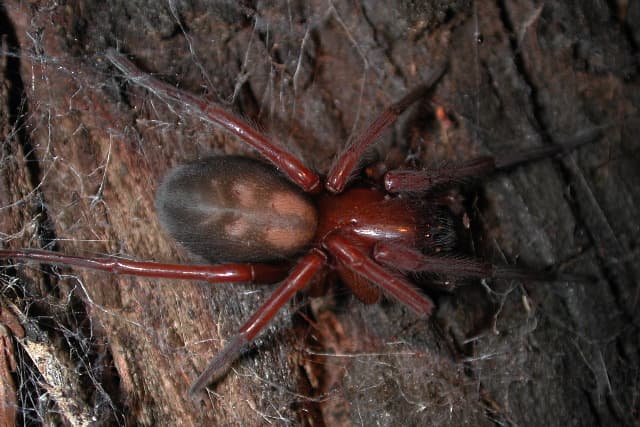
Amaurobiidae is a family of spiders characterized by their three-clawed feet and the presence of either a cribellum or its absence. These spiders are typically found in crevices, hollows, or under stones, where they construct retreats and are often captured in pitfall traps. While widespread, they can be challenging to distinguish from closely related spider families.
Anapidae
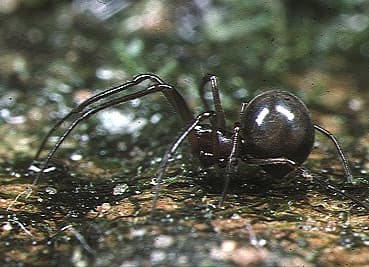
Anapidae is a diverse family of small spiders, with most species measuring less than two millimeters in length. These spiders are found worldwide, inhabiting leaf litter and moss in rainforest environments. A distinctive characteristic of many Anapidae species is their ability to build small orb webs, often less than three centimeters in diameter.