
Telemidae
Telemidae·Telemidae·Tropical rainforests and karst caves; also found under leaf litter or rocks in surrounding areas.·Small spiders with long, thin legs.
Telemidae, also known as long-legged cave spiders, is a family of small haplogyne spiders with approximately 100 described species. Primarily inhabiting tropical rainforests and karst caves, these spiders are distinguished by their long, thin legs and a unique zigzag ridge on their abdomen.
Key Facts
- ›Telemidae are small, haplogyne spiders found in tropical rainforests and karst caves.
- ›They are characterized by long, thin, and relatively spineless legs.
- ›Most species possess six eyes, though some are eyeless.
- ›Their abdomen features a hardened, zigzag ridge, more pronounced in males.
- ›The family comprises about 100 described species across sixteen genera.

Long-Legged Cave Spiders
Southern Holarctic, Neotropical, Australasian, Oriental, Ethiopian Realms
- Long, Thin, Relatively Spineless Legs
- Three Pairs of Spinnerets, With the Longest Being Toward the Head
- Two Pairs of Tracheal Spiracles Instead of Book Lungs
- Elongate Abdomen With A Hardened, Zigzag Ridge Above the Pedicel
- Oval and Bag-Like Pedipalp In Males With A Thin Spermatophore
- Female Pedipalp Lacks A Claw
About Telemidae
Telemidae, commonly known as long-legged cave spiders, represent a family of small haplogyne spiders. This family encompasses approximately 100 described species spread across sixteen distinct genera. Their name reflects their most prominent physical characteristic: long, slender legs that are notably devoid of spines and trichobothria.
Natural Environment and Distribution
These spiders are primarily troglobitic, meaning they inhabit caves, with a strong preference for karst cave systems. They are also found in tropical rainforests. Their geographic distribution spans several realms, including the Southern Holarctic, Neotropical, Oriental, and Ethiopian realms, as well as parts of the Australasian realm, excluding Australia and New Zealand. While typically found within caves, individuals have been observed in the surrounding environment, concealed beneath leaf litter or rocks.
Physical Characteristics
Telemidae spiders are characterized by their elongated, thin legs. Internally, they possess two pairs of tracheal spiracles instead of the book lungs found in many other spider families. A distinctive feature of their anatomy is the elongate abdomen, which bears a hardened ridge above the pedicel. This ridge forms a zigzag pattern that is more pronounced in male specimens than in females. The pedipalps also exhibit sexual dimorphism: in males, they are oval and bag-like, housing a thin spermatophore, while the female pedipalp lacks a claw.
Diversity and Taxonomy
As of September 2025, the Telemidae family includes sixteen genera and 113 recognized species. While most species are adapted to subterranean life and possess six eyes, some have evolved to be entirely eyeless, a common adaptation in cave-dwelling fauna. The family's taxonomy and relationships have been a subject of study, with research contributing to our understanding of their placement within the spider order Araneae.
Source: Wikipedia ↗
Frequently Asked Questions
What are Telemidae spiders?
Telemidae are a family of small, haplogyne spiders, commonly referred to as long-legged cave spiders. They are known for their slender legs and their preference for dark, humid environments.
Where do Telemidae spiders live?
These spiders are predominantly found in tropical rainforests and karst caves. They can also be observed in surrounding areas beneath leaf litter or rocks.
What do Telemidae spiders look like?
Telemidae spiders are small with long, thin legs that are relatively spineless. A distinctive feature is an elongate abdomen with a hardened, zigzag ridge above the pedicel.
Do all Telemidae spiders have eyes?
Most Telemidae species have six eyes, which is common for cave-dwelling spiders. However, some species within the family have evolved to be completely eyeless.
How many species of Telemidae are there?
As of recent records, there are about 100 described species within the Telemidae family. These species are organized into sixteen different genera.
Related Spider species
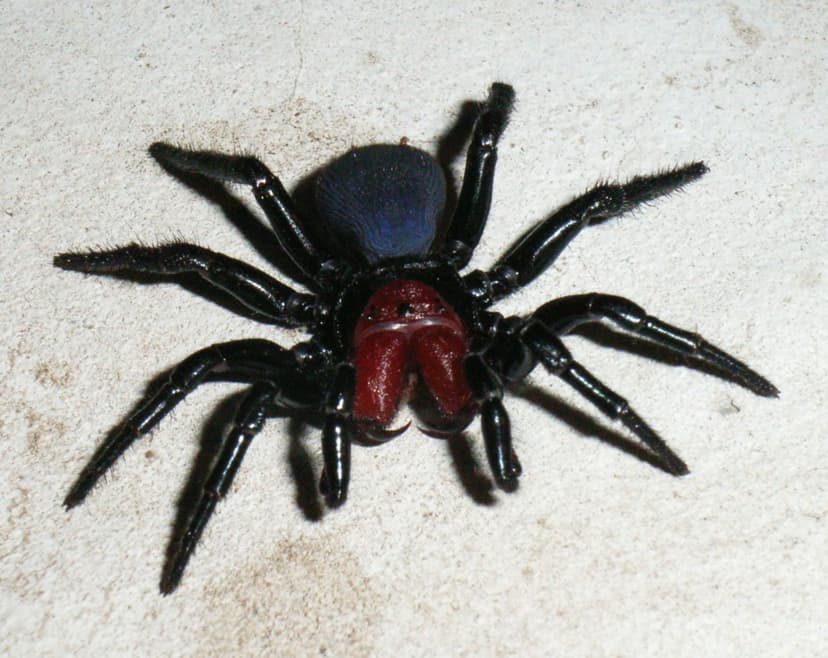
Actinopodidae
Actinopodidae is a family of mygalomorph spiders native to mainland Australia and South America, typically inhabiting open forests. This family includes the mouse spiders (Missulena species), which are notable for their medically significant and potentially dangerous bites.

Agelenidae
The Agelenidae, commonly known as funnel weavers, are a large family of spiders found globally. They are distinguished by their fast running speeds and the construction of flat sheet webs with a funnel-shaped retreat. While most species are solitary, some African species exhibit parasocial behavior, living in communal webs.
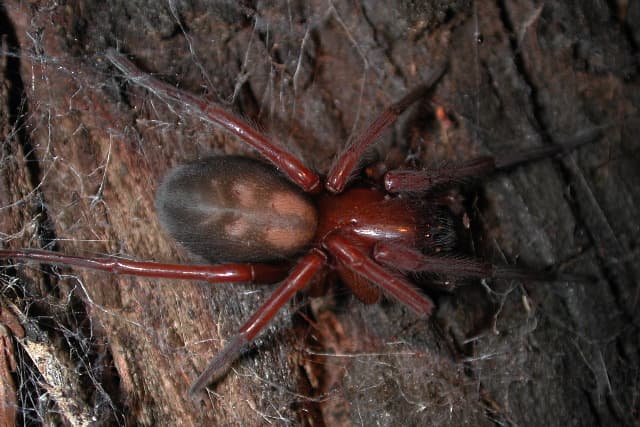
Amaurobiidae
Amaurobiidae is a family of spiders characterized by their three-clawed feet and the presence of either a cribellum or its absence. These spiders are typically found in crevices, hollows, or under stones, where they construct retreats and are often captured in pitfall traps. While widespread, they can be challenging to distinguish from closely related spider families.