
Theraphosidae
Ambush predator.
Theraphosidae, commonly known as tarantulas, are a family of large, often hairy spiders found worldwide, with over a thousand species identified. These terrestrial arachnids are characterized by their two-part body, powerful chelicerae with fangs, and a variety of coloration depending on the species. Many New World species possess urticating hairs, a defensive mechanism that can cause irritation to skin and eyes.
Key Facts
- ›Tarantulas belong to the family Theraphosidae and are characterized by their large size and often hairy appearance.
- ›Their body consists of a prosoma (cephalothorax) and an opisthosoma (abdomen), connected by a pedicel.
- ›Body lengths range from 5 to 11 CM with leg spans up to 30 CM, and some species can weigh over 85g.
- ›Their natural habitats include savannas, grasslands, rainforests, deserts, scrublands, mountains, and cloud forests.
- ›Tarantulas primarily prey on large insects and other arthropods, using ambush as their hunting strategy.
- ›All tarantulas are venomous, but their venom is generally not considered deadly to humans, though bites can cause discomfort.

Tarantula
United States, Mexico, Central America, South America, Africa, Asia, Australia, Spain, Portugal, Italy, Turkey, Cyprus
- Fangs Face Downward, Unlike the Pincer-Like Motion of True Spiders.
- Possess Two Book Lungs, Whereas True Spiders Have Only One.
- Many New World Species Have Urticating Hairs On Their Abdomen For Defense.
- Burrowers, Lining Their Burrows With Silk.
- Use Silk For Building Material Or As A Tripwire.
- Can Kick Urticating Hairs Off Their Abdomen As A Defense Mechanism.
- Some Species Stridulate Using Specialized Bristles.
Tarantula Hawks, Large Scorpions, Giant Centipedes, Lizards, Frogs, Birds, Snakes, Mammals
About Theraphosidae
Tarantulas (Theraphosidae)
Tarantulas are a family of large, often hairy spiders belonging to the infraorder Mygalomorphae. With over a thousand species identified across nearly 200 genera, they are found in various habitats worldwide, from arid deserts to lush rainforests.
Anatomy and Size
The tarantula's body is composed of two main segments: the prosoma (cephalothorax) and the opisthosoma (abdomen), connected by a pedicel. Their size varies considerably, with body lengths ranging from 5 to 11 cm and leg spans reaching up to 30 cm. The goliath birdeater (Theraphosa blondi) is among the largest, capable of weighing up to 170 grams.
Coloration and Habitat
While many North American species are brown, tarantulas exhibit a wide spectrum of colors globally, including vibrant blues, blacks with white stripes, and yellow markings. Their natural habitats span savannas, grasslands, rainforests, deserts, scrublands, mountains, and cloud forests, with most species being terrestrial burrowers.
Diet and Hunting
Tarantulas primarily prey on large insects and other arthropods, employing an ambush hunting strategy. Their powerful chelicerae, tipped with long fangs, are well-adapted for subduing prey. Larger species may occasionally hunt small vertebrates.
Defense Mechanisms
All tarantulas are venomous, though their venom is typically not dangerous to humans. A notable defense mechanism found in many New World species is the presence of urticating hairs on their abdomen, which can be flicked off to irritate predators' skin and eyes. Some species also possess specialized bristles that allow them to produce a hissing sound.
Identification
Key features for identifying tarantulas include their downward-facing fangs, the presence of two book lungs, and their generally larger size compared to many other spiders. They do not typically use webs for hunting, instead utilizing silk for lining burrows or as tripwires.
Distribution
Tarantulas are found across the Americas, from the United States to South America. They also inhabit parts of Africa, Asia, Australia, and specific regions of Europe, including Spain, Portugal, Italy, and Turkey.
Source: Wikipedia ↗
Frequently Asked Questions
What is a tarantula?
A tarantula is a type of large, often hairy spider belonging to the family Theraphosidae. There are over a thousand known species of tarantulas, found across various continents.
Where do tarantulas live?
Tarantulas inhabit a wide range of natural environments globally, including savannas, grasslands, rainforests, deserts, scrublands, mountains, and cloud forests. They are generally terrestrial and often live in burrows.
What do tarantulas eat?
Tarantulas primarily feed on large insects and other arthropods like centipedes and millipedes. Larger species may also consume small vertebrates such as lizards, mice, and birds.
Are tarantulas dangerous to humans?
All tarantulas are venomous, but their venom is not typically deadly to humans. However, bites can cause discomfort for several days, and some species possess urticating hairs that can cause irritation to skin and eyes.
How do tarantulas hunt?
Tarantulas primarily use ambush as their hunting strategy. They are equipped with powerful chelicerae and fangs to subdue their prey.
What is the difference between a tarantula and a wolf spider?
While the name "tarantula" was originally applied to a wolf spider species (Lycosa tarantula), true tarantulas belong to the family Theraphosidae. Theraphosids are generally much larger and hairier than wolf spiders and belong to a different infraorder of spiders.
Can tarantulas build webs?
Tarantulas can produce silk and use it for lining their burrows or as a tripwire, but they do not typically use webs for hunting prey like many other spider species.
Related Spider species
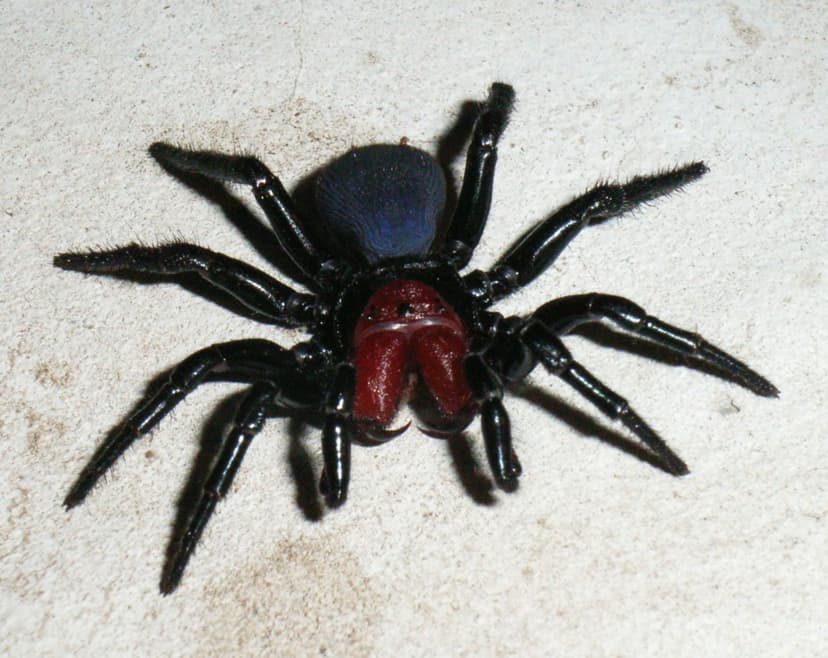
Actinopodidae
Actinopodidae is a family of mygalomorph spiders native to mainland Australia and South America, typically inhabiting open forests. This family includes the mouse spiders (Missulena species), which are notable for their medically significant and potentially dangerous bites.

Agelenidae
The Agelenidae, commonly known as funnel weavers, are a large family of spiders found globally. They are distinguished by their fast running speeds and the construction of flat sheet webs with a funnel-shaped retreat. While most species are solitary, some African species exhibit parasocial behavior, living in communal webs.
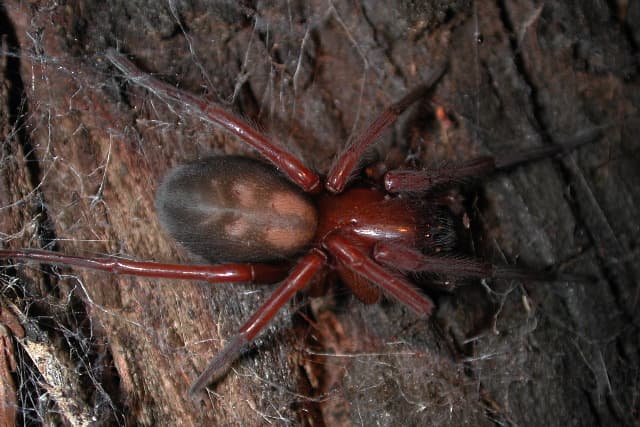
Amaurobiidae
Amaurobiidae is a family of spiders characterized by their three-clawed feet and the presence of either a cribellum or its absence. These spiders are typically found in crevices, hollows, or under stones, where they construct retreats and are often captured in pitfall traps. While widespread, they can be challenging to distinguish from closely related spider families.