
Thomisidae
Ambush predators; they sit and wait for prey, often camouflaged on flowers or other plants, and use their powerful front legs to grab and hold prey while delivering a venomous bite.
The Thomisidae, commonly known as crab spiders, are a diverse family of ambush predators that do not spin webs to catch prey. They are characterized by their crab-like body shape and their ability to scuttle sideways, often found on or near flowers where their coloration provides camouflage. Many species exhibit significant sexual dimorphism, with females typically being much larger than males.
Key Facts
- ›Ambush predators that do not build webs.
- ›Many species can change color to match their surroundings, especially flowers.
- ›Known for their crab-like posture and sideways movement.
- ›Exhibit significant sexual dimorphism, with females often much larger than males.
- ›Found globally in a variety of habitats, often on plants.
- ›Their venom is not considered harmful to humans.

Crab Spider, Flower Spider, Flower Crab Spider
Worldwide
- Two Front Legs Are Usually Longer and More Robust Than the Other Legs.
- Ability To Scuttle Sideways Or Backwards.
- Body Shape and Posture Resembling True Crabs.
- Ambush Predators
- Can Change Color To Match Surroundings
- Some Species Mimic Bird Droppings
- Some Species Hunt In Leaf Litter Or Under Bark
- Use Silk For Drop Lines and Reproductive Purposes, But Not For Prey Capture
About Thomisidae
The Thomisidae, commonly recognized as crab spiders, constitute a vast and widely distributed family of spiders, encompassing approximately 170 genera and over 2,100 species. These arachnids are primarily known for their distinctive crab-like appearance, characterized by their body shape and the way they hold their two front pairs of legs extended, giving them the ability to scuttle sideways or backward. Many members of this family are also referred to as flower spiders or flower crab spiders due to their frequent association with floral habitats.
Description and Habitat
Thomisidae are ambush predators, a trait that defines their hunting strategy. Unlike many other spider families, they do not spin webs to ensnare prey. Instead, they rely on camouflage and patience. Their coloration can vary significantly, ranging from dull browns and grays to vibrant greens, pinks, whites, or yellows, often matching the colors of the flowers they inhabit. This ability to blend in is crucial for their survival and hunting success. While often confused with huntsman spiders, Thomisidae can generally be identified by their leg arrangement and hunting behavior.
Behavior and Reproduction
These spiders are masters of disguise. Many species are adept at changing their coloration over a period of several days to perfectly match the flowers on which they perch, waiting for unsuspecting insects like bees and butterflies. Some species also exhibit mimicry, resembling bird droppings to evade predators. While they produce silk for purposes such as creating drop lines and for reproduction, it is not used in their predatory activities. A notable characteristic of Thomisidae is pronounced sexual dimorphism, with females typically being considerably larger than males. Several hypotheses attempt to explain this size disparity, including the fecundity hypothesis, suggesting larger females can produce more eggs, and the gravity hypothesis, which posits that smaller males can travel more easily to find mates.
Venom and Human Interaction
While Thomisidae spiders possess venom, it is primarily used to paralyze their insect prey. They are not considered harmful to humans, and their venom is not medically significant. This stands in contrast to some distantly related spiders sometimes also called crab spiders, such as species within the genus Sicarius, which are highly venomous.
Source: Wikipedia ↗
Frequently Asked Questions
What are Thomisidae spiders?
Thomisidae spiders, commonly called crab spiders, are a large family of spiders known for their ambush predatory behavior and crab-like appearance. They are found worldwide and are often associated with flowers.
Why are they called crab spiders?
They are named crab spiders due to their body shape, the way they hold their front two pairs of legs extended, and their ability to move sideways or backward, much like true crabs.
Do Thomisidae spiders build webs?
No, Thomisidae spiders are ambush predators and do not spin webs to catch their prey. They rely on camouflage and their powerful legs to capture unsuspecting insects.
Are crab spiders dangerous to humans?
The spiders belonging to the Thomisidae family are not known to be harmful to humans. Their venom is not considered dangerous to people.
Do crab spiders change color?
Yes, some species of Thomisidae, such as Misumena vatia and Thomisus onustus, are capable of changing their coloration over a period of days to match the flowers they inhabit, aiding in their camouflage.
What is the difference between male and female crab spiders?
There is often a significant difference in size between male and female crab spiders, a phenomenon known as sexual dimorphism. Females are typically much larger than males, with some species showing extreme size differences.
Where do Thomisidae spiders live?
Thomisidae spiders are found in diverse habitats around the world, commonly residing on or near flowers, fruit, leaves, or bark. Some species hunt in leaf litter or under loose bark.
Related Spider species

Orsolobidae
Orsolobidae is a family of six-eyed spiders comprising approximately 200 described species across thirty genera. First described by J. A. L. Cooke in 1965, it was elevated to family status from the "Dysderidae" classification in 1985. While most of its genera are endemic to New Zealand and Australia, some are also found in southern Africa and South America.
Oonopidae
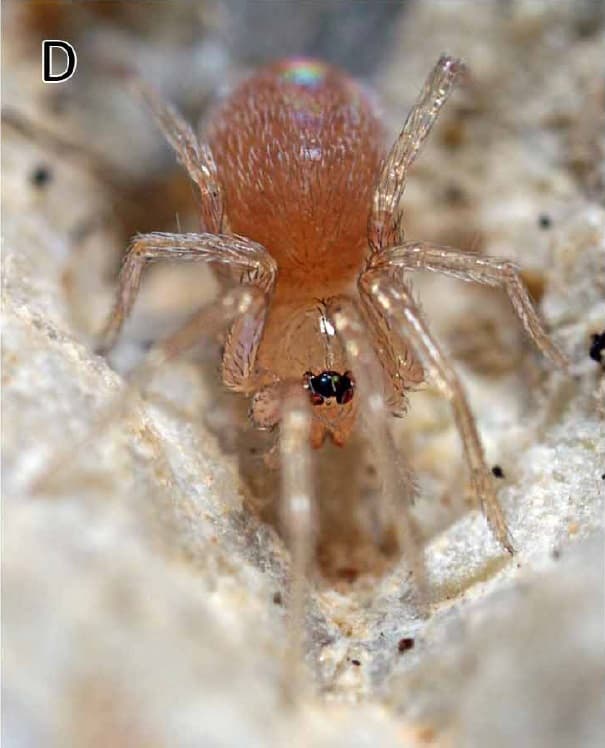
Oonopidae, commonly known as goblin spiders, are a widespread family of tiny spiders, typically measuring between 1 to 3 millimeters. They are characterized by their small size, often six eyes (though variations exist), and a remarkable array of unusual morphological traits, particularly in males. These spiders are frequently found in leaf litter, under rocks, and in tropical rainforest canopies, with some species even inhabiting termite nests.
Philodromidae
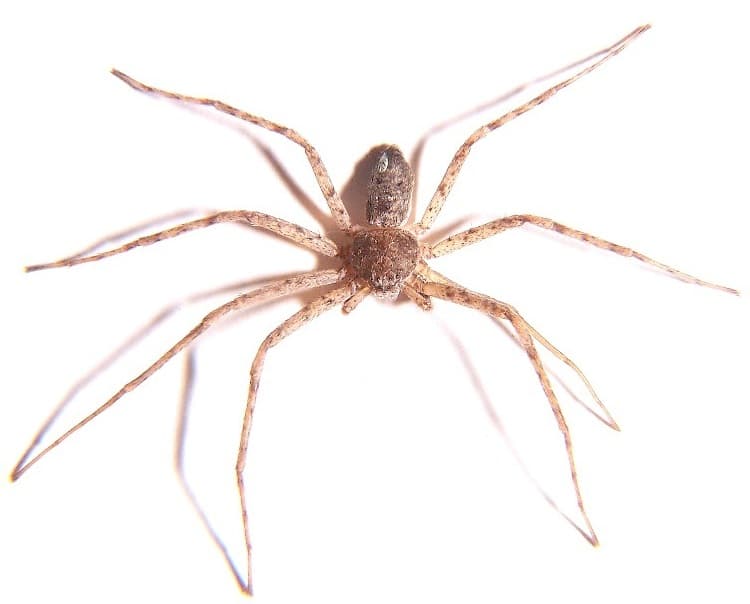
Philodromidae, commonly known as philodromid crab spiders or running crab spiders, is a diverse family of araneomorph spiders that includes over 500 species across approximately thirty genera. These spiders are characterized by their crab-like body shape and active hunting strategy, preying on insects and other small invertebrates by ambush rather than web-building. They are typically found on plants, from deciduous trees to conifers, and are widespread across various habitats.