
Zodariidae
Daytime hunters, often mimicking ant behavior.
Ant spiders, belonging to the family Zodariidae, are small to medium-sized eight-eyed arachnids distributed across tropical and subtropical regions worldwide. These spiders are notable for their close association with ants, often mimicking their behavior and sometimes even their chemical signatures, with many species specializing in preying on ants or termites.
Key Facts
- ›Zodariidae are commonly known as ant spiders.
- ›They are found in tropical and subtropical zones across South America, Africa, Australia, and parts of Asia.
- ›Most species are diurnal hunters, active during the day.
- ›Many Zodariidae MIMIC the behavior and chemical traits of ants.
- ›Several genera, like Zodarion, are specialized ant predators.
- ›The family comprises 90 genera and 1,325 species as of early 2026.
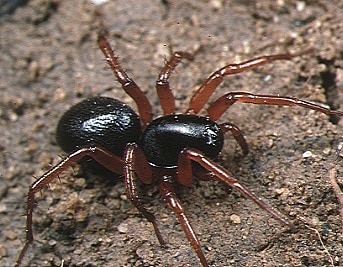
Ant Spiders
South America, Africa, Madagascar, Australia, New Guinea, New Zealand, Arabia, Indian Subcontinent
Eight Eyes
Mimic Ant Behavior, Mimic Ant Chemical Traits
About Zodariidae
Ant Spiders (Zodariidae)
Ant spiders, scientifically classified under the family Zodariidae, are a diverse group of arachnids recognized for their unique ecological niche and behavioral adaptations. These spiders are characterized by their eight eyes and a size range from small to medium. They inhabit a broad geographical spread, thriving in the tropical and subtropical climates of South America, Africa, Madagascar, Australia, New Guinea, New Zealand, Arabia, and the Indian subcontinent.
Lifestyle and Diet
Most zodariids are diurnal, meaning they are active hunters during the day. Their most striking characteristic is their close association with ants. Many species exhibit remarkable mimicry, not only imitating ant behavior but sometimes even replicating their chemical signatures to blend in or to facilitate predation. This specialization is evident in genera like Zodarion, which are known to feed exclusively on ants, and in other genera that also target ants or termites.
Biodiversity
As of early 2026, the Zodariidae family is a significant component of arachnid biodiversity, encompassing ninety distinct genera and a total of 1,325 described species. This extensive lineage highlights the evolutionary success of their ant-mimicking and ant-specialist strategies across various global ecosystems.
Source: Wikipedia ↗
Frequently Asked Questions
What are ant spiders?
Ant spiders are members of the family Zodariidae. They are small to medium-sized spiders with eight eyes, known for their association with ants and their mimicry of ant behavior.
Where do ant spiders live?
Ant spiders are found in all tropical and subtropical regions of the world. This includes South America, Africa, Madagascar, Australia, New Guinea, New Zealand, Arabia, and the Indian subcontinent.
What do ant spiders eat?
Many species of ant spiders are specialized predators that feed exclusively on ants. Some other genera within the family are also known to prey on ants or termites.
Are ant spiders active at night?
Most species of Zodariidae are daytime hunters, meaning they are primarily active and hunt during daylight hours.
How many species of ant spiders are there?
As of January 2026, the Zodariidae family includes ninety genera and a total of 1,325 described species.
Related Spider species
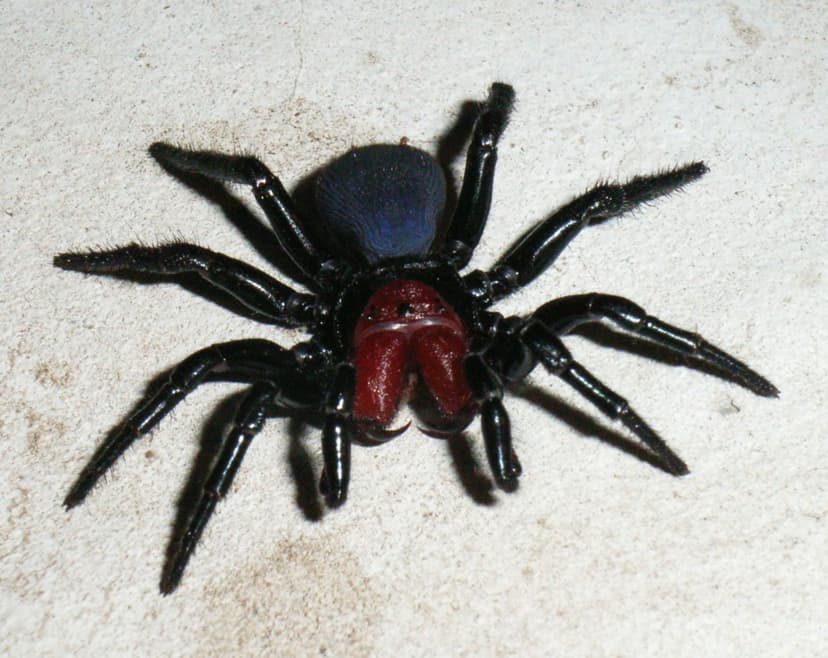
Actinopodidae
Actinopodidae is a family of mygalomorph spiders native to mainland Australia and South America, typically inhabiting open forests. This family includes the mouse spiders (Missulena species), which are notable for their medically significant and potentially dangerous bites.

Agelenidae
The Agelenidae, commonly known as funnel weavers, are a large family of spiders found globally. They are distinguished by their fast running speeds and the construction of flat sheet webs with a funnel-shaped retreat. While most species are solitary, some African species exhibit parasocial behavior, living in communal webs.
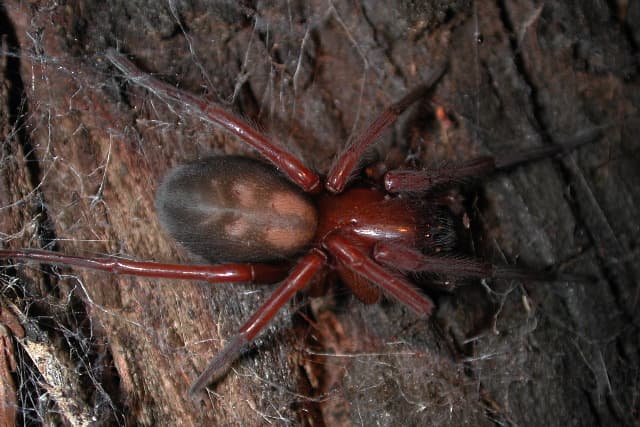
Amaurobiidae
Amaurobiidae is a family of spiders characterized by their three-clawed feet and the presence of either a cribellum or its absence. These spiders are typically found in crevices, hollows, or under stones, where they construct retreats and are often captured in pitfall traps. While widespread, they can be challenging to distinguish from closely related spider families.