
African piculet
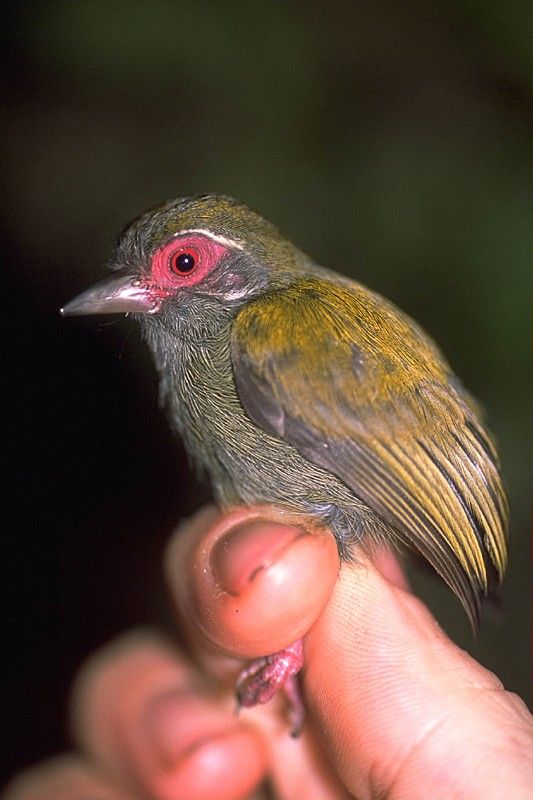
The African piculet is a small bird found in lowland secondary forests across several African countries. It is characterized by its dark greenish-yellow upperparts, greyish underparts, and a distinctive chestnut or reddish forehead in males. This species is known for its active foraging behavior, hammering branches to find beetle larvae.
Key Facts
- ›The African piculet is the sole species in the genus Verreauxia.
- ›Males have a chestnut or reddish forehead, while females share the crown color.
- ›It inhabits lowland secondary forests and forages in lower tree storeys and dense vegetation.
- ›This species hammers branches to access beetle larvae and also gleans other insects.
- ›Breeding has been observed between June and February, with clutches typically of two eggs.
- ›Its conservation status is listed as 'least concern' due to a large range and local abundance.
African Piculet
Angola, Cameroon, Central African Republic, Republic of the Congo, Democratic Republic of the Congo, Ivory Coast, Equatorial Guinea, Gabon, Ghana, Liberia, Uganda
Lowland Secondary Forest
Chestnut, Reddish, Greyish-Green, Olive-Green, Dark Green, Yellow, Brownish-Black, Dark Grey, Paler Grey
Chestnut Or Reddish Forehead In Males, Greyish-Green Or Olive-Green Crown
Beetle Larvae, Insects
Hammers Beak Into Branches, Splits Stems, Gleans Insects
Within 5 Metres of the Ground
About African piculet
The African piculet, scientifically known as Verreauxia africana, is a small bird belonging to the family Picidae. It is notable for being the sole species within the genus Verreauxia. This species is distributed across a significant portion of Africa, with confirmed sightings in Angola, Cameroon, the Central African Republic, the Republic of the Congo, the Democratic Republic of the Congo, Ivory Coast, Equatorial Guinea, Gabon, Ghana, Liberia, and Uganda.
Description and Ecology
Measuring approximately 9 to 10 cm in length, the African piculet exhibits distinct sexual dimorphism in its plumage. Males possess a chestnut or reddish forehead, contrasting with a greyish-green or olive-green crown, while females share the same coloration for both their forehead and crown. The upper body is predominantly dark green with yellow tinges, and the wings and tail are brownish-black. The throat and breast are a dark grey, transitioning to a slightly paler grey on the belly. Its beak is black, eyes are red, and legs are reddish. Juveniles resemble adults but have grey or buffy tones interspersed with the general plumage hue.
The African piculet primarily inhabits lowland secondary forests. It is an active bird, often observed in pairs or small groups, and occasionally joins mixed-species flocks. Its foraging behavior involves actively searching through the lower storeys of trees, bushes, and dense vegetation. Despite its small size, it employs a woodpecker-like technique, hammering its beak into branches and splitting stems to extract beetle larvae. While it also gleans other insects, it appears to be uninterested in ants.
Reproduction
Breeding activity for the African piculet has been recorded between June and February across various parts of its extensive range. Nests are constructed within 5 meters of the ground. Typically, a clutch consists of two eggs, and both parents actively participate in the incubation and raising of the young.
Conservation
Due to its vast geographic distribution and its status as locally common, the International Union for Conservation of Nature has assessed the African piculet's conservation status as 'least concern'. This classification indicates that the species is not currently facing significant threats to its survival across its range.
Source: Wikipedia ↗
Frequently Asked Questions
What is the scientific name of the African piculet?
The scientific name of the African piculet is Verreauxia africana. It was formerly placed in the genus Sasia and is currently the only species recognized in the genus Verreauxia.
Where is the African piculet found?
The African piculet is found in a wide range across Africa, including countries such as Angola, Cameroon, the Republic of the Congo, the Democratic Republic of the Congo, Ivory Coast, Gabon, Ghana, Liberia, and Uganda.
What does the African piculet eat?
The African piculet primarily feeds on beetle larvae, which it accesses by hammering its beak into branches. It also gleans other insects but shows no interest in ants.
What are the nesting habits of the African piculet?
The African piculet builds its nest within 5 meters of the ground. Breeding has been observed between June and February, and clutches typically consist of two eggs, with both parents involved in raising the young.
What is the conservation status of the African piculet?
The African piculet is classified as 'least concern' by the International Union for Conservation of Nature. This status is attributed to its very large geographic range and its common occurrence in parts of its habitat.
Related Woodpecker species
Great slaty woodpecker
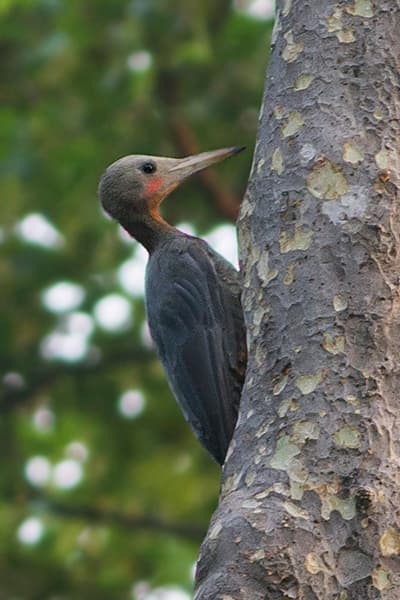
The great slaty woodpecker (Mulleripicus pulverulentus) is the largest confirmed living woodpecker species, recognized for its imposing size and distinctive dark grey plumage. It inhabits primary forests across the Indian subcontinent and Southeast Asia, preferring areas with large, mature trees for foraging and nesting.

Levaillant's woodpecker
Levaillant's woodpecker is a large African member of the woodpecker family, found in the Maghreb countries of Morocco, Algeria, and Tunisia. It is characterized by its dark green upperparts, yellowish-green underparts, crimson nape, and a distinctive black moustache with a pale border.
Spot-breasted woodpecker
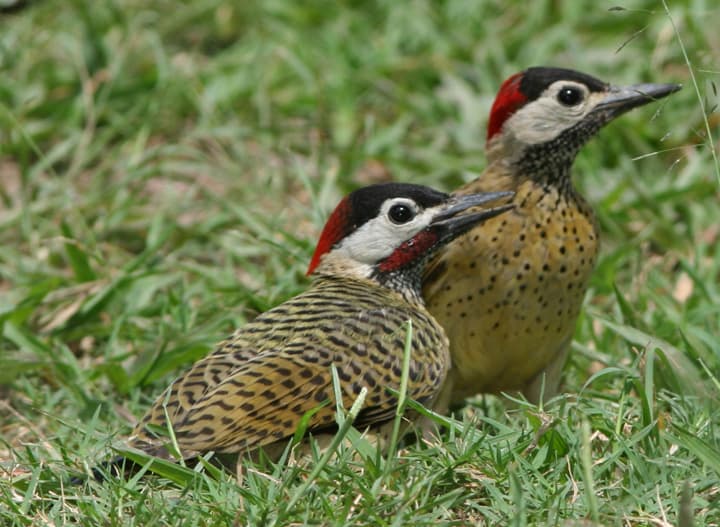
The spot-breasted woodpecker (Colaptes punctigula) is a bird species found across much of mainland South America and Panama. It is characterized by its distinctive black and white spotted throat and is known for its varied vocalizations and adaptable habitat preferences, inhabiting humid lowland landscapes including forests, savannas, and plantations.