
Spot-breasted woodpecker
The spot-breasted woodpecker (Colaptes punctigula) is a bird species found across much of mainland South America and Panama. It is characterized by its distinctive black and white spotted throat and is known for its varied vocalizations and adaptable habitat preferences, inhabiting humid lowland landscapes including forests, savannas, and plantations.
Key Facts
- ›Inhabits a wide variety of humid lowland landscapes, including rainforests, savannas, and plantations.
- ›Primarily feeds on ants, including their larvae and pupae, gleaning and probing for food.
- ›Breeding season varies geographically across its extensive range.
- ›Known for a diverse vocal repertoire, including various calls and whistles.
- ›Assessed as Least Concern by the IUCN due to its large range and stable population.
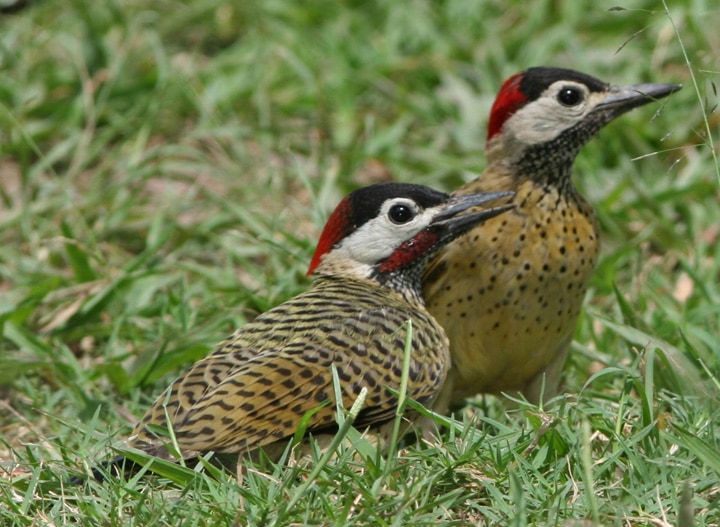
Spot-Breasted Flicker
Panama, South America
Rainforest, Deciduous Forest, Gallery Forest, VáRzea, Mangroves, Llanost, Palm Savanna, Palm Plantations, Shade Coffee Plantations, Other Treed Plantations
Spotted Throat, Red Malar Stripe, Barred Upperparts, Barred Flight Feathers, Spotted Underparts
Ants, Ant Larvae, Ant Pupae
Gleaning, Probing, Sweeping Aside Litter
Living Trees, Dead Trees, Fence Posts
- High-pitched weak and nasal 'wha' or 'kah' or 'keeh' in series
- Series of 'peek' notes
- 'Whew' whistle
- Series of 'ta-wick' or 'week-a' calls
- Fast series of 'wick' notes
- 'Low soft 'pee-ya' calls
About Spot-breasted woodpecker
The spot-breasted woodpecker, scientific name Colaptes punctigula, is a medium-sized bird found throughout much of Panama and mainland South America. It is a member of the Picidae family, known for its distinctive black and white spotted throat, which gives it its common name. This species is adaptable, inhabiting a wide array of humid lowland environments, from dense rainforests and gallery forests to more open areas like palm savannas and various types of treed plantations.
Description and Identification
Measuring between 18 to 21 cm in length and weighing between 50 to 79 grams, the spot-breasted woodpecker exhibits sexual dimorphism primarily in its head plumage. Adult males of the nominate subspecies feature a black forehead and forecrown, contrasted with a red hindcrown and nape, and a red malar stripe. Both sexes share bronze-green upperparts with brownish-black barring, and dull olive-yellow underparts with faint reddish tinges and small black spots, particularly on the breast and flanks. Juveniles are generally duller and have greener upperparts with larger spots on their undersides.
Distribution and Habitat
The spot-breasted woodpecker's range is extensive, with six recognized subspecies found across diverse geographical regions. It occupies habitats ranging from sea level up to 1,600 meters in elevation, depending on the specific locale. Its preference for sparser woodlands allows it to coexist with some degree of habitat alteration, contributing to its adaptability.
Behavior and Ecology
This woodpecker is a year-round resident within its range. Its diet consists almost exclusively of ants, including their larvae and pupae, which it obtains by gleaning and probing surfaces, and by sweeping aside leaf litter on the ground. Foraging typically occurs in pairs or family groups at various heights within the forest strata. The breeding season varies significantly across its range. Both sexes participate in excavating nest cavities, usually in trees but sometimes in man-made structures like fence posts. The species possesses a rich vocal repertoire, utilizing a variety of calls and whistles for communication, alarm, and courtship.
Conservation Status
The spot-breasted woodpecker is classified as Least Concern by the International Union for Conservation of Nature (IUCN). This assessment is based on its vast geographic range, an estimated population of over half a million mature individuals, and a stable population trend. No significant immediate threats have been identified, and its adaptability to varied woodland types suggests resilience to environmental changes.
Source: Wikipedia ↗
Frequently Asked Questions
What is the scientific name of the spot-breasted woodpecker?
The scientific name of the spot-breasted woodpecker is Colaptes punctigula. This binomial name was coined by Pieter Boddaert in 1783 and is derived from the Latin words for 'spot' and 'throat'.
Where can the spot-breasted woodpecker be found?
The spot-breasted woodpecker is distributed across Panama and most mainland South American countries, excluding Argentina, Chile, Paraguay, and Uruguay. Its range extends through diverse habitats from the Amazon Basin to coastal regions.
What does the spot-breasted woodpecker eat?
The diet of the spot-breasted woodpecker consists almost entirely of ants, including adult ants, larvae, and pupae. They forage by gleaning and probing, and also sweep aside leaf litter on the ground.
What are the nesting habits of the spot-breasted woodpecker?
Both male and female spot-breasted woodpeckers excavate their nest cavities, typically in living or dead trees, but occasionally in fence posts. Specific details regarding clutch size, incubation, and parental care are not well documented.
What is the conservation status of the spot-breasted woodpecker?
The spot-breasted woodpecker is listed as Least Concern by the IUCN. This status is attributed to its very large range, an estimated population of at least half a million mature individuals, and a believed stable population trend with no immediate identified threats.
How does the spot-breasted woodpecker vocalize?
The spot-breasted woodpecker possesses a wide range of vocalizations. These include high-pitched nasal calls, alarm calls described as 'peek' notes, courtship or rival challenge whistles, display calls, and soft intimate calls between pairs.
Related Woodpecker species

Hoffmann's woodpecker
Hoffmann's woodpecker is a bird species found from Honduras south to Costa Rica, inhabiting dry forests, open areas, and human-modified landscapes like shade coffee plantations. Adults are distinguished by their plumage, with males having a red crown and yellow nape, while females have a dull white crown and pale yellow nape. Their diet consists primarily of arthropods extracted from wood, supplemented by fruits, nectar, and occasionally bird eggs.

Cream-colored woodpecker
The cream-colored woodpecker is a South American bird species known for its predominantly yellowish plumage, long crest, and black tail. It inhabits various humid forest environments across much of mainland South America, excluding the southern cone. Primarily feeding on ants and termites, it plays a role in its ecosystem by breaking into arboreal nests for food.
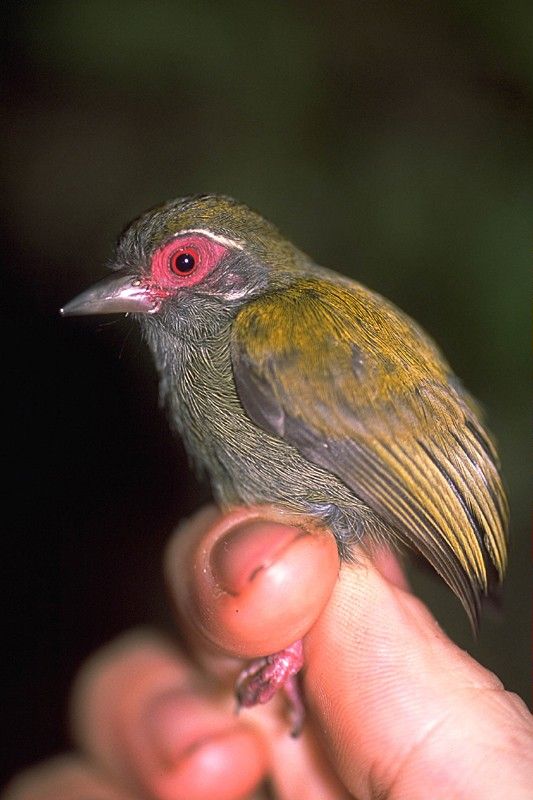
African piculet
The African piculet is a small bird found in lowland secondary forests across several African countries. It is characterized by its dark greenish-yellow upperparts, greyish underparts, and a distinctive chestnut or reddish forehead in males. This species is known for its active foraging behavior, hammering branches to find beetle larvae.