
Banded woodpecker
The banded woodpecker, also known as the banded red woodpecker, is a bird species found in tropical southeastern Asia. It is characterized by its predominantly rufous-brown upper parts, yellowish nape, and heavily barred belly. This species primarily inhabits lowland forests and mangroves, feeding on ants and other invertebrates.
Key Facts
- ›Found in Brunei, Indonesia, Malaysia, Myanmar, Singapore, and Thailand.
- ›Adult birds measure approximately 26 cm (10 in) in length.
- ›Prefers primary rainforests but also utilizes secondary forests, mangroves, and gardens.
- ›Diet consists mainly of ants, their eggs and larvae, and other small invertebrates.
- ›Assessed by the IUCN as 'least concern' due to its wide range and adaptability.
- ›Breeding seasons vary across its range, with nestlings observed between February and August in the Malay Peninsula.

Banded Red Woodpecker
Southeast Asia, Malay Peninsula, Sumatra, Borneo, Java, Myanmar, Brunei, Indonesia, Malaysia, Singapore, Thailand
Subtropical Or Tropical Moist Lowland Forests, Subtropical Or Tropical Mangrove Forests, Primary Rainforest, Secondary Forest, Plantations, Coastal Scrub, Parks, Wooded Suburbs, Overgrown Gardens
Rufous-Brown, Olive, Buff, Yellow, Chocolate-Brown, Reddish-Brown, Red, Whitish, Brownish-Black
- Shaggy Yellowish Nape
- Reddish Breast Barred With Olive
- Whitish Belly Heavily Barred With Brownish-Black
- Bluish Orbital Ring
Ants, Ant Eggs, Ant Larvae, Small Invertebrates
- Foraging Unobtrusively Among Vines and Dense Cover
- Foraging Higher In the Canopy
- Probing Into Crevices, Moss and Epiphytes
Tree Cavities
About Banded woodpecker
The Banded Woodpecker
The banded woodpecker, scientifically known as Chrysophlegma miniaceum and sometimes referred to as the banded red woodpecker, is a bird species native to the tropical regions of southeastern Asia. Its natural range encompasses countries such as Myanmar, Thailand, Malaysia, Indonesia, Brunei, and Singapore, where it inhabits a variety of forest types.
Description and Identification
Adult banded woodpeckers typically measure around 26 centimeters (10 inches) in length. Their plumage is distinctive, with predominantly rufous-brown upper parts. The mantle is a dull olive color, finely scaled with buff, and the rump is a bright yellow. The tail is a deep chocolate-brown. The head is largely rufous-brown, featuring a characteristic shaggy yellowish nape. The chin, neck, and throat are a reddish-brown. The breast exhibits a reddish hue, marked with olive barring, while the belly is whitish and heavily streaked with brownish-black.
There are subtle differences between the sexes. Males possess a redder face and throat compared to females, whose faces and throats are browner and flecked with white. Both sexes share a dark beak, chestnut-colored eyes encircled by a bluish orbital ring, and greenish legs.
Distribution and Habitat
This species is a sedentary, non-migratory bird, primarily found in lowland areas. Its distribution extends from southern Myanmar southward through the Malay Peninsula, and across the islands of Sumatra, Borneo, and Java. While its preferred habitat is primary rainforest characterized by abundant vines, epiphytes, tangled shrubs, and fallen trees, the banded woodpecker has demonstrated adaptability. It can also be found in secondary forests, plantations, coastal scrub, mangrove forests, as well as more cultivated or human-influenced environments like parks, wooded suburbs, and overgrown gardens.
Ecology and Behavior
Banded woodpeckers are often observed foraging alone or in pairs. They tend to forage unobtrusively, moving amongst vines and dense foliage, but also ascend to higher parts of the canopy. Their foraging technique involves probing into crevices, mossy areas, and among epiphytes in search of food. The primary components of their diet are ants, including their eggs and larvae, along with other small invertebrates.
Reproduction
The timing of the breeding season for the banded woodpecker varies across its extensive geographic range. In the Malay Peninsula, nesting activities have been documented in January. Observations of nestlings have occurred between February and August in this region, suggesting a prolonged breeding period.
Conservation Status
The banded woodpecker is considered to have a very wide range and is described as common in some parts of its territory, while being uncommon in others. Although the exact population size has not been quantified, it is believed to be steady. This stability is partly attributed to the species' capacity to adapt to man-made habitats. Consequently, the International Union for Conservation of Nature (IUCN) has assessed its conservation status as 'Least Concern', indicating a low risk of extinction.
Source: Wikipedia ↗
Frequently Asked Questions
What are the key physical characteristics of the banded woodpecker?
The banded woodpecker has predominantly rufous-brown upper parts, a dull olive mantle scaled with buff, and a yellow rump. Its head is mostly rufous-brown with a shaggy yellowish nape, and its breast is reddish barred with olive, while the belly is whitish and heavily barred with brownish-black. Both sexes have dark beaks, chestnut eyes with bluish orbital rings, and greenish legs.
Where is the banded woodpecker found?
This species is native to tropical southeastern Asia, with its range extending from southern Myanmar through the Malay Peninsula, Sumatra, and Borneo to Java. It is found in countries including Brunei, Indonesia, Malaysia, Myanmar, Singapore, and Thailand.
What kind of habitats does the banded woodpecker prefer?
The banded woodpecker's primary habitat is primary rainforest with dense vegetation, but it also thrives in secondary forests, plantations, coastal scrub, mangrove forests, parks, wooded suburbs, and overgrown gardens. It is mainly found in lowland areas.
What does the banded woodpecker eat?
The main items of diet for the banded woodpecker are ants, including their eggs and larvae. They also consume other small invertebrates, foraging unobtrusively among vines and dense cover.
What is the conservation status of the banded woodpecker?
The International Union for Conservation of Nature (IUCN) has assessed the conservation status of the banded woodpecker as 'least concern'. This is attributed to its very wide range and its ability to adapt to man-made habitats.
Do the male and female banded woodpeckers look different?
Yes, the sexes differ slightly. The male banded woodpecker has a redder face and throat, whereas the female's face and throat are browner and flecked with white. Both share similar body plumage and physical features.
Related Woodpecker species
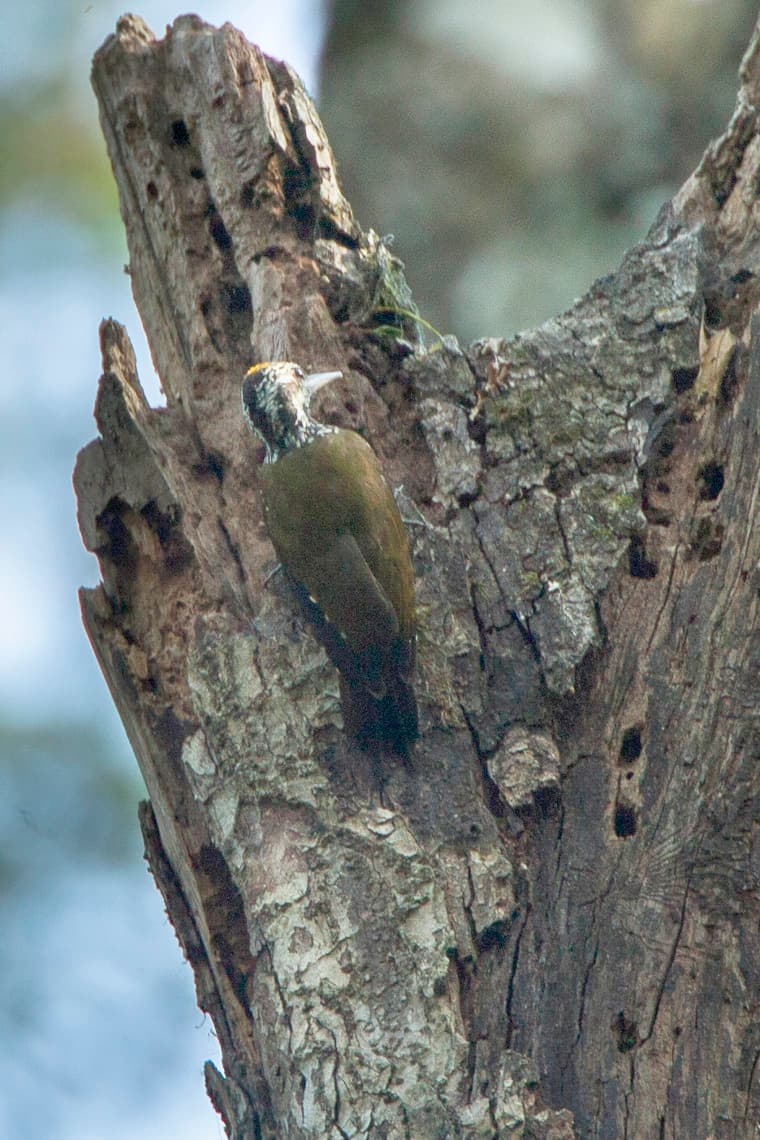
Yellow-crested woodpecker
The yellow-crested woodpecker, also known as the golden-crowned woodpecker, is a species found in wet tropical forests across equatorial Central and Western Africa. Measuring between 22 to 25 cm, males are distinguished by a small golden patch on their crown, while females lack this feature. They are known for their distinctive drumming and vocalizations, and primarily feed on insects found in the forest canopy.

Red-backed flameback
The Red-backed flameback is a species of woodpecker endemic to Sri Lanka, known for its predominantly crimson plumage and black markings. It inhabits various forest types and man-made environments, and its diet primarily consists of ants.
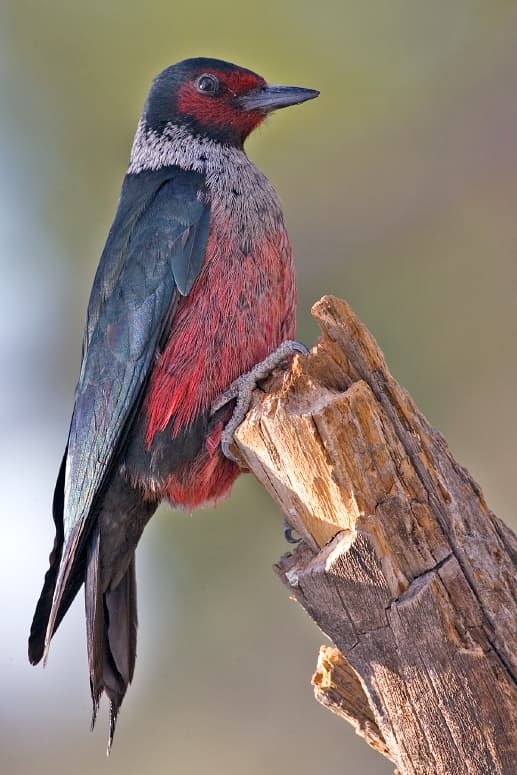
Lewis's woodpecker
Lewis's woodpecker is a large North American woodpecker known for its striking reddish-breasted and blackish-green plumage. It inhabits open pine woodlands and areas with scattered trees, often preferring to perch in the open. This species exhibits unique foraging behaviors, including catching insects in mid-air.