
Yellow-crested woodpecker
The yellow-crested woodpecker, also known as the golden-crowned woodpecker, is a species found in wet tropical forests across equatorial Central and Western Africa. Measuring between 22 to 25 cm, males are distinguished by a small golden patch on their crown, while females lack this feature. They are known for their distinctive drumming and vocalizations, and primarily feed on insects found in the forest canopy.
Key Facts
- ›Found in wet tropical forests, forest edges, and plantations in Central and Western Africa.
- ›Males possess a golden patch on the crown, which is absent in females.
- ›Feeds on insects, particularly beetle larvae, by chiseling into wood and levering off bark.
- ›Produces loud, accelerating drumming rolls and a variety of chattering calls.
- ›Has a wide distribution and is assessed as Least Concern by the IUCN.
- ›Juveniles are drabber with fewer spots and more barring than adults.
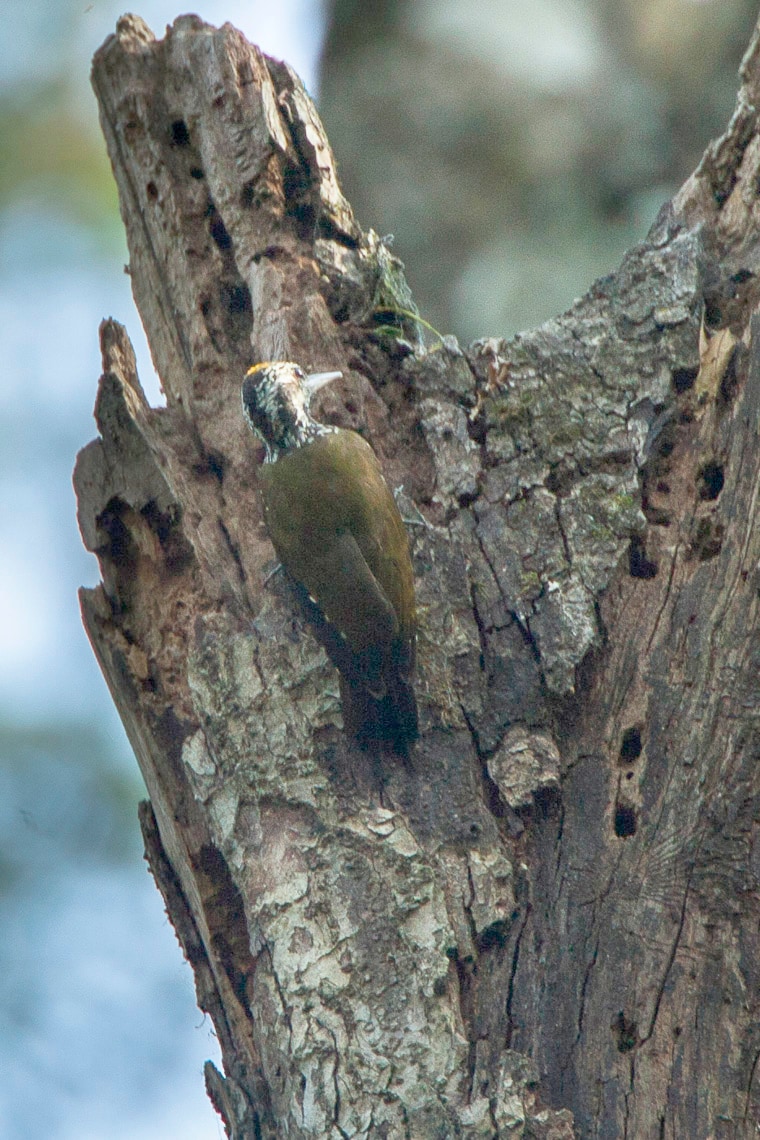
Golden-Crowned Woodpecker
Angola, Cameroon, Central African Republic, Republic of the Congo, Democratic Republic of the Congo, Gabon, Kenya, Nigeria, South Sudan, Tanzania, Uganda
Wet Tropical Forest, Dense Primary Rainforest, Dense Secondary Rainforest, Drier Forests, Forest Edges, Cocoa Plantations, Coffee Plantations
Golden Patch On Crown, Broad Black Streak Through the Eye
Insects, Beetle Larvae
Chiseling Into Wood, Levering Off Bark, Sallying To Catch Flying Insects
Tree Cavities
Loud Rolls, Chattering Calls, Series of Notes
About Yellow-crested woodpecker
The yellow-crested woodpecker, scientifically known as Chloropicus xantholophus and sometimes referred to as the golden-crowned woodpecker, is a bird species belonging to the family Picidae. Some taxonomic bodies classify it within the genus Dendropicos.
Description and Identification
This woodpecker typically measures between 22 and 25 centimeters in length. A key distinguishing feature is the male's small golden patch on its crown, which is more apparent during displays; females lack this golden marking. Both sexes share a brown forehead, whitish cheeks and throat, and a prominent broad black streak extending from the eye to the sides of the neck. The nape is black, and the upper body is a dull brownish-olive, which is usually plain but can sometimes exhibit slight barring. The rump and upper tail coverts are yellowish, and the tail is chocolate-brown. The underparts are brown, marked with white spotting on the breast and white barring on the flanks and lower belly. The beak is long, with the upper mandible being darker than the lower. The iris is dark red, and the legs and feet are olive-grey. Juveniles are generally drabber, showing fewer spots and more barring, and both sexes may have some yellow-tipped feathers on the crown.
Distribution and Habitat
The yellow-crested woodpecker inhabits equatorial Central and Western Africa. Its geographical range spans from western Kenya eastward to Nigeria and southwestern Cameroon, and extends southward to northwestern Angola. The species can be found at altitudes ranging from 700 to 2,150 meters (2,300 to 7,100 feet). Its preferred habitat includes dense primary and secondary rainforests, as well as drier forests, forest edges, and plantations such as cocoa or coffee farms, provided there are still mature trees present.
Ecology and Behavior
Both male and female yellow-crested woodpeckers engage in frequent drumming, producing loud, accelerating rolls that fade away. The species is also quite vocal, emitting a variety of chattering calls and series of notes. Their diet consists mainly of insects found in the mid to upper forest canopy. They forage by chiseling into wood to extract beetle larvae, levering off bark, and occasionally sallying out to catch flying insects.
Reproduction
Detailed information regarding the breeding habits of the yellow-crested woodpecker is limited. However, nesting is believed to occur between September and March in regions like Cameroon, Kenya, and Uganda, and between June and September in Angola.
Conservation Status
The yellow-crested woodpecker boasts an extensive range, covering an area of occupancy nearing 4,000,000 square kilometers. The population is thought to be stable. Due to these factors, the International Union for Conservation of Nature (IUCN) has classified its conservation status as Least Concern.
Source: Wikipedia ↗
Frequently Asked Questions
What is the scientific name for the yellow-crested woodpecker?
The scientific name for the yellow-crested woodpecker is Chloropicus xantholophus. Some taxonomic authorities also place this species in the genus Dendropicos.
What are the main physical characteristics of the yellow-crested woodpecker?
The yellow-crested woodpecker measures 22 to 25 cm in length. Males have a notable golden patch on their crown, while females do not. Both sexes have a black streak through the eye, dull brownish-olive upperparts, and yellowish rump.
Where is the yellow-crested woodpecker found?
This species is found in equatorial Central and Western Africa, with its range extending from western Kenya to Nigeria and southwestern Cameroon, and south to northwestern Angola. It inhabits wet tropical forests, drier forests, forest edges, and plantations.
What does the yellow-crested woodpecker eat?
The yellow-crested woodpecker primarily feeds on insects, which it finds in the middle and upper parts of the forest canopy. It chisels into wood to locate beetle larvae, removes bark, and occasionally catches flying insects.
What is the conservation status of the yellow-crested woodpecker?
The yellow-crested woodpecker has a very wide range and its population is believed to be stable. Consequently, the International Union for Conservation of Nature (IUCN) has assessed its conservation status as Least Concern.
Related Woodpecker species

Banded woodpecker
The banded woodpecker, also known as the banded red woodpecker, is a bird species found in tropical southeastern Asia. It is characterized by its predominantly rufous-brown upper parts, yellowish nape, and heavily barred belly. This species primarily inhabits lowland forests and mangroves, feeding on ants and other invertebrates.

Chestnut woodpecker
The chestnut woodpecker is a bird species found across much of mainland South America and Trinidad. It is characterized by its chestnut plumage, a bright red malar area in males, and a distinctive call. This species primarily inhabits forests and secondary growth areas, where it forages for ants and termites.
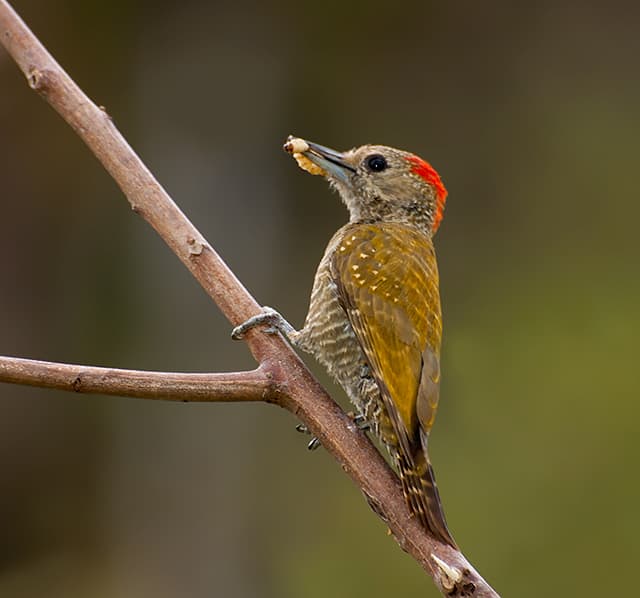
Little woodpecker
The little woodpecker (Veniliornis passerinus) is a small South American bird found in a wide variety of wooded habitats, generally avoiding dense forest interiors. Males and females share similar plumage, with males displaying red on their heads. This adaptable species is widespread across the continent and is currently listed as Least Concern.