
Beautiful woodpecker
The beautiful woodpecker is a species endemic to Colombia, found primarily in the Magdalena River valley. This bird is characterized by its striking plumage, with males and females differing in head patterns, and it feeds on a mixed diet of insects and fruits, foraging high in forest canopies. Its conservation status is assessed as Least Concern.
Key Facts
- ›Endemic to the Magdalena River valley in Colombia.
- ›Adults measure approximately 17-18 cm in length.
- ›Diet consists of insects and a variety of fruits.
- ›Primarily inhabits mature open forests, both dry and humid.
- ›Considered Least Concern by the IUCN, with a stable population trend.
- ›Both sexes are believed to drum.

Colombia
Mature Open Forests, Plantations, Fragmented Forest, Secondary Forest
- Sexes differ in head pattern
- Scarlet crown
- Black forecrown and scarlet hindcrown
- Golden yellow nape and hindneck
- Black eye-ring extending down neck side
- White to cream or pale yellow lores, cheeks, chin, throat, and breast
- Black mantle and upper wings with white barring on flight feathers
- White back and rump, sometimes blotched with black
- Brownish black tail
- Lower breast, belly, and flanks barred black and white
- Red patch on mid-belly
Insects, Fruit
- Forages high in the forest canopy and just below it
- Hawks flying insects above tree tops
- Loud, Rather Squeaky, Sometimes More Guttural Call of Usually 3 Notes
- Rattling Trills
- Churring Call
About Beautiful woodpecker
Beautiful woodpecker (Melanerpes pulcher)
The beautiful woodpecker is a species of bird belonging to the woodpecker family Picidae, found exclusively in Colombia. It is endemic to the Magdalena River valley, where it primarily inhabits mature open forests, including both dry and humid environments. The species may also be found in plantations and occasionally in fragmented or secondary forest areas, typically at elevations between 400 and 1,500 meters.
Description and Identification
Adult beautiful woodpeckers measure between 17 to 18 cm (6.7 to 7.1 inches) in length. The sexes exhibit differences in their head plumage: males have a scarlet crown and golden yellow nape, while females have a black forecrown and a scarlet hindcrown. Both sexes share a whitish forehead, a golden yellow hindneck, and black markings around the eye that extend down the side of the neck. Their upperparts are primarily black with white barring on the flight feathers, and their back and rump are white, sometimes with black blotches. The underparts are barred black and white, with a distinctive red patch on the mid-belly. Juveniles are duller overall, with browner black areas and less contrasting underparts.
Behavior and Ecology
The beautiful woodpecker is a year-round resident throughout its range. Its diet is varied, consisting of insects such as wood-boring beetles and winged termites, and a significant amount of fruit, including figs, bananas, and the fruits of the Cecropia tree. Foraging typically occurs high in the forest canopy or just below it, and they are also known to hawk flying insects above the treetops. Both sexes are believed to drum. Their vocalizations include loud, squeaky or guttural calls, rattling trills, and a churring sound.
Breeding and Conservation
The breeding season is thought to occur from February or March to June or July, though little else is known about their breeding biology. The International Union for Conservation of Nature (IUCN) has assessed the beautiful woodpecker as Least Concern. Despite its limited range and unknown population size, the population is believed to be stable, and no immediate threats have been identified. The species is noted as being rather scarce and local throughout its distribution.
Source: Wikipedia ↗
Frequently Asked Questions
What is the scientific name of the beautiful woodpecker?
The scientific name of the beautiful woodpecker is *Melanerpes pulcher*. This binomial name is used to classify it within the broader scientific community.
Where is the beautiful woodpecker found?
The beautiful woodpecker is endemic to Colombia, specifically inhabiting the valley of the Magdalena River. It is found in mature open forests across this region.
What does the beautiful woodpecker eat?
Its diet is varied, including insects such as adult and larval wood-boring beetles and winged termites. It also consumes a significant amount of fruit, including figs, bananas, and fruits from the Cecropia tree.
What is the conservation status of the beautiful woodpecker?
The International Union for Conservation of Nature (IUCN) has assessed the beautiful woodpecker as Least Concern. While its population size is not precisely known, it is believed to be stable, and no immediate threats have been identified.
How large is the beautiful woodpecker?
The beautiful woodpecker is a medium-sized bird, measuring approximately 17 to 18 cm (6.7 to 7.1 inches) in length. This measurement is typical for adults of the species.
Related Woodpecker species
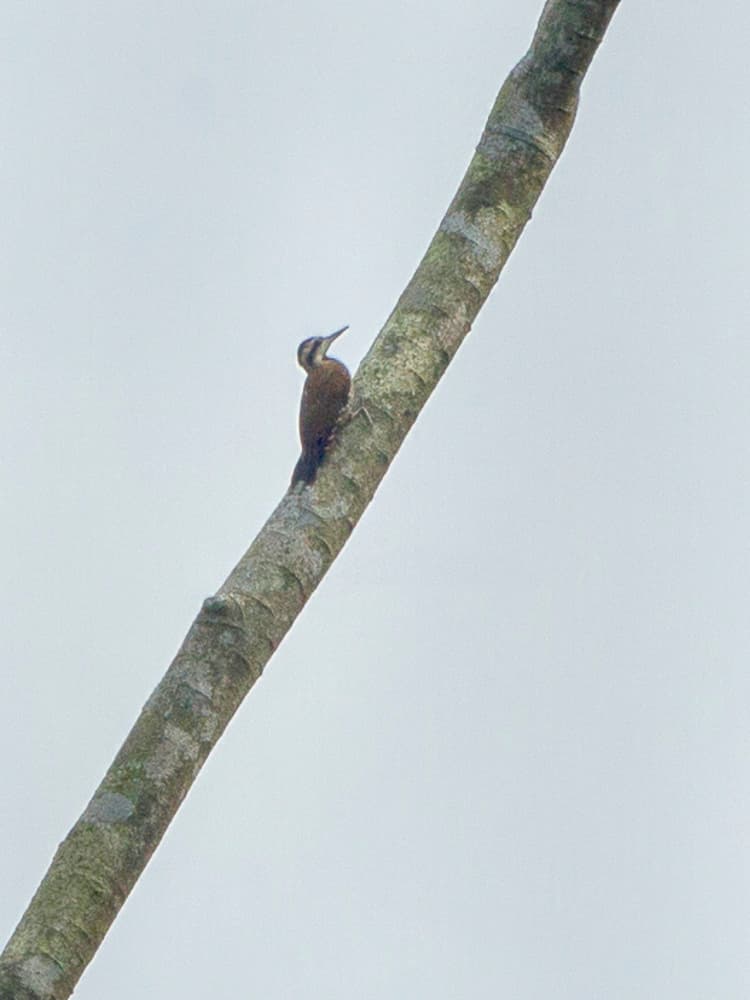
Fire-bellied woodpecker
The fire-bellied woodpecker is a bird species found across tropical West Africa, inhabiting various wooded environments from primary rainforest edges to savannahs. It is characterized by its olive-bronze upperparts, crimson rump, and a striking scarlet belly, with males displaying a red crown and females a black one. This species is common and its population is considered stable or increasing, leading to a 'least concern' conservation status.

Striped woodpecker
The striped woodpecker is a bird species found in Argentina, Bolivia, and Chile, inhabiting semi-open to open forests, woodlands, and even gardens. It is characterized by its black and white striped plumage, with males and females differing slightly in head coloration, particularly the nape. This species primarily feeds on insects and excavates nest cavities in trees or cacti.
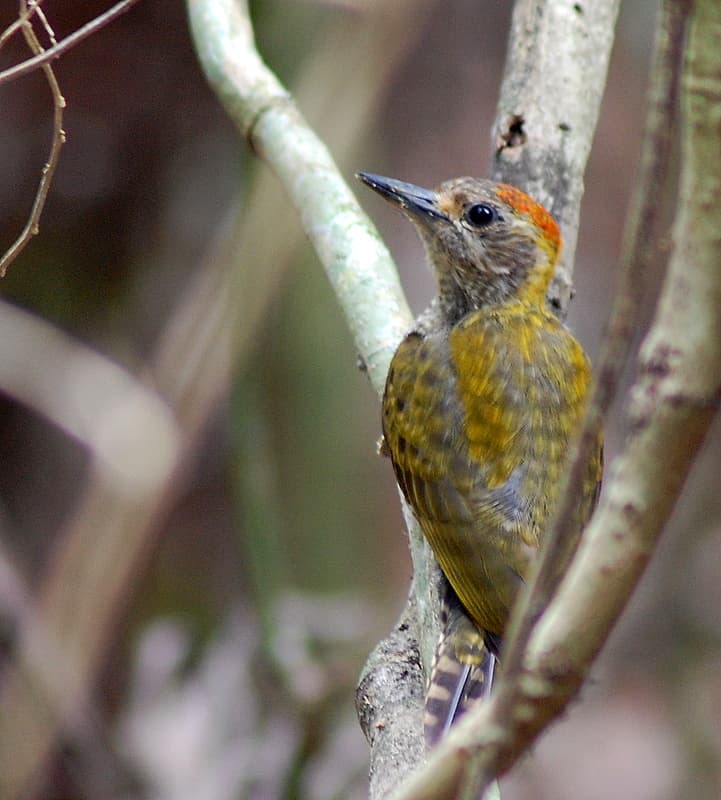
Yellow-eared woodpecker
The yellow-eared woodpecker is a species of bird endemic to eastern Brazil, found between the states of Bahia and Rio de Janeiro. This species inhabits lowlands and hills of the Atlantic Forest, including primary and secondary forests, as well as parks. Adults are approximately 15 cm long and are characterized by olive-brown faces with whitish streaks and a pale golden-yellow nape, with males and females differing primarily in their head plumage.